
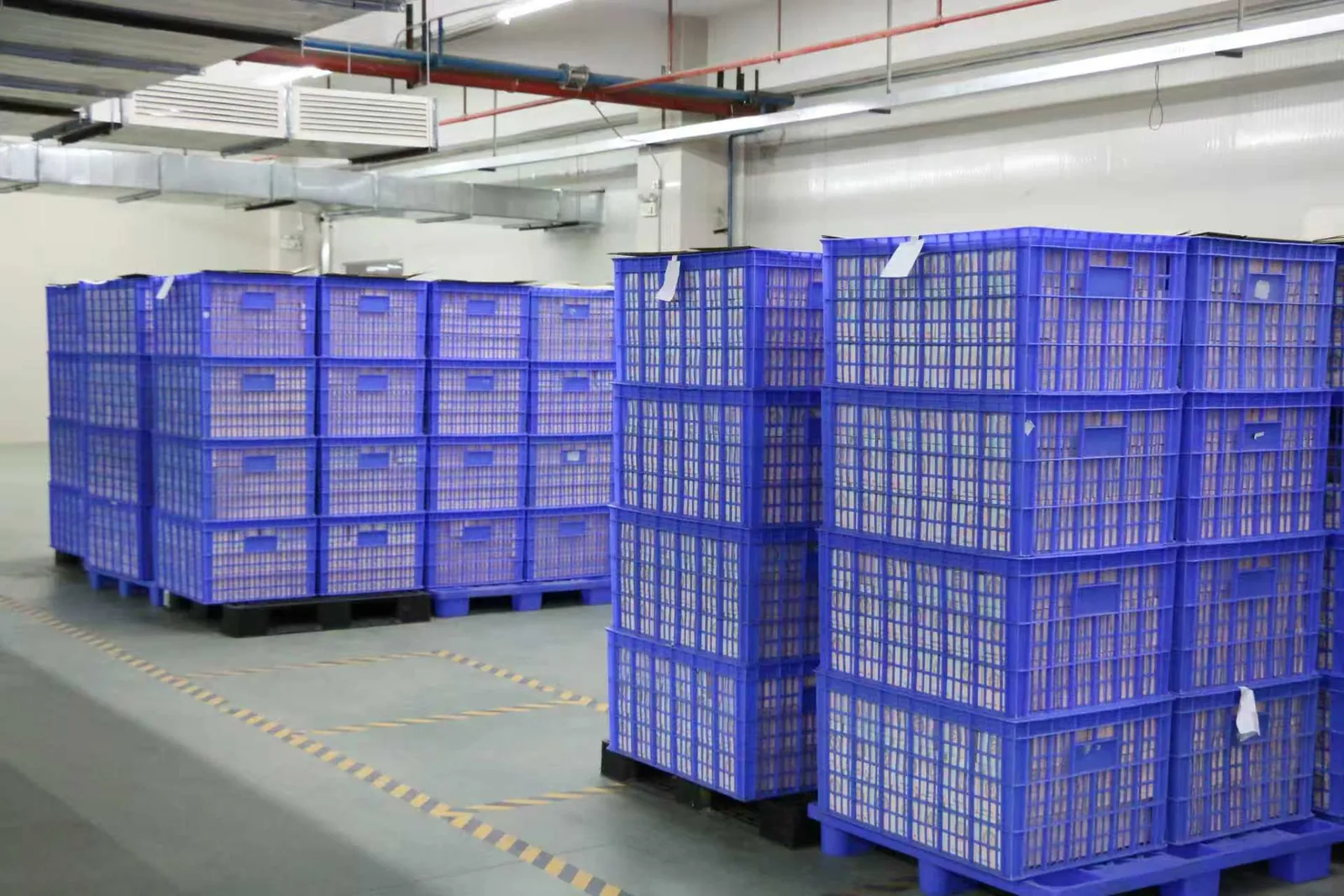
A container of sanitary pads lands in Lagos and within a week the importer knows whether the numbers were real. That container is not the interesting one. The next one is. A distributorship is decided by whether the second order arrives as a copy of the first at the same cost, and three things that never appear on a quotation decide that.
Sanitary Pad Distributor Nigeria: What the Second Order Costs
Every quotation a sanitary pad distributor Nigeria importers compare answers one question: what a container costs. That is worth asking once. The question that keeps a distribution business alive is what the tenth container costs, because by then the tooling has been paid for twice or not at all, the specification has held or drifted, and the cost per carton has fallen or climbed. None of that is negotiated. It is decided inside the plant.
A reorder is not a repeat purchase. It is a fresh production event that has to reproduce an earlier one, and a plant can only reproduce what it kept. Three artefacts do that work: the print tool, the retained sample from the closed batch, and the cutting plan that fixed the size ratio. Lose any one of them and the next order is a new product wearing the old name.
Individually, none of the three is expensive. What is expensive is finding out, four months in, that the tool was scrapped, the sample discarded, and the ratio belonged to a buyer who has since left.
The Print Tool Is Not in the Invoice
Flexible packaging is printed from a cylinder or a plate cut to the repeat length of one artwork. The tool is made once, stored somewhere, and costs money before a single carton exists. It never ships and never appears as a line in a price, which turns the question of who holds it into a commercial question wearing technical clothes.
The answer often surprises buyers. A tool can sit with a printer the factory does not own, in which case a reorder inherits that printer's queue and its pricing. It can also fall under a storage policy that treats idle tools as scrap after a period, so a brand ordering once a year pays for the tool every year without being told. Keeping plate making and printing under one roof removes the variable, which is how our converting capability is arranged.
The instruction is short. Write the tool location into the first purchase order, and treat a change of artwork as an order for a new tool rather than as an amendment to an old one.
Batch Closure Decides Whether a Reorder Is a Copy
A batch is closed when samples are pulled off the running line, sealed, dated and put away. That retained sample is the physical definition of what you bought. It is what gets compared when a carton arrives and reads differently, and it is the only object in the whole relationship that cannot argue back.
The mechanism explains why some plants answer a consistency question in an afternoon while others cannot answer it at all. A sample pulled from the run and sealed before the batch closes is evidence. A photograph, a spec sheet and a memory of a phone call are recollections, and recollections converge on whatever the person holding them prefers.
This is also where a mid-year change in pack count quietly becomes a new SKU. The core is unchanged, the film is unchanged, and the retained sample no longer matches, so the comparison restarts. A distributor who changed counts for a new account finds the product they approved is not the one they can reorder under that approval.
The Size Ratio Is a Cutting Plan, Not a Preference
A carton holds a mix of sizes, and that mix is not a marketing decision. It is a nesting problem. Patterns are laid out across a web to waste as little material as possible, and the ratio that wastes least is rarely the ratio a market most wants to buy. Where the two disagree, the plant either runs what the plan supports or accepts more waste, and the difference surfaces in pieces per size rather than in the headline price.
For a sanitary pad distributor Nigeria serving open-market wholesalers, the ratio inside the carton is often the first thing a sub-dealer objects to, because a carton that is heavy in one size and thin in another does not break into saleable units no matter how good the unit price looked.
So the ratio belongs in the purchase order with the pieces per carton beside it. A ratio without a carton count is an instruction the plant has to guess at, and the guess is where the second order stops matching the first.
Why Two Containers Have to Move at Once
A shipment is not one event. It is a queue: a production slot, an inland haul, an ocean leg, a clearance, and an inland move to the distributor. Stock has to cover the entire queue, not the sea part of it, which is why a distributor with one container in the water and nothing behind it is exposed for far longer than a voyage.
That arithmetic is why overlapping shipments exist, and why they are not a symptom of over-ordering. Once the queue is longer than the selling season, supply stays continuous only if the next order is placed before the current one clears.
The plant controls one segment of the queue and no more: the production slot and the batch closure that ends it. Ordering earlier does not shorten clearance, and asking for a shorter lead time usually means asking for the least compressible part, because a slot can be moved while a tool, a film and a closure cannot be skipped. We ship from China and do not hold stock locally, so the queue is what a buyer in Lagos is actually committing to.
None of this is specific to one country. The same questions arrive from a sanitary pad distributor Kenya buyers already know, from a sanitary pad distributor Ghana placing a first order, and from a sanitary pad wholesaler Lagos who has done nothing else for a decade. Different order, same set.
The Register Does Not Move With the Relationship
Importers usually meet the paperwork layer later than they should. The product file that allows a sale in the destination market is filed in the name of the importing entity, describes a production site and a product, and stays with that entity. It is not an asset of the brand, and not an asset of the plant.
That matters at the precise moment a distributorship changes hands. A new importer starts with no file, and a new production site means the existing file no longer describes what arrives at the port. Either change opens a filing cycle that runs on an authority's clock rather than a commercial one, which is how a switch made to save money in month nine leaves a market without supply in month ten.
The factory's part in this is narrow and worth saying out loud: consistent invoices, packing lists, carton marks and a specification sheet that agree with one another. Anything past that belongs to the importer. A distributor who expects the plant to carry it is buying a promise that nobody in the chain can keep, and a sanitary pads supplier who volunteers to carry it is telling you something about how the next dispute will go.
What to Put in Writing Before the First Run
Five lines a sanitary pad distributor Nigeria should get in writing. All cheap now, expensive to rebuild from memory later.
- Where the print tool is held, who paid for it, and what happens if the artwork changes.
- The retained sample rule: one sealed sample per batch, dated, kept where both sides can reach it.
- The size ratio and the pieces per carton, stated in the same line of the purchase order.
- Who holds the editable artwork file, as distinct from the approved proof.
- The notice window for a reorder, measured in production slots rather than in weeks.
Small first orders are exactly when these lines get dropped, because both sides are concentrating on quantity and price. That is the wrong trade: the minimum order quantity is a number you can renegotiate later, while a scrapped tool and a discarded sample are facts you cannot.
Where a Comparison Between Two Plants Breaks
Two quotations can be identical on paper and different in every way that matters six months later. The table is the short version.
| What the quotation names | What the reorder actually needs | What to ask instead |
|---|---|---|
| A price per carton | The cost of the second run after tooling is amortised | Who pays for the tool, and is it stored for reuse |
| A pack count | The pieces per carton and the ratio behind them | Send the cutting plan with the count written on it |
| A lead time in days | The queue from production slot to inland delivery | When does the batch close, relative to the sailing |
Read the third column as a test, not a checklist. A plant that answers all three without leaving the room has been asked before, and the wholesale buying guide runs the same arithmetic from the buyer's side.
If you are weighing plants for a Nigerian distributorship, send the pack count and the ratio you intend to sell, plus the artwork if it exists. We will answer with the four lines that decide the reorder: where the tool lives, the retained sample rule, the ratio with pieces per carton, and the notice window in production slots. Send the brief here and it comes back as a document, not a price.
Frequently Asked Questions
Does a reorder cost the same as the first order?
Only if the tool, the retained sample and the size ratio all survived. When any was scrapped or changed, the second order carries a setup cost the first one absorbed, and the price rises for a reason unrelated to greed.
Who holds the print cylinder or plate after the first run?
Usually whoever printed, not whoever paid. Ask before the order is placed and write the answer into the purchase order. A tool stored under someone else schedule can be unavailable, scrapped or repriced without your consent.
Why does a change in pack count need a fresh approval?
Because the retained sample no longer matches what the line runs. It is the physical record of what you approved, so once the count, film or carton changes, the comparison restarts from a new sealed sample.
Can one plant run two size ratios for the same product?
It can, at a cost. A ratio is a cutting plan, so a second ratio means a second layout and more waste on both runs. The cheaper route is to fix one ratio for the volume you can commit to, and to state the pieces per carton next to it.
How far ahead should the next order be placed?
Far enough that the current container clears before the next is needed, which is longer than the ocean leg alone. Measure the whole queue from production slot to inland delivery, then order so that two shipments overlap rather than follow each other.