
Night care
Eight hours in one position, then another. The waistband has to hold through turning without digging in, and the leg gather has to stay seated while the body moves. This is the case the pant format was built for.

Two sizes cover most of the market, and the difference between them is a few centimetres of hip. This page explains what the numbers on the bag actually mean, how to measure for them, and what changes when a wearer moves from one size to the other.
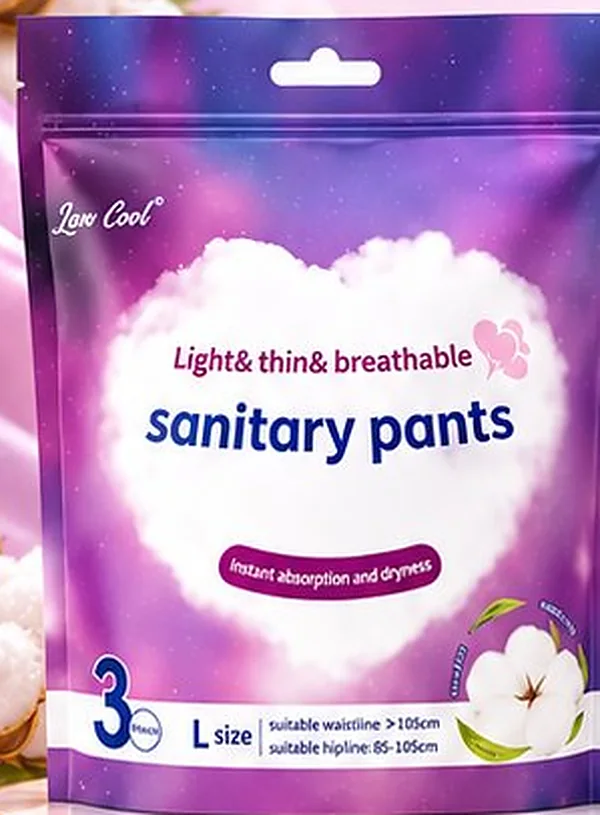
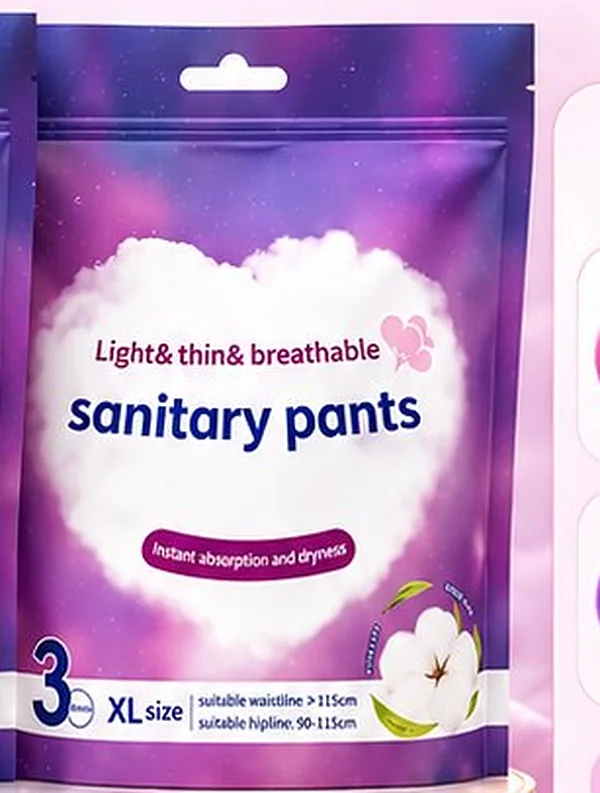
A sanitary pant is a single elastic garment with the core built into it. That means fit and function are the same decision, and the size printed on the bag is doing more work than the absorbency figure on the back.
When a wearer reports a leak with a pad, the usual causes are saturation, a fold in the pad, or adhesive that let go. When a wearer reports a leak with a pant, the cause is almost always the fit at the leg opening. Too large and the gathered elastic cannot sit against the crease of the leg, so liquid travels sideways along the surface instead of into the core. Too small and the waistband rolls down under tension, which drags the whole garment out of position during the night. Neither failure appears on a specification sheet, and neither is solved by adding pulp.
This is why the size decision deserves more attention than it usually gets in a retail listing. A buyer comparing two products on absorbency is comparing a number that is already sufficient in most cases. A buyer comparing them on fit range is comparing the thing that actually generates returns. For a distributor, the practical consequence is that the size split in the first order matters more than the total volume: an order that is 80 percent L will produce complaints from the 20 percent who needed XL, and those complaints travel further than the satisfied majority.
There is a second reason size comes first. Sanitary pants are bought by people who are not in a position to experiment. The purchase is often made in a hurry, in a pharmacy or a supermarket aisle, by someone who needs the product to work on the first night. A pack that states a centimetre range on the front panel removes a decision that a letter alone leaves open. That is not a marketing detail. It is the difference between a first purchase and a repeat one, and repeat purchase is the only number that matters to a retailer deciding whether to keep the line.
The rest of this page is written for two audiences at once. The first is a shopper trying to work out which bag to pick up. The second is a buyer or brand owner deciding what to print on that bag and how many of each size to order. Both need the same underlying information, presented the same way.
The table below is the current specification for the LanCool sanitary pants line. Every figure is printed on the front panel of the bag, so a shopper can check it in the aisle without opening anything.
| Size | Hip range | Stretched waist | Pieces per pack | Cut for |
|---|---|---|---|---|
| L | 85 – 105 cm | over 105 cm | 3 | Closer fit through the seat and thigh |
| XL | 90 – 115 cm | over 115 cm | 3 | More room through the seat and thigh |
The overlap between the two sizes is deliberate. An elastic garment is not a rigid container, so a band of bodies can wear either size comfortably. Rather than forcing a hard break at a single centimetre, the range is stated honestly and the wearer chooses. In practice, the overlap band is where most repeat customers sit, and it is also where most first-time returns come from when the choice is made on a letter alone.
Both sizes carry the same core construction: 4 g of wood pulp with 1.5 g of superabsorbent polymer in L, and 5 g with 1.5 g in XL. What changes between sizes is the pattern, not the material. The core is extended proportionally, the leg gather is re-tensioned rather than simply scaled, and the waistband elastic is cut to a different length so that the stretched circumference differs by roughly ten centimetres.
That last point is the one most often missed in a product comparison. A factory that scales a pattern by a single ratio will produce an XL that is a stretched photograph of an L: the same tension, the same gather, a larger outline. The result fits at the waist and gaps at the leg. Re-tensioning the gather per size costs almost nothing on the line and is the difference between a garment that behaves and one that merely measures correctly.
Three pieces per pack is the standard configuration for this line. It exists because the pant is a higher unit cost than a pad and because the purchase is usually situational rather than routine. Ten-piece packs and mixed cartons are produced for private label orders, and the pack count can be changed without touching the product specification.
Body size changes slowly, so a measurement taken properly once is worth more than a guess taken every time a pack runs out. Here is the sequence we recommend to retail staff explaining the range at a shelf.
Stand with feet together. Run the tape around the fullest part of the hip and seat, level all the way round, over underwear rather than over a garment. This is the number that decides the size.
Measure the natural waist, the narrowest point above the navel. Use it as a confirmation rather than a decision: if the waist is far above the stretched figure for the size, move up one.
If the hip sits inside 90 to 105 cm, both sizes wear. Take L when the wearer prefers a close fit under clothing, XL when the priority is ease of pulling on and off.
A tape measure is not always available, and a size guide that assumes one is not much use in a supermarket. The fallback rule we give retail staff is the waistband of the underwear the customer already wears. If the waistband sits comfortably and does not roll, the hip is almost certainly inside the L range. If the customer habitually buys underwear one size up, or reports that waistbands leave marks, the XL is the safer first purchase.
The measurement that people get wrong most often is the hip, and the error is almost always too small a figure. Measuring over jeans, measuring with feet apart, or measuring at the widest point of the waist instead of the seat all produce a number five to ten centimetres below the real one. Since the two sizes are separated by roughly ten centimetres of range, a single systematic error of that size is enough to push a wearer into the wrong bag.
Height is not part of the calculation. A taller wearer with the same hip measurement wears the same size, because the garment is cut to the seat rather than to an inseam. What does change with height is where the waistband lands on the torso, and that is a comfort preference rather than a sizing rule.
For retail and e-commerce, the most useful thing a brand can publish is not a letter chart but a centimetre range, repeated in the listing title, the pack front and the size sheet. It costs nothing to print and it removes the single most common pre-purchase question.
The size is the same across all four. What changes is how long the garment is worn, what the wearer is doing, and therefore which property of the construction is doing the most work.
Eight hours in one position, then another. The waistband has to hold through turning without digging in, and the leg gather has to stay seated while the body moves. This is the case the pant format was built for.

A long flight, a night bus, a station with no usable washroom. The value here is that nothing has to be removed to change, which matters more than absorbency when the alternative is a queue.

The first two days are when a pad alone is least reliable. The pant carries the same core family with more pulp in XL, and the containment comes from the garment rather than from adhesive holding a pad in place.

For the days around a period, or when a cycle is unpredictable, the pant works as a low-attention option. Worn under clothing it reads as ordinary underwear rather than as a product.
Across all four situations, the property that decides whether the product is bought again is not absorbency. It is whether the garment stays where it was put. A pant that shifts during the night produces a leak regardless of how much pulp sits in the core, and a pant that is audible when the wearer stands up fails in a shared office before it fails in use.
Travel deserves a separate note because the constraint is different. On a long journey the wearer cannot change in private, so the garment is worn for longer than the design case assumes. That pushes the requirement toward the back sheet: a breathable film lets vapour out, which is what keeps the experience tolerable over ten or twelve hours. A non-breathable film is cheaper, passes every absorbency test, and produces exactly the complaint that ends a repeat purchase.
The daily backup use is the one most often left out of a product listing, and the one that drives the largest share of volume in mature markets. It is also the use that depends most heavily on the garment reading as ordinary underwear, which is a design question rather than a performance one. Quiet film, a matte surface, no visible outline under clothing: none of these appear on a specification sheet and all of them decide whether the product is worn on a day that is not a period day.
Most fit problems produce one of three symptoms. Each points at a different cause, and only one of them is solved by changing size.
The size is too large. The gathered elastic cannot sit in the crease of the leg, so liquid travels along the surface. Moving down one size usually resolves it; adding absorbency never does.
The size is too small, or the waistband is sitting too high. A mark that fades within an hour is normal for an elastic garment. A mark that persists, or that the wearer feels, means one size up.
The waistband is under tension, which happens when the garment is stretched to its limit. This is a sizing problem rather than a design one, and it is the most reliable signal that a wearer needs XL.
Two of these three symptoms are solved by changing size, and one is not. Marks at the waist and rolling down both point upward: the garment is at or beyond the edge of its stretch range, and the fix is the next size. Gaps at the leg point the other way, and the fix is downward. The confusion arises because all three are described by customers as leaking, which is why a complaint log that records only the word leak tells a factory nothing.
There is a fourth case that looks like a sizing problem and is not: a wearer who is between sizes and chooses the larger one for comfort, then reports gaps at the leg. The garment is behaving correctly for its size; the choice was wrong for the body. This is the case the overlap range in the size chart is designed to address, and it is the reason the hip range is printed on the pack rather than left to a letter.
For a brand handling returns, the practical instrument is a two-question script at the point of complaint: where did the product fail, and what does the waistband feel like. The first answer separates leg gaps from waist problems. The second confirms whether the garment was under tension. Two questions, thirty seconds, and the return reason becomes usable data instead of a statistic.
None of this is unique to this product. It is the ordinary consequence of selling an elastic garment in two sizes: the range has to be communicated clearly, the overlap has to be explained, and the failure modes have to be mapped to a cause. A factory that does this well sells fewer sizes with fewer complaints than one that adds sizes to cover the gaps in its own communication.
The size question changes shape once it moves from a shopper to a distributor. A shopper picks one bag. A distributor picks a ratio, and that ratio is fixed for a season once the container ships.
The starting point that works in most markets is 65 percent L and 35 percent XL. It is not a universal figure, and it is not derived from a body size survey: it is the split that most first orders settle on after one round of sell-through data, and it is offered here as a starting position rather than a rule. Markets with a larger average body size move toward 55 / 45. Markets where the product is sold mainly as an overnight item skew further toward XL than markets where it is sold as daily backup.
Pack count is the second decision, and it is easier to get wrong than the size split. A three-piece pack sells at a low unit price and suits a trial purchase. A ten-piece pack lowers the cost per piece and suits a household that has already decided. Most markets support both, with the small pack carrying the shelf presence and the large pack carrying the margin. The mistake is to launch with only the large pack in a market where the brand is unknown, because the first purchase is a trial and a trial is priced by the pack, not by the piece.
Label language is the third. A centimetre range printed on the front panel is only useful if it is printed in a unit the shopper reads fluently. For markets where inches are the convention, we print both. For markets where sizing letters differ from the local underwear convention, the letter is kept for shelf consistency and the centimetre range does the actual work. This costs a line on the artwork and removes a category of pre-purchase question.
Artwork changes are handled inside the private label programme, and the size block is treated as a fixed element rather than a design variable. The reason is practical: a size figure that moves between print runs, or that is set in a decorative typeface, is a compliance problem in most destination markets and a customer service problem in all of them. We keep the size block in a fixed position, in a fixed typeface, at a fixed minimum size, and design the rest of the bag around it.
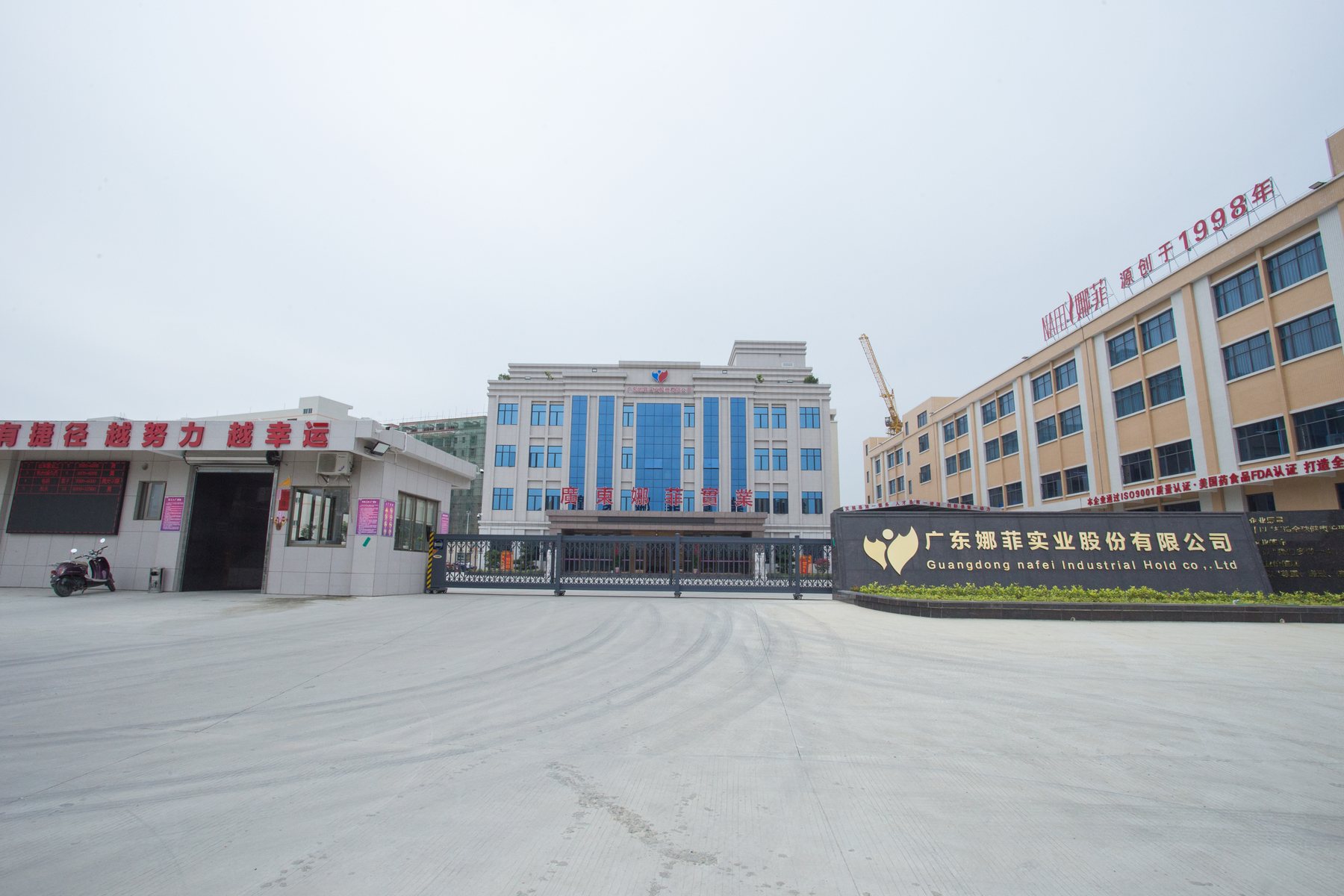
Sampling for a new size follows the same path as any other specification change. A pattern is cut, a short run is produced, and the sample is measured against the stated range before artwork is finalised. Sampling runs about two days once the specification is agreed, and bulk production typically follows 25 to 30 days after sample approval. Buyers who need a size sheet for retail staff or for an e-commerce listing can request one directly and receive it in English or in the destination language.
The same dozen questions come up in retail conversations and in first enquiries. They are answered the same way here as they are on the phone.
Tell us the market, the pack count and the retail price band. We will send the current size sheet and a suggested split, or tell you honestly where the range does not fit.