
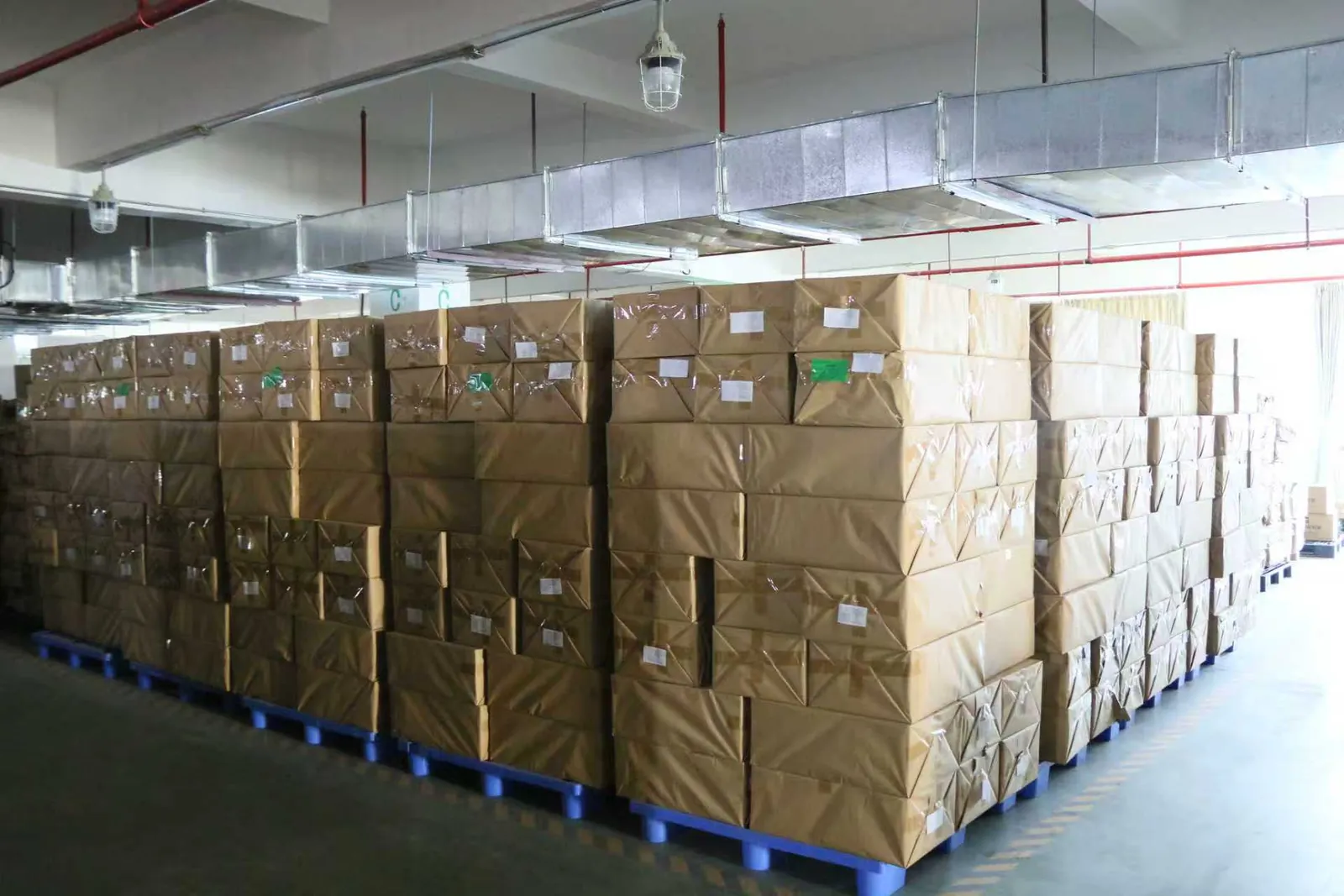
A Brazilian buyer will often answer a quote with one question that has nothing to do with the price: how many cartons fit in a container. That is not a shipping detail. Two lines of the Brazilian landed cost are calculated on the freight rather than on the goods, and one of them sits inside its own tax base. A supplier who wins on unit price can still lose on cubic.
Two Cost Lines Are Calculated on the Freight
Start with the federal import tax. It is assessed on a customs value that already contains the ocean freight and the insurance, so a price quoted free on board is not the number the tax is applied to. The freight is added back before the calculation begins, and the buyer pays tax on a figure the supplier never quoted.
Then there is the merchant marine levy, charged on the ocean freight itself. A product that is light but bulky pays a share of that levy out of proportion to what it is worth, because the levy follows the transport invoice and not the goods invoice. Nothing about the pad's construction changes it.
The third line is brokerage, charged once per import declaration. Split one order into three shipments and it is charged three times, which is why consolidation is worth arguing about even when each individual shipment looks too small to matter.
None of these lines responds to a discount on the pad. That is why experienced importers ask for freight and goods to be quoted separately even when they intend to nominate their own forwarder, and why a delivered price with freight buried inside it is hard to compare against anyone else's.
Why a Cheaper Pad Loses to a Tighter Carton
An absorbent pad is mostly air. The compression step after folding decides the flat width of the bag, the bag decides the internal dimension of the carton, the carton decides the pallet pattern, and the pattern decides how much of the container floor is used. The saving from a slightly thinner pad is smaller than the saving from a slightly tighter bag.
That claim is falsifiable. Take two suppliers whose unit prices differ, run the carton arithmetic for both, and see which container carries more units at the same freight. Buyers who compare on sanitary pads wholesale in Brazil terms do this by habit; buyers who compare on unit price alone usually discover it after the first shipment, when the entry has already been booked and the container has already sailed.
The Order in Which the Landed Cost Is Assembled
A Brazilian landed cost is assembled in a fixed order, and the order matters more than the rates, which change with policy and are the importer's business to track rather than the supplier's.
| Line on the sheet | What it is calculated on | Who can move it |
|---|---|---|
| Federal import tax | A value that already contains freight and insurance | The importer, through the value declared |
| Merchant marine levy | The ocean freight, not the goods | Whoever books the freight |
| Brokerage | One declaration, not one carton | The importer, by consolidating shipments |
| State tax | A base that already contains the tax itself | The state, not the negotiation |
| Terminal and storage | The waiting time of the container | The departure schedule |
| Carton configuration | The cubic, and through it every freight-based line above | The plant, before the print plate is cut |
Read the last row again. Five of the six lines above sit outside the supplier's reach, and the sixth is fixed long before the price is agreed.
The Product File Belongs to the Importer
Absorbent hygiene products enter Brazil as health-regulated goods. The file that covers a product is held by a company established in Brazil, and that company answers for the label. A sanitary pads supplier in Brazil cannot hold the file on the buyer's behalf, and cannot transfer it to whoever pays more.
The import licence is requested by the importer against that file, and where one is required it has to be granted before the cargo sails. A container that leaves ahead of the grant arrives without cover, and the cost of that mistake lands on the importer's account rather than on the supplier's.
The practical consequence is uncomfortable for brand owners. Change the importer and the holding company named on the label changes with it, which means new artwork for every bag and carton that carries the name. Same product, new distributor, new plates.
One Heading Covers Pads and Disposable Menstrual Pants
The customs heading for absorbent hygiene articles covers both sanitary pads and disposable menstrual pants. That single heading is why a buyer can trial both lines under one file, and why the description on the licence and on the invoice has to follow the heading's own wording instead of your catalogue name.
The first thing that gets rewritten for Brazil is therefore your product name, not your specification. A buyer who wants the trade name on the invoice will normally be told to keep it on the label and leave the declaration in the heading's language.
This is also where a pads manufacturer earns or loses a reprint: the artwork has to satisfy the label rule and the heading's description at the same time, and those two are written by different authorities, for different reasons, on different schedules.
Where the Cubic Is Actually Decided
Cubic is not decided in the quotation. It is decided at the filling station, where the bag's flat width is set by the volume of the stack inside it, and again at the pallet, where a carton that overhangs the footprint loses its lane in the container.
A micro-perforated film lets air out and lets the compression go further, but it also gives the stack somewhere to move, so a fill size that works for one film is wrong for another. Film choice and bag dimension are one decision, not two.
The arithmetic is done on the outside of the carton: length, width and height, then how many cartons sit on one pallet layer, then how many layers the container height allows. Nothing in that chain reads absorbency, thickness in microns, or the count printed on the bag.
Two consequences follow. A bag that looks generous on a shelf costs cubic in a container, and a carton chosen to suit a retail shelf may waste the container floor. The pallet pattern should be agreed in writing before the carton is specified, not after.
What the Plant Signs and What It Only Supports
The plant issues the commercial invoice, the packing list and a general origin document. Buyers sometimes ask for a preferential origin form; between China and Brazil there is no preferential arrangement, so the origin document establishes where the goods were made and does not change the duty.
Everything else in the chain belongs to someone else: the import licence to the importer, the declaration to the broker acting in the importer's name, the bill of lading to the carrier, and the label's legal responsibility to the company named on it.
Knowing that boundary is useful in a negotiation, because it stops a supplier from promising a paper it can never issue. It is also why our factory capability page describes lines and testing rather than customs outcomes.
A Short List Before You Quote Brazil
Five questions will save a reprint and a re-declaration, and all five are answerable before a sample is approved.
- Which Brazilian company holds the health file, and is it the same company that will appear on the label?
- Which wording will the importer declare under the heading, written in the heading's own language?
- What pallet pattern does the buyer's warehouse accept, and what carton dimension does that pattern require?
- Who books the freight, and will freight appear as a separate line in the comparison?
- Which cartons may be combined into one declaration, and which must stay apart?
If a buyer cannot answer the first two, the price is not the problem yet, and no discount will fix it.
Where a Sanitary Pads Supplier in Brazil Earns Its Margin
Buyers who search for a sanitary pads supplier in Brazil are usually looking for a plant that can serve the market, not a plant inside it. We have run the plant since 1998, we ship from China and do not hold stock locally, so the margin we can protect is the one that comes from getting the carton, the label and the declaration right the first time.
That is also the honest answer to a common request. When you import sanitary pads from China to Brazil, the two expensive mistakes are artwork that names the wrong company and a carton that wastes the container floor, and both are decided before production rather than at the port.
A sanitary pads manufacturer in Brazil would meet the same health file and the same heading, which is why comparing a local quote with an import quote on unit price alone tells you very little. Put both on the landed sheet, in the order above, and the comparison starts to mean something.
Send the carton drawing, the label wording and the heading's description before you place an order. We will return the three points where your artwork and your declaration disagree, and say which of them costs a new plate. That comparison is the part of the work a sanitary pads supplier in Brazil is actually paid for; a scope note sits on our supplier page, and the wider purchase file is covered in the wholesale buying guide.
Frequently Asked Questions
Which documents does the plant issue for a Brazilian import?
The commercial invoice, the packing list and a general origin document. The import licence, the customs declaration and the bill of lading are issued by the importer, the broker and the carrier, not by the plant.
Why does carton size change the Brazilian landed cost?
Because the federal import tax is assessed on a value that includes freight, and the merchant marine levy is charged on the ocean freight itself. A carton that wastes container space raises both lines without changing the price of a single pad.
Can the label name our own company instead of the importer?
The label has to name the company that answers for the product in Brazil, which is the holder of the health file. A brand can appear as a brand, but the responsibility line follows the file holder, so changing importer means new artwork.
Does one file cover both pads and menstrual pants?
Pads and disposable menstrual pants sit under the same customs heading, so one file can cover both. The description declared on the licence still has to follow the heading's wording rather than the trade name printed on the bag.
Does an origin document reduce the duty in Brazil?
No. There is no preferential arrangement between China and Brazil, so the origin document establishes where the goods were made and does not change the rate applied at clearance.


