
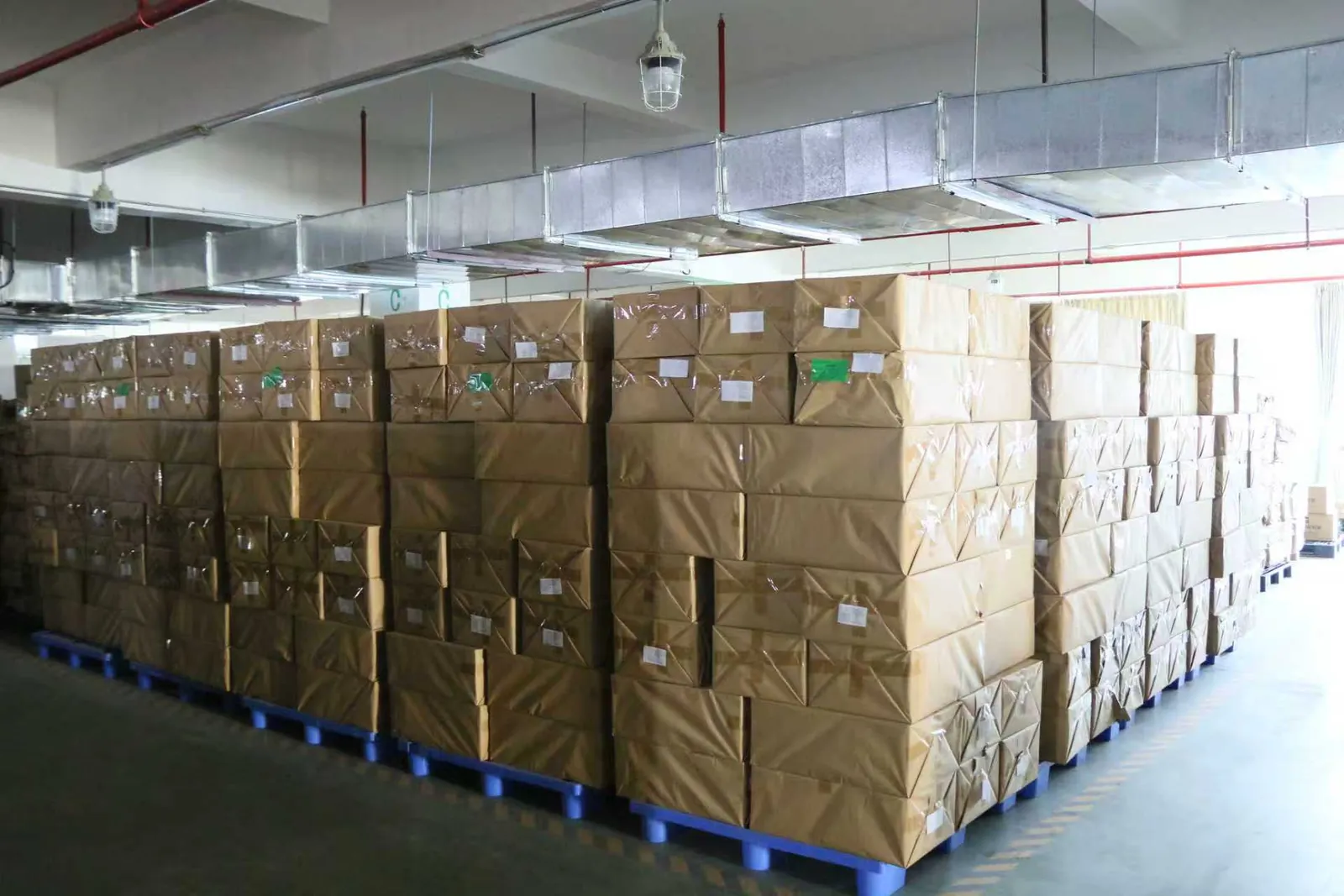
Most first orders to Mexico are lost on price, and most second orders are lost on the case. The case is the only line in your quotation that your buyer's warehouse has to live with every week, and it is usually the one line nobody argues about until the goods are already on the water.
The Case Count Is a Channel Decision
A case count is not a packing preference. It is a decision about who will touch the goods, how many times, and with what equipment.
Where small-format retail still carries a large share of volume, goods are opened, re-packed and re-delivered before they ever reach a shelf. The person doing that work sets the count, not the factory that seals the case.
So the count belongs in the request for quotation, next to the price, and a wholesale buying guide that starts with the product spec has started in the wrong place. A supplier who quotes a price without a count has quoted half an answer.
Counts also get copied. Once a figure is in a buyer's system it is reproduced in the next purchase order, the next letter of credit and the next case mark, so a count chosen by accident is a count defended for years.
Sanitary Napkins Supplier in Mexico: Who Moves the Case
Buyers who search for a sanitary napkins supplier in Mexico are looking for a plant that can serve the market, not a plant inside it. The useful question is not where the machine stands but who will move the case once it clears the port.
There are two answers, and they rarely coexist inside one order. One buyer is a distributor with routes, a re-casing area and a delivery schedule of its own. The other is a chain that receives on a dock and pushes pallets to stores without opening anything.
Ask which one you are selling to before you ask for a price. The answer changes the board grade, the count, and the number of print plates.
A sanitary napkins manufacturer in Mexico would pay for the same die and the same plate, so proximity buys response time rather than a cheaper count. That is worth saying plainly, because buyers often assume the opposite.
Two Handling Paths Produce Two Different Failures
A case that is lifted by hand fails at the corners and along the seal. A case that rides a pallet fails at the bottom layer, where the whole load is carried.
Those are not the same specification, and one board grade cannot be good at both. Corner crush is a local impact with a short duration. Bottom-layer failure is a slow compression that depends on load, time and moisture rather than on a single hit.
- Hand path: corner impact, seal abrasion, and a case that must be openable without a knife.
- Pallet path: bottom-layer compression, stacking height, and a case that survives being wrapped and unwrapped.
- Both paths: a count the handler can verify by eye without opening the case.
Note the third line. A count that cannot be checked without opening the case will be checked by opening the case, and an opened case is a damaged case by the time it reaches the shelf.
Why a Distributor and a Chain Want Different Counts
A distributor breaks cases and rebuilds mixed loads, so a larger case is cheaper for them: fewer units to handle per delivery and fewer trips from the truck to the rack. A chain dock does the opposite. It wants the case to be a pallet's building block and nothing else, because anything it cannot stack is something it has to store by hand.
One product line therefore needs two counts, which means two die-cuts, two case marks and two levels of barcode. The napkins are identical; the packaging file is not.
The path that sanitary napkins wholesale in Mexico actually takes, a distributor's rack or a chain's dock, decides which of those two cases you print. Printing both for a first order doubles a fixed cost before you have learned which channel you are really in.
This is where a first quotation usually goes wrong. The buyer describes the product, a supplier quotes the product, and the count, which is the single variable that decides the buyer's handling cost, is left to whoever runs the packing line that week.
The Reorder Is Placed in Cases, Not in Packs
Your buyer does not reorder napkins. They reorder cases, against a rhythm set by their own delivery schedule and by how much space the route can carry.
If the case count does not divide into that rhythm, the buyer carries the remainder either as stock or as a gap on the shelf, and at the end of the quarter both of those read as a supplier problem.
Anyone shortlisting a sanitary napkins supplier in Mexico should get the count in writing, then divide it into a month of their own sales. If it does not divide, the price on the quotation is not the number that matters.
What a Count Change Costs Before Plates Are Cut
A count is printed before it is packed. It appears on the case mark, on the packing list and in the invoice description, and it is cut into the die that forms the case.
Change it after the plates exist and you pay twice, once for the new plate and once for the goods already packed to the old count. Change it before and it is a line in a document, revised in an email.
That is the cheapest decision in the whole order and the one most often postponed, because a count looks like a detail until the container is loaded. A manufacturer who cannot tell you how many plates your order needs has not yet costed your order.
The Same Count Appears in Three Documents
The count reaches three documents and three different readers. A mismatch is almost never found by the first one, which is what makes it expensive.
| Document | Who writes it | What breaks when the count differs |
|---|---|---|
| Commercial invoice | The plant, from the confirmed order | The entry is built on this line, so a wrong count is a wrong declaration, not a typo |
| Packing list | The plant, per case at loading | The receiver counts against it, so every discrepancy becomes a claim against the whole batch |
| Case mark | The plant, from the buyer's artwork | The shelf is priced from it, so an old count can survive in the market after the new one is packed |
The plant writes the first two and prints the third. What it cannot do is recall the third, because artwork already in the market keeps making its own claim about how many pieces a case holds.
Where the Export File Ends and Recasing Begins
We ship from China and do not hold stock locally. There is no local warehouse and no local office; the goods arrive as an import and only become a local product once the entry is filed and the label is applied.
If you import sanitary napkins from China to Mexico for the first time, put the count in the first line of the brief rather than the last. It is the one instruction that survives every later conversation about price.
What we can hold is the count, the case mark and a closed batch, and what we can show for it is the packing capability behind those three. What we cannot do is pick your channel for you, re-case goods after arrival, or decide how a route in another country should load its truck.
That division is not a limitation to work around. It is the reason the count has to be settled at quotation stage: after loading, every adjustment costs a plate, a pallet or a claim, and none of those three are cheap at destination.
Frequently Asked Questions
Does the case count change the price per napkin?
It changes the price per napkin less than it changes the cost of handling. A larger case usually lowers the unit cost of packing and raises the cost of the last leg, so the two effects pull in opposite directions and only your own delivery schedule can settle which one wins.
Can one case count serve both a chain and a distributor?
Not without a compromise that appears later. A chain wants a case that builds a pallet; a distributor wants a case that can be carried and broken. One count can be tolerated by both, but the tolerance is paid in handling time, and handling time is the cost your buyer remembers.
What should a first order from China include besides the product spec?
A channel description, a reorder rhythm, and the case mark you want to see. Those three decide the count, the board grade and the plate count, and settling them before production is far cheaper than settling them after packing.
Who applies the retail label in the destination market?
The importer, not the plant. The label that faces the shopper is applied and owned where the goods are placed on the market, which is why the plant should supply the data lines and let the importer print the rest of the panel.
How do I compare two quotes when the pack counts differ?
Normalise both to a price per piece, then add the handling that each case implies. A lower price per piece inside a case your warehouse cannot use is not a lower cost, and the gap only becomes visible after the first reorder.


