Home >> Brand >> LanCool Cool
LanCool Cool · Brand Story

LanCool Cool: a mint layer built for hot, humid days.

LanCool Cool is the variant we developed after a Thai distributor sent back a simple observation: the product worked, but in April it felt like wearing a jacket. The answer was not a thinner pant. It was a slow-release mint layer that changes how the surface feels without touching the absorbent construction underneath.

  • Slow-release mint layer
  • Same wood pulp and SAP core as the Light range
  • Made in Shanwei, Guangdong since 1998
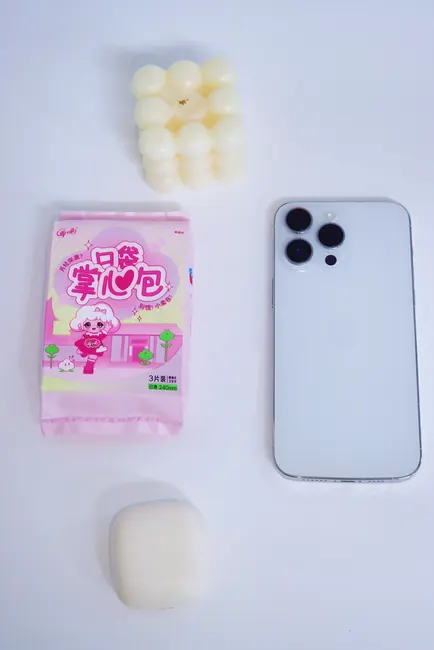
LanCool Cool menstrual pants Thai retail pack with a slow-release mint layer for hot and humid climates
Why A Mint Layer Exists

Humidity is a design constraint, not a preference.

Feminine care products are usually developed in temperate conditions and sold everywhere. In a tropical market that gap shows up as a complaint that has nothing to do with absorbency.

Woman in a hot climate, the condition LanCool Cool was developed for
01

The complaint is heat

In a market where the daytime temperature sits above 33 degrees for months, a product that performs perfectly on a leakage test can still feel wrong. The wearer's judgement is formed in the first ten minutes.

Close view of the mint layer that sits above the absorbent core
02

Change the sensation, not the core

The obvious response is to thin the product. That reduces capacity and creates a different complaint. The less obvious response is to leave the core alone and change what the surface feels like.

Globe showing Thailand and Southeast Asian markets where the mint variant sells
03

Then localise the pack

The first version shipped in Thai because that was the market that asked for it. Other Southeast Asian markets followed with their own language, once the product proved it sold.

The mint layer is a small piece of material and the hardest part of this product to get right. It has to release slowly enough to still be perceptible after an hour and gently enough not to produce a sting on first contact. A formulation that is too strong reads as a medicine; one that is too weak is undetectable and therefore pointless.

Getting that curve right took more iterations than any other component in the LanCool range. The first version released almost entirely in the first few minutes, which felt intense and then disappeared. The second released too slowly to be noticed at all. The production version sits between them: noticeable within a minute, still present an hour later, and gone by the time the product is changed.

Position matters as much as formulation. Placed directly under the topsheet, the layer releases into the surface the wearer feels. Placed inside the core, it is absorbed and lost. LanCool Cool puts it between the topsheet and the core, where it is close enough to be felt and far enough not to interfere with liquid transfer.

The commercial logic is straightforward. In a humid market, a product with a perceptible difference is easier to sell than a product with a better specification. A distributor can hand a sample to a buyer and the difference is immediate. That is worth more at the shelf than a marginally higher absorbency figure that nobody can feel.

The Format

Three pieces, two sizes, Thai retail pack.

The construction is the familiar LanCool pull-up with one addition. Nothing else in the specification was reduced to make room for the mint layer.

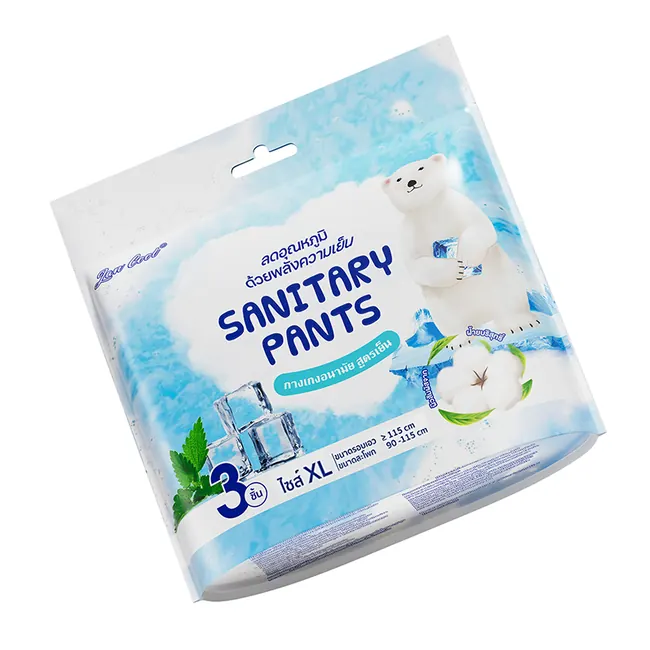
LanCool Cool L size Thai retail pack, three pieces per pack with mint layer

L · Thai Pack

Three pieces per pack. The main size for the Thai market, with the mint layer positioned between topsheet and core.

→
LanCool Cool XL size Thai retail pack with mint layer

XL · Thai Pack

Same construction and same mint layer, wider hip range. Core weight scales with size; the mint layer dose does not.

→

What the mint layer does not do

It is worth being precise about this, because the category is full of claims that do not survive a regulator's reading. The mint layer produces a sensation. It does not lower skin temperature, it does not treat anything, and it does not make the product suitable for a wearer who should not be using a scented or mint-containing product.

What it does is change the first ten minutes of wear, which is when a wearer decides whether a product feels acceptable. In a humid market that decision is dominated by sensation rather than by capacity.

3pieces per pack, Thai retail format
1mint layer above the core, no core change
2sizes, L and XL
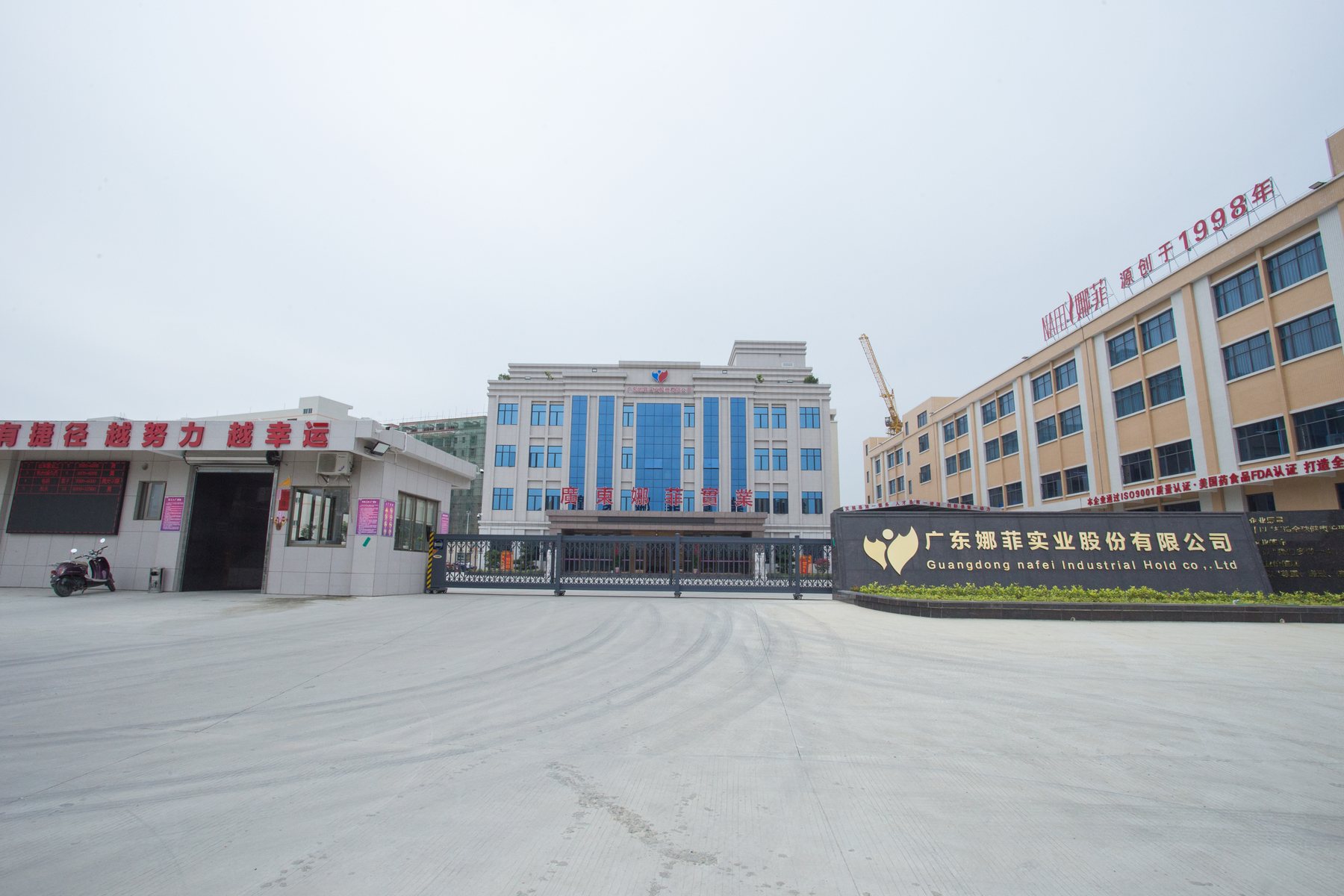
Nafei factory in Shanwei, Guangdong, where LanCool Cool is produced

The pack is printed in Thai as standard. That is unusual in this category, where most stock packs ship in English and localisation is treated as a private label project. The reason is that the mint variant is not a general-purpose product: it was built for one market and the pack reflects that.

A Thai-language pack also removes a barrier at the shelf that an English pack creates. In a pharmacy, the customer reads the front panel before asking for help. If the front panel is in a language she reads slowly, the product loses the moment. Localising the stock pack cost a print run and returned a product that sells without explanation.

For buyers in other Southeast Asian markets, the same construction ships with different artwork through the private label programme. The mint layer specification stays identical; only the pack changes. That is the advantage of a product built around one component rather than around one pack design.

Materials & Structure

One added layer, nothing removed.

Every other component in this product is the standard LanCool construction. That is deliberate: the mint variant should not be a different product, only a differently felt one.

Topsheet

Through-air-bonded nonwoven, same grade as the standard LanCool pant. The soft hand is what the mint layer is perceived through, so the surface cannot be downgraded.

Mint layer

A mint-derived layer between topsheet and core, formulated for gradual release across a normal wear cycle. Positioned close enough to be felt and far enough not to block liquid transfer.

Core

Wood pulp with superabsorbent polymer, unchanged from the Light range. The mint layer adds a component rather than replacing one, so absorbency is not traded away.

Side barrier

Hydrophobic barrier material at the leg opening, plus an elastic nonwoven waist. In a humid market the barrier does more work because the core is under more sustained load.

The mint layer is a topical sensation layer, and that distinction matters for how the product is described. It is not a pharmaceutical, it is not a treatment, and it does not make a hygiene claim. The stock pack says a fresh sensation, which is what the layer does. Private label artwork is checked against destination labelling rules before print, because the same sentence can be acceptable in one market and not in another.

There is a genuine limitation worth stating. A wearer who reacts to mint or to menthol-type sensations should not use this variant. That is not a defect in the product; it is a property of the ingredient. The standard LanCool pant exists for exactly that wearer, which is why the range carries both rather than replacing one with the other.

The mint layer dose does not scale with size. A larger pant has a larger core because it covers more area, but the mint dose stays constant so the sensation is consistent between sizes. Scaling it would produce an XL that feels stronger than an L, which is the kind of inconsistency that generates a complaint from a customer who buys both.

Where LanCool Cool Is Made

One extra station on a familiar line.

LanCool Cool runs at the Nafei plant in Shanwei, Guangdong, on the same lines as the rest of the LanCool range, with an added station for the mint layer. The site has produced feminine hygiene products since 1998.

Adding a component to an existing construction is a smaller change than building a new product, but it is not free. The mint layer needs its own unwind, its own registration check against the topsheet, and a separate inspection point. That is why the variant carries a higher per-piece cost than the standard pant even though the core is identical.

1998feminine hygiene production on this site
2days typical sampling turnaround
25-30days bulk production after approval
See Factory Capability →
Exterior of the Nafei plant in Shanwei, Guangdong, operating since 1998
Quality & Documents

What gets checked on an added layer.

A component that sits between two other layers is invisible in the finished product. Inspection has to confirm it is there, in the right place, at the right dose.

ISO 9001

Quality management system covering production control, inspection and corrective action.

ISO 14001

Environmental management system for the site, covering waste, effluent and energy.

ISO 45001

Occupational health and safety management across the production floor.

Layer registration

The mint layer position is checked against the topsheet during the run, because a shifted layer is invisible from outside the pack.

Export documents

Packing list, commercial invoice and certificate of origin prepared in house per shipment.

Layer registration is the check that distinguishes this product from the standard pant in inspection terms. The mint layer is narrow relative to the core, so a small drift puts it partly outside the area the wearer perceives, which produces a product that feels inconsistent between pieces in the same pack.

Sensation is assessed on retention samples at agreed intervals rather than only at production. A layer that performs correctly on the day of manufacture can lose intensity in storage, particularly in a hot warehouse, and the only way to know is to open a retained sample later and compare it with a fresh one.

Certification scope is limited to what applies to this site. Where a destination market requires product-level documentation for a scented or mint-containing product, it is commissioned against that standard rather than borrowed from the unscented range.

The other check that matters here is storage stability, and it is the one buyers ask about least. A mint layer stored in a warehouse at 40 degrees for three months behaves differently from one stored at 20 degrees, and the difference is not visible in a specification sheet. Retained samples kept at ambient conditions and opened at intervals are the only practical way to know what a buyer will receive after a long sea freight.

That is also why the recommended pack is a sealed laminate rather than a loose bag. The layer is sensitive to air exchange over time, and a pack that lets air move will lose intensity before it reaches the shelf. The film choice costs a small amount per pack and protects the one component that makes this product different from the standard pant.

Market Versions

Where a fresh sensation sells.

The variant was built for one market and has since been taken up in others where the same climate logic applies.

LanCool Cool Thai retail pack for the Thailand market
01

Thailand

The origin market. Thai-language stock pack, pharmacy and modern trade channels, with the product positioned on sensation rather than on capacity.

Compact pack formats suited to Southeast Asian convenience channels
02

Southeast Asia

Vietnam, Malaysia, Indonesia and the Philippines share the climate driver. Most take the construction with local artwork rather than the Thai pack.

LanCool Cool positioned in Middle East and Gulf retail channels
03

Gulf markets

Extreme summer heat produces the same complaint. Buyers here usually take it as private label with Arabic artwork and a different pack count.

The Thai market taught us something about how this product should be sold. It does not win on a specification comparison. It wins when a customer opens a pack and notices something. That makes it a product for sampling and demonstration rather than for shelf copy, and buyers who understand that sell more of it than buyers who treat it as a line item.

Southeast Asian markets differ in how much they want the sensation. A buyer in Vietnam may want a stronger effect than a buyer in Malaysia, and the layer dose can be adjusted within a range during sample review. That flexibility exists because the layer is a separate component rather than a treatment applied to the whole product.

Gulf markets present a different challenge: the climate drives demand but the labelling environment is stricter about what can be claimed. The stock pack describes a sensation and nothing more. Private label artwork for those markets is reviewed line by line before print, which is slower and cheaper than a reprint.

The Thai channel structure shaped the pack more than the climate did. In a pharmacy, the product sits behind a counter and is handed over by staff; in modern trade it competes on an open shelf. The same three-piece pack has to work in both, which is why the front panel carries the brand and the count in large type and leaves the explanation to a side panel that only matters when someone picks the pack up.

Repeat purchase behaves differently for this variant than for the standard pant. A first purchase is driven by curiosity about the sensation; a second purchase is driven by whether the sensation was pleasant rather than merely noticeable. That means the dose has a narrower acceptable range than absorbency does, and it is why we send two doses at sample stage rather than one.

There is also a seasonal pattern worth planning for. Demand in the Gulf peaks in summer and falls sharply outside it, while Southeast Asian demand is flatter because humidity does not follow a season. A buyer serving both can hold one SKU and let the pack artwork carry the difference, rather than committing to two product specifications.
Working With LanCool Cool

How an order runs.

Six steps. The mint layer dose is confirmed at sample stage, because it is the one parameter that cannot be adjusted once the run begins.

1. Brief

Size, pack count, market and the sensation strength you are targeting. Climate and channel both feed into that answer.

2. Sample

About two days. Sample review is where the layer dose is settled, ideally by more than one person since sensation is subjective.

3. Artwork

Copy checked against destination labelling rules. Claims about sensation are the part most likely to need rewording.

4. Production

25 to 30 days after approval. The mint layer unwind is loaded and registration verified before the run starts.

5. Inspection

Layer registration, core weight, seal integrity and pack count, plus sensation comparison against the approved sample.

6. Shipping

Export documents prepared in house. Carton dimensions and weights provided so freight can be priced accurately.

The starter minimum for private label work is 10,000 pieces per size. Because the pack holds three pieces, that is roughly 3,334 packs per size, which keeps a first order manageable for a market test.

Sample approval on this product should involve more than one person. Sensation is subjective, and a dose that one reviewer finds pleasant another may find faint. Getting two or three opinions at sample stage costs a day and avoids a reprint.

Artwork review is slower on this variant than on an unscented product, because the wording carries more risk. A sentence describing a fresh sensation is acceptable in most markets; a sentence implying a hygiene or therapeutic effect is not. We review the copy before print rather than after, which is the only reliable way to avoid a reprint.

One last note on lead time. Because the mint layer is a separate component, a change to it resets the sample clock rather than the production clock. A buyer who approves a sample and then asks for a stronger sensation should expect a new sample round, not a faster line setting. Planning for that in the calendar is cheaper than discovering it in the middle of a production window.

Questions Buyers Ask

Straight answers before you enquire.

The questions that come up most often on a mint-layer product, answered the same way we would answer them in a call.

What is LanCool Cool?
LanCool Cool is the mint-chip variant of the LanCool pant, developed for hot and humid markets. A slow-release mint layer sits in the product and gives a fresh sensation on contact, while the absorbent construction stays the same as the Light range.
What is the mint chip?
A small mint-derived layer placed inside the product that releases gradually during wear. It produces a fresh sensation rather than a temperature change, and it is not a medicine or a treatment.
How long does the mint sensation last?
It releases slowly across a normal wear cycle rather than all at once at application. Exact duration depends on body temperature, humidity and wear time, and is confirmed on the sample rather than quoted as a fixed figure.
Does the mint chip affect absorbency?
No. The mint layer sits outside the absorbent core and does not replace any part of it. The wood pulp and SAP core is the same construction used in the Light range.
Which markets is LanCool Cool made for?
Primarily Thailand and Southeast Asia, where high humidity makes a fresh sensation valuable. The stock pack is printed in Thai; other languages are produced through private label.
What sizes are available?
L and XL in the stock Thai retail pack, three pieces per pack. Other configurations are available through the private label programme.
Is LanCool Cool suitable for sensitive skin?
The mint layer is a topical sensation layer, not a treatment. Wearers who react to mint or to menthol-type sensations should use the standard LanCool pant instead. We do not make a skin-safety claim for this variant.
Can I order it with my own artwork?
Yes. The private label starter minimum is 10,000 pieces per size, with bag printing carrying its own minimum depending on the specification.
Where is LanCool Cool made?
At the Nafei plant in Shanwei, Guangdong, China, on the same lines as the rest of the LanCool range, operating since 1998.
What is the difference between LanCool Cool and LanCool Light?
LanCool Light is the daytime side-tab format built around changing away from home. LanCool Cool is a pull-up pant with a mint layer, built around heat and humidity. The two solve different problems and can sit side by side in a range.
Does the pack say what the mint layer does?
The stock pack describes a fresh sensation. It does not make a medical or therapeutic claim, and private label artwork is checked against destination labelling rules before print.
What is the private label minimum?
10,000 pieces per size for the product. Bag printing carries a separate minimum that depends on the bag specification and the number of printed colours.

Sell into a humid market without a different product.

Tell us the market and how strong you want the sensation. We will send a sample at two doses so your team can choose rather than guess.

Woman outdoors in warm weather, the condition LanCool Cool was designed for
WhatsApp contact WeChat QR code

Nafei WeChat QR code