
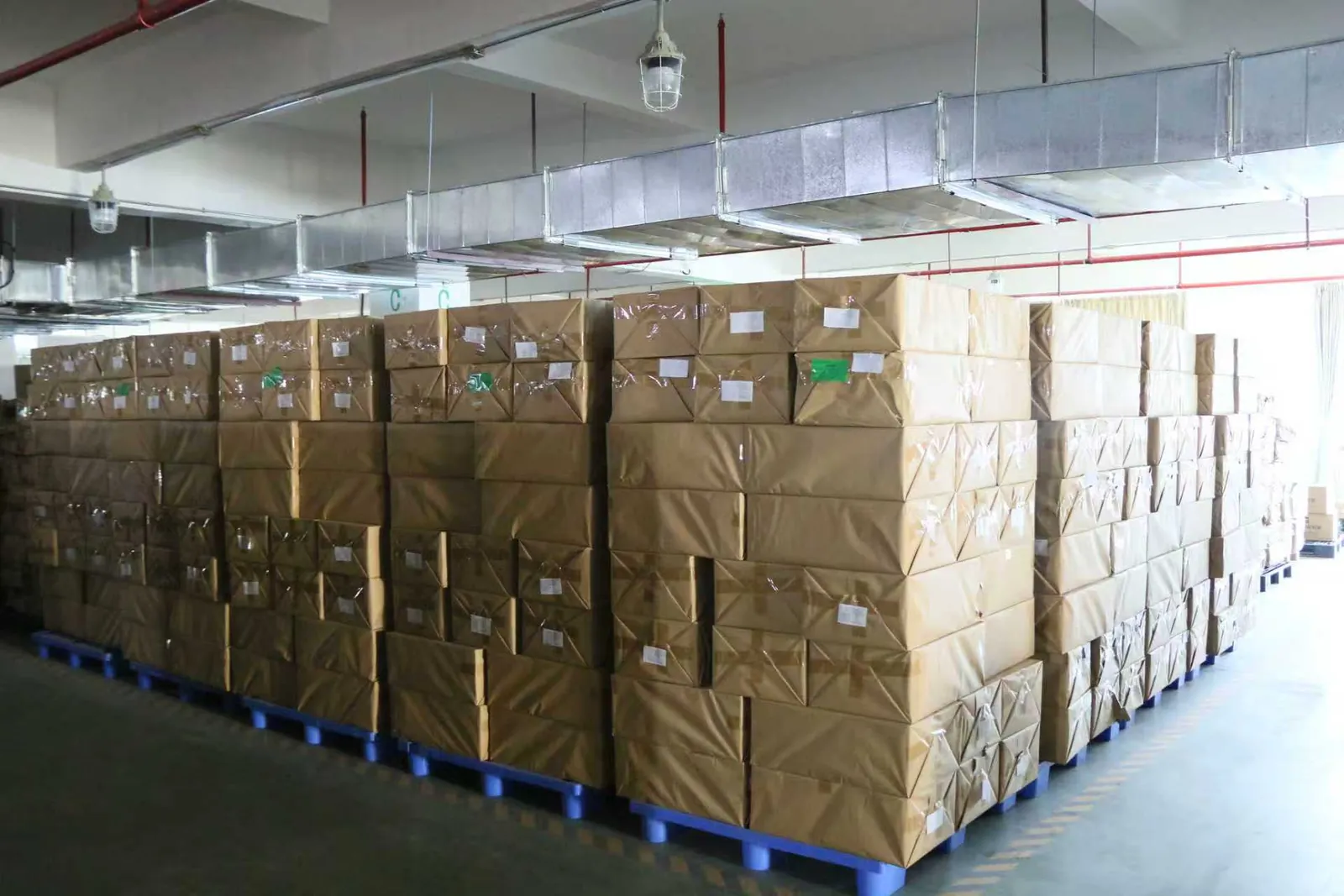
A Philippine distributor can agree a price per pad, accept a carton count, and then repack everything into single-unit pouches before the goods reach a sari-sari store. At that point the carton specification stops describing what the buyer sells. The unit on the shelf was settled by whoever bought the film, not by whoever quoted the pad, and that decision is easier to make before production than after.
Three Units, Three Owners
Every shipment of sanitary pads carries three units, and in the Philippines they usually belong to three different parties. The carton is the shipping unit and it is created at our packing station, so it carries what a carrier and a broker need: shipping marks, carton count, lot reference. The wholesale pack is created by the importer. The retail pouch is created by whoever wraps it for the shelf, and that party is rarely the same as the other two.
| Unit | Created by | What its label has to carry |
|---|---|---|
| Shipping carton | The factory at packing | Shipping marks, carton count, lot reference, gross weight |
| Wholesale pack | The importer or distributor | Product name, pack count, importer identity |
| Retail pouch | Whoever fills and seals it | The wording a shopper reads, and the party answerable for it |
The middle unit is where most arguments start. A distributor assumes the factory owns it, because the factory printed the carton. The factory assumes the distributor owns it, because the distributor set the pack count. Nobody writes it down, and the gap only appears when a pouch is opened on a shelf and the label is wrong. Our packing and converting lines are where the carton unit is fixed, and they stop at the carton.
Why the Repacker Inherits the Label
Labeling responsibility follows the act of putting product into the pack the shopper picks up, not the act of making the pad. If a distributor buys bulk and wraps single units, the distributor is the party whose identity sits on that pouch and whose wording is being read. The factory cannot write that label on its own authority, because it did not assemble that pack and does not know the shelf it will sit on.
This has a consequence that shows up in cost rather than in law. Retail film is printed from a plate, and a plate is ordered per design, not per run. A repack design is therefore a second plate set plus a second setup on the wrapping line, and both settle on the party who commissioned the design. When an importer asks what repacking costs, the honest answer is that most of it is local rather than ours.
What the Factory Still Has to Send
Asking a factory for complete documentation is usually the wrong request, because most of it has no use to a repacker. What a repacker actually needs is the short list the retail label is built from, and very little beyond it.
- The material of each layer, in the order it sits, so the retail copy describes the product rather than the category.
- The lot reference that connects a finished pouch back to a production window.
- The basis of the shelf life, including the storage condition it was set under.
- The manufacturer identity and site address exactly as they should appear.
- The packing list line that ties lot to carton, so a repacked unit can still be traced.
The distinction matters in practice. A repacker who receives a generic compliance folder learns nothing usable, while a repacker who receives the material sequence can write copy that survives a complaint six months later. Four usable lines beat a folder nobody opens, and they take less time to prepare than the folder does.
Cube Against Local Hands
The choice between factory-packed retail units and bulk pack is normally presented as a matter of preference. It is arithmetic, and the terms of that arithmetic sit outside everyone's quotation.
Factory packing moves labour to us and volume onto the ship. Bulk packing does the reverse: fewer cubic metres leave China, and the wrapping happens where hands are cheaper and the film can be bought close by. Which side wins depends on freight per cubic metre and on local hands per unit, and both of those move independently of the pad price. An importer comparing two offers on the pad price alone is comparing the wrong line of the page.
There is a second effect that is easier to miss. Bulk pack removes the retail unit from the carton, so the packing list describes loose product instead of sellable packs, and every later traceability question costs more to answer. Cheaper cube is not free, because the cost moves into administration, and a pads manufacturing quote that covers only the pad price is quoting half of the decision.
The Smallest Film Does the Work
A carton protects a carton. Once a single pouch is separated and handled on a store shelf, there is no corrugated board left to absorb anything, so the film of the retail unit carries the whole protection burden by itself.
The seal is the part that fails first, and it is also the part that cannot be checked completely. A seal strength test cuts a strip from a finished seal and pulls it apart, which destroys the specimen. That makes it a sample test taken from one lane at one moment, not a statement about every pouch in a carton, and the result is only as good as the sampling plan behind it.
This is why retail film is a specification decision rather than a purchasing detail. Two films that look identical on a roll behave differently once the pouch is thin, and the difference surfaces on a shelf weeks later, outside any window in which a claim can still be made.
What a Sanitary Pads Supplier in Philippines Buyers Ask First
Most first emails from Manila, Cebu or Davao open with the same two questions: the minimum order and the price per pad. Both are reasonable, and both are premature, because neither can be answered before the retail unit exists.
A buyer searching for a sanitary pads supplier in Philippines is usually comparing quotes built on different packing assumptions. One quote assumes a factory-packed pouch, another assumes bulk with local wrapping, and the pad inside is the same product. The gap between them is not margin. It is the unit.
Wholesale is the same conversation one level down. When people ask about sanitary pads wholesale in Philippines terms, what they are really asking is how a carton breaks into sellable units, and that answer exists before any price does. A wholesale pads quotation that skips it is a number without a unit attached.
Order the Retail Unit Before the Carton Count
A retail unit definition is five short answers, and once they are written down the carton count follows almost by itself.
- What one retail unit contains, in pads, and whether it is a pouch, a box or a wrapped stack.
- Whether you repack, or whether we pack to the retail unit at the line.
- How many retail units fill a wholesale pack, and how many wholesale packs fill a carton.
- Which film the retail unit uses, and which party prints it.
- Which party name appears on the retail pack, because that party answers for the wording.
A quotation that answers carton count without asking these five is a quotation for a different product, and it will not survive the first reorder. The pads wholesale buying guide lists the film and pack questions ahead of the price ones for that reason. We would rather quote two configurations side by side than quote one and guess.
Where We Ship From, and What That Changes
We ship from China and do not hold stock locally. There is no plant and no warehouse here to inspect, so the only version of the product that exists is the one specified before the line starts running.
The distance is why the repack question has to be settled early. If you import sanitary pads from China to Philippines ports and only define the retail unit after the film is printed, the change is a new plate and a new seal setting, not an edit. That is the sequence most sanitary pads supplier in Philippines projects get wrong.
Some enquiries want a sanitary pads manufacturer in Philippines territory they can audit in person. That does not exist, and we would rather say so plainly than imply otherwise. What we can do is settle the packing decision with you before production, so the version that arrives is the version you planned. We have been making these products since 1998.
Frequently Asked Questions
Who is responsible for the label on a repacked retail pouch?
The party that fills and seals the pouch is the one whose identity and wording appear on it, so a distributor who repacks takes over that responsibility from the factory.
Can the factory print retail film for a pack it does not assemble?
It can print a design you supply, but it cannot take ownership of wording for a pack assembled elsewhere, because it does not control the filling or the storage of that unit.
Why does bulk packing change the carton count?
Bulk packing removes the retail unit from the carton, so the carton count describes loose product rather than sellable packs, and the packing list has to be written differently as a result.
What should a first email to a supplier contain?
State the retail unit, say whether you repack, give the pack counts you want, name the film, and name the party that will appear on the retail label. Those five answers are enough to quote against.
Does an order need a repack design before production starts?
It does, because retail film is printed from a plate ordered per design, so a design change after printing is a new plate and a new seal setting rather than a correction to an existing run.


