
What a Sanitary Pants Supplier in Indonesia Cannot Quote
A buyer in Surabaya and a buyer in Jakarta can accept the same quoted number and still land at different costs, because that number names a port and not a market. For disposable menstrual pants the ocean leg is often the cheaper half of the journey. The expensive half begins after the import declaration closes, when the cargo stops being an import and becomes domestic freight.
A container price answers a narrower question than most buyers ask. It prices the goods to one named terminal, and that terminal is where the supplier's control ends. Everything after it is bought from other parties: the declaration is lodged by the consignee, the release note is issued in the consignee's name, and the delivery past the gate is contracted by whoever holds the released cargo. None of those steps belongs to the factory.
The Second Voyage Is a Separate Carriage
Indonesia reserves domestic sea carriage for nationally flagged tonnage under its cabotage principle. That single rule changes the shape of a quotation. A through ocean bill of lading cannot quietly continue from the entry port to Makassar or Balikpapan, because the leg after the entry port is domestic carriage, and the container that moves into the outer islands is booked again on different terms.
Two contracts mean two liability regimes. The ocean carrier answers under the convention that governs the bill of lading; the domestic carrier answers under its own conditions. The claim window, the limit per package and the place where a survey can be arranged all move. A buyer who first notices crushed cartons on the second vessel has usually already closed the first claim.
The Cargo Has to Stop Being an Import
Sequence is what makes the second leg late. The container is discharged, the declaration is lodged, duty is assessed and paid, and the release note follows. Until that note exists the goods remain under customs control and cannot be handed to a domestic carrier, so the domestic booking is a decision taken after arrival rather than after the purchase order.
Two clocks then run at once and neither waits for the other. The carrier's free time at the depot keeps counting, and the domestic sailing schedule departs on its own dates. A delayed release does not pause the first clock, and a missed domestic vessel does not delay the second. This is the ordinary reason a shipment that cleared cheaply still arrives late, and the reason a sanitary pants supplier in Indonesia should never present a port price as a landing cost.
Why Pants Fill a Container Before They Weigh It
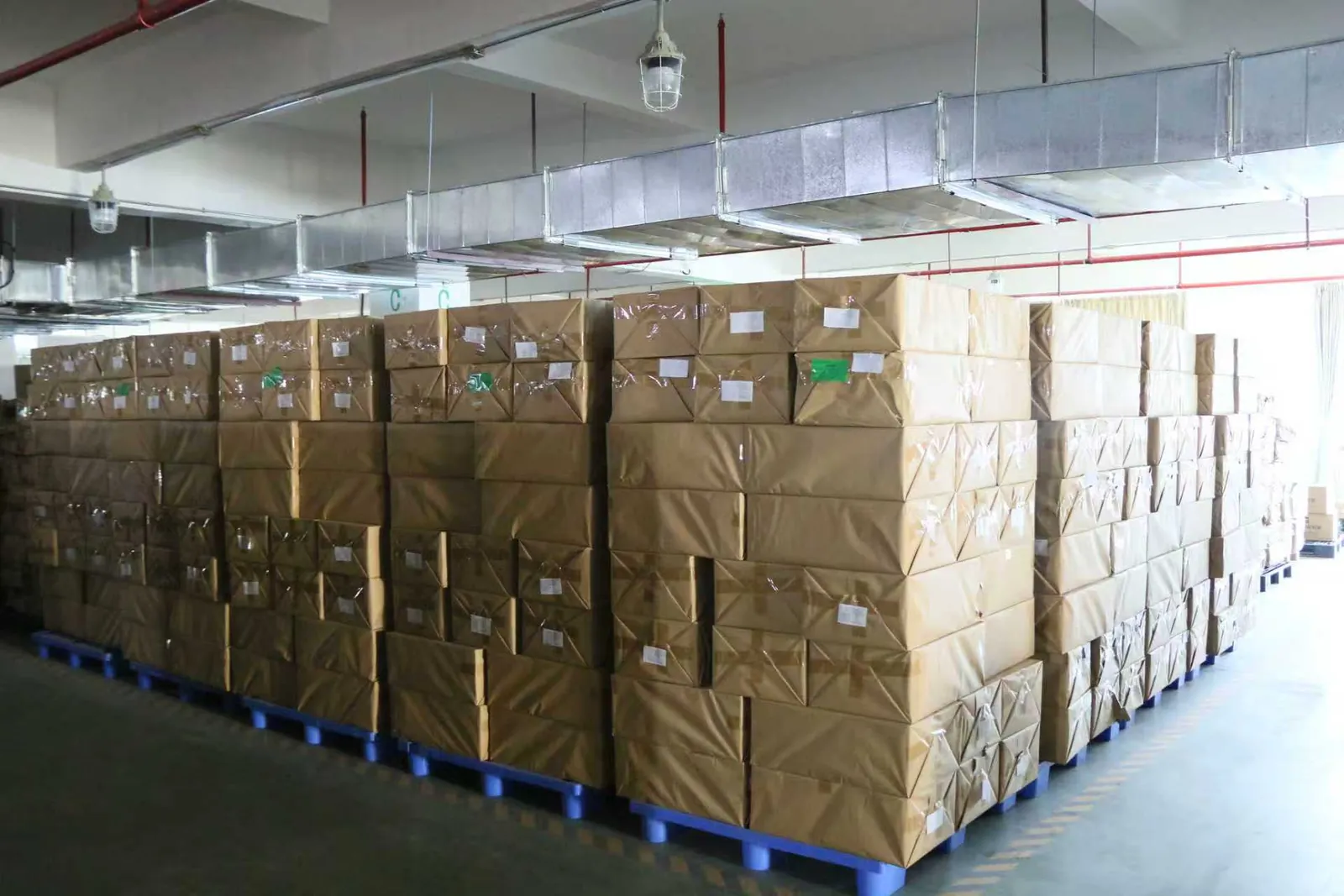
Disposable menstrual pants are garments, not flat pads. A pad stacks; a pant traps air in the waist band and around the leg openings, and that trapped air is what the shipping line measures. The cargo therefore reaches the volume limit of a container long before it approaches any weight limit, which makes cube rather than mass the figure that sets freight per unit.
Cube is decided at the bag, not at the machine. A higher compression ratio reduces the outside dimensions of the carton, and those dimensions are the only figure the domestic carrier will read. Two plants can pack the same pant count into cartons that differ by a visible margin, and the cheaper offer becomes the dearer one once the cargo has to move again.
Measuring the Carton the Way a Carrier Will
Length times width times height times carton count gives the chargeable measure for the domestic leg. That arithmetic can be finished on the packing list before the order is placed, and it is one of the few calculations a buyer can complete without asking anyone for a favour. Four figures decide the result, and none of them normally appears in a product specification. This is also the point where a sanitary pants supplier in Indonesia can be held to something concrete, because the numbers come off the packing table rather than off a rate sheet.
- bags per carton, which sets how much air travels with the goods
- outside carton dimensions, measured after packing rather than before
- cartons per layer, which decides whether a stable pallet can be built at all
- the size ratio inside each carton, which decides whether the retail pack can be split at the shelf
The last figure is the one that surprises buyers. A carton holding a single size is efficient to pack and awkward for a shop that sells three sizes in unequal numbers. A carton holding a ratio is slightly less efficient to pack and can be opened at the shelf, which is where the cost of the wrong ratio actually surfaces.
Who the Importer of Record Is, and Why It Matters
A declaration can only be lodged by an entity registered to do business in the country, using its own business registration and tax numbers. A brand owner who has not completed that registration cannot be the consignee. The goods then land in the name of a trader who can be, and that trader becomes the importer of record for that shipment.
This is a commercial fact before it is a customs one. The importer of record controls the release, the resale documentation, and the traceability of any later quality question. Buyers sometimes ask whether a sanitary pants manufacturer in Indonesia would shorten that chain. A plant inside the country would, but building one is a different decision from buying a container.
Where a tariff line is subject to import controls, the approval is applied for in the name of that same importer and should be in hand before the vessel loads. The control sits with the importer because the importer is the party the authority can hold responsible once the goods enter circulation. A factory in China has no standing in that relationship, so a request for the factory to handle the permit returns nothing except lost time.
What the Factory Can Sign and Cannot
A supplier can issue the commercial invoice, the packing list, the origin data behind a certificate of origin, and the reports from its own laboratory or a commissioned one. A carrier issues the bill of lading. The importer files the declaration. Asking one party for a complete document set is asking for papers that party has no right to create.
| Document | Who issues it | When it can exist |
|---|---|---|
| Commercial invoice | Supplier | After the order is confirmed |
| Packing list with carton dimensions | Supplier | After packing, before loading |
| Bill of lading | Carrier, through the forwarder | After the container is on board |
| Declaration and release note | Importer of record | After arrival and duty payment |
| Domestic booking and delivery order | Domestic carrier | After the release note is issued |
Read as a sequence, the table explains most delays. A buyer who wants the bill of lading before loading is asking for a document that does not yet exist. A buyer who wants the domestic booking confirmed before arrival is asking a domestic carrier to commit to cargo it cannot yet be given.
Comparing Offers That Name Different Ports
Two offers can be compared only after they are converted to one denominator: cost per carton at the city where the goods are sold. That means adding the domestic leg, the depot charges and the handling at destination to the port price, then dividing by cartons rather than by containers. The result is dull and it is the only figure that survives contact with a shop.
Buyers who import sanitary pants from China to Indonesia for the first time often skip this step, because the port price looks complete and the second leg looks like a local detail. It is not a detail. On a bulky garment it is frequently the difference between a workable margin and a conversation with the bank. Side by side, two shortlists of a sanitary pants supplier in Indonesia usually differ by one line, and that line is the domestic leg.
What to Fix in the First Order
Three items are worth settling before the deposit. The delivery point should be written as a city and a named facility, not as a port. The consignee should be the entity that will own the brand in that market, not a forwarder of convenience. The packing standard should sit in the purchase order next to the price, because it sets the cost of every movement that follows. Anyone comparing suppliers of sanitary pants should ask for those figures before the sample stage rather than after it.
For a buyer still shaping a range, sanitary pants wholesale in Indonesia is priced per carton rather than per unit, which is why the carton standard matters more than a headline unit figure. Our wholesale programme and the minimum order quantity page cover what can be fixed at the start; the packing and carton standards cover the part that decides the second voyage. We have been making these goods for more than 25 years, always shipping from China.
If you are weighing two offers that name different ports, send the carton dimensions, the bags per carton and the city you actually sell in. I will mark which figures in your request change when the cargo leaves the entry port, and which ones you can fix by naming your own consignee. Use the contact page and put the port name in the subject line.
Frequently Asked Questions
Does the quoted price cover delivery to my city?
Usually not. A container price is normally quoted to one named port or terminal, and the domestic voyage after release is contracted separately by the importer of record. Ask any supplier to state the exact delivery point in writing, because the gap between a port and a city address is often a heavier line in a landed cost than buyers expect.
Who is allowed to be the consignee on the declaration?
Only an entity registered to do business in the country, using its own business registration and tax numbers. If your company is not registered yet, the goods will be imported in someone else's name, and that party becomes the legal importer of record for that shipment.
Why do carton dimensions matter more than unit price?
Because the domestic carrier charges by measure, and the measure is calculated from the outside dimensions of each carton. A smaller carton holding the same contents reduces the chargeable volume on every later movement, so the packing standard belongs in the purchase order next to the price.
Can the factory obtain the import approval for me?
No. Import controls are applied for in the name of the importer of record, and the authority holds that party responsible once the goods enter the market. A supplier can prepare the technical files and answer questions, but the application itself has to come from your side of the transaction.
What should I check before the first order is loaded?
Confirm the delivery point, the consignee name, the approval status for the tariff line, and the four packing figures: bags per carton, carton dimensions, cartons per layer, and the size ratio inside each carton. Those four figures decide the cost of every later movement of the same cargo.


