
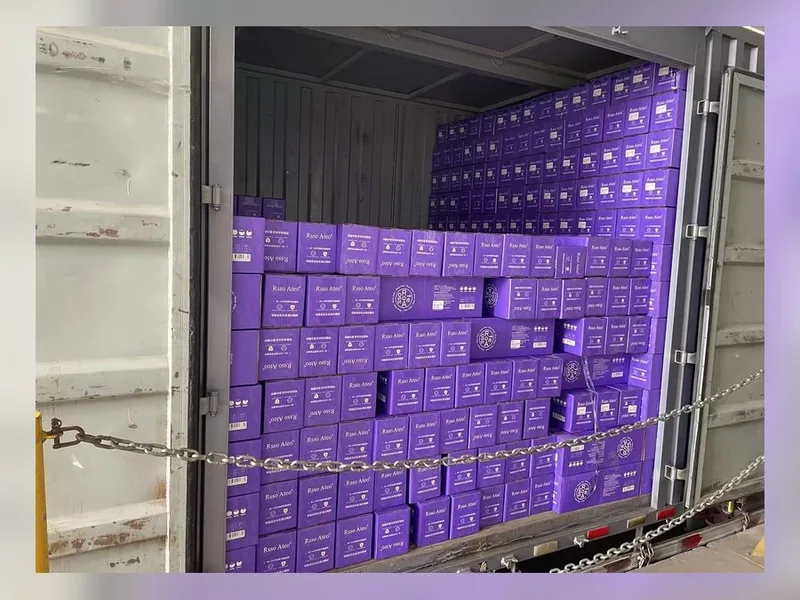
Disposable period pants packaging proof approval is often treated as a design sign-off: a colour looks right, a logo sits correctly, and somebody replies with an okay. A plant needs more than that. The approval freezes the panel wording, the barcode, the pack count, the die-line and the carton plan that follows from them. A dated record of those fields is what keeps the first run and the first reorder identical.
What disposable period pants packaging proof approval must freeze
A proof is a picture of a physical object that does not exist yet. Write down what it commits to: pack count, unit and pack dimensions, the barcode and its symbology, the language panels, the material and finish of the wrapper, and the die-line. Each of those has a downstream consequence in the carton plan or in the production run.
An OEM production specification fixes construction, the material list and the carton plan. The proof approval should reference the same version identifier, so a later wording change can be handled as an artwork revision without reopening the product construction. Keeping the two documents separate is the main control here.
The approval record
One page is enough, but it needs named fields: the artwork version identifier, the date, the name of the single approver, the files that were approved, the pack count, the barcode record and the specification version it belongs to. Add a note on what is explicitly out of scope, such as local claim wording owned by the brand. A record without an approver name is not an approval.
| Field | Why it is on the record | What breaks if missing |
|---|---|---|
| Version identifier | Links proof to specification | Two versions in one picking run |
| Approver and date | Names who decided | A revision with no owner |
| Pack count | Sets the carton plan | Wrong units per carton |
| Barcode record | Identifies the unit at the till | Scanning and counting errors |
| Out-of-scope wording | Separates facts from claims | Unverified sentences on the pack |
The first row is the one that causes the most rework. An image saved without a version identifier gets forwarded, printed and eventually compared with a different image from a later revision. Neither side can then say which one the order was placed against.
Panel wording and accountability
Market-facing claim wording belongs to the party accountable for compliance in the destination market. A factory can supply pack dimensions, the material list, the construction description and incoming check measurements, but it should not write a sentence it has not verified locally. Record that division on the approval page rather than leaving it implicit.
- The dated specification version the artwork belongs to.
- The source artwork files and their revision log.
- The barcode register entry for this pack count.
- A physical signed reference of the approved proof.
- The end date for any version being retired.
The physical reference matters when a printed wrapper arrives and someone says the colour changed. Both sides can hold one object up against the delivery. Factory capability outlines the measurements and records available as source material for that comparison.
Retail ready packaging versus a bundle wrapper
A retail ready pack and a bundle wrapper are different objects with different approvals. One carries the retail barcode and the panel information for a shelf; the other groups several units and may carry only a lot identifier. Treating them as one proof produces a wrapper that is wrong for one of the two channels, and a carton plan that was drawn against the wrong unit.
If both are needed, issue two artwork versions with two identifiers and two approval records. The product construction can stay frozen while the packaging annex carries the two versions. That is the practical reason to keep the specification and the artwork records apart from the start.
What happens after approval
After approval, the carton plan and the picking instruction are written against the frozen pack count, and a first-article check compares a printed unit with the signed reference. Any change after that point is a new version with a new approval record, not an edit to the existing file. Retire the old version with an end date before the next picking run.
%s describes the producer and the production, carton and lot records behind those versions, which is what a buyer needs when a question about a delivered carton arrives weeks later.
Where the packaging is produced
The wrappers and cartons are produced alongside the goods in Guangdong, and the shipment leaves from China. No plant, office or depot is maintained in the buyer market, so an approval revision has to be timed against production and shipping lead time rather than treated as a same-day change.
Put that interval in the approval record. A revision requested after materials have been reserved does not simply change a file; it changes a booked slot. Naming the lead time at sign-off prevents the most common late-stage surprise in a packaging project.
Reviewing the record at the first reorder
At the first reorder, check that the version identifier on the order form matches the approval record and the packing list from the previous run. If the three differ, resolve it before the slot is booked. A reorder that names no version is the usual source of a mixed-version carton.
Keep a short log of every disposable period pants packaging proof approval issued for the product, with the date, the approver and the reason for each revision. A log with four lines tells a buyer why two wrappers exist in the market and which one a given carton belongs to. Without it, the difference is usually explained from memory, and the explanation changes each time it is given. Attach the log to the same folder as the product schedule and the packing lists, and withdraw any superseded proof images from the shared folder at the same moment the new version is approved. That habit keeps a reorder form, a printed wrapper and a carton mark pointing at one dated document.
The team can help turn the reviewed approval record into a clean production brief with one dated version, so the following run starts from a document both sides can read.
Questions buyers ask before the first order
What does a packaging proof approval commit to?
Pack count, unit and pack dimensions, the barcode and its symbology, the language panels, the wrapper material and finish, and the die-line. Each has a downstream consequence in the carton plan or in the production run.
Which fields belong on the approval record?
The artwork version identifier, the date, the name of a single approver, the approved files, the pack count, the barcode record, the specification version and a note on wording that is out of scope. A record without an approver is not an approval.
Who owns the wording printed on the pack?
The party accountable for compliance in the destination market should own it. A factory supplies pack dimensions, the material list, construction descriptions and incoming check measurements without endorsing a sentence it has not verified locally.
Are a retail ready pack and a bundle wrapper the same proof?
No. One carries the retail barcode and shelf panels while the other groups units and may carry only a lot identifier. They need two artwork versions, two identifiers and two approval records, even if the product construction is unchanged.
Where is the packaging produced and what does a late revision change?
Wrappers and cartons are produced in Guangdong alongside the goods and ship from China, with no local plant or depot. A revision after materials are reserved changes a booked production slot, so the lead time should be named at sign-off.


