
The Layer Buyers Never Ask About — and Why It Makes or Breaks Period Pants
2026-08-05
There's a layer in a period pants that almost no buyer mentions, and it's the one that decides whether the product feels like nothing or feels like a wet rag by hour four. We call it the distribution layer — the bit between the top sheet and the core. Most people don't know it exists. The ones who "upgrade" it without understanding it are the ones who ship failures.
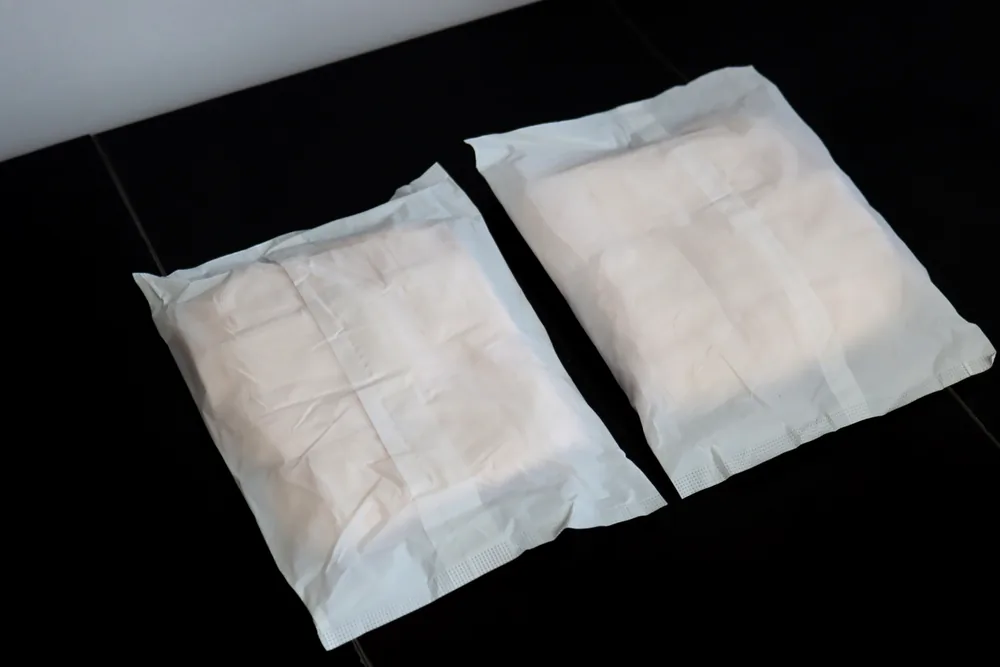
The layer that moves, not stores
Picture the structure as a building. Top sheet is the front door — fluid comes in and should keep going. Core is the basement — storage. The distribution layer is the hallway: it takes what came in and spreads it sideways so the basement doesn't flood in one spot.
Get that hallway right and fluid never piles up at the entry point. Get it wrong and you get a dark, soggy mark right where the body meets the product — and that's where leaks and rewet start.
A customer once swapped in a "better," more expensive distribution layer. The product got worse. More expensive wasn't better — it was just wrong.
That case stuck with me. They'd been sold on the premium material and assumed pricier = safer. It wasn't. The new layer held fluid at the surface instead of moving it. Same core, same top sheet, completely different wearable result. The lesson: you don't spec this layer by price. You spec it by how it behaves in the combination.
Why "good alone" lies to you
Here's the trap. A distribution layer can test fine on its own — great wicking in isolation — and then fail once it meets your specific top sheet and core. The three have to agree. Change one and you've changed the system.
No layer is good in isolation. The trio either works together or it doesn't.
We tune the combination per product. A thin daytime style needs a different hallway than an overnight one with a contoured rear. The overnight one has to move fluid backward and hold it there under side-sleep pressure. Same principle, different geometry.
What I'd ask a supplier about this
- "Show me the trio, not the parts." A supplier who only talks component specs hasn't thought about the system. Ask how top sheet + distribution + core were validated together.
- "What happens at the entry point after a realistic load?" That's where failures show. Dark local mark = the hallway failed.
- "Can you change the distribution layer for my market?" If they can't, they're assembling, not developing.
Our development process validates the full stack on every new structure, not the pieces. That's the difference between "we bought good materials" and "we built a product."
Is the distribution layer the same as the core?
No. The core stores fluid; the distribution layer sits above it and spreads fluid sideways so the core fills evenly instead of flooding one spot. Without a working distribution layer, the core's capacity is wasted because fluid never reaches the empty parts.
Can I tell if a sample has a bad distribution layer?
Pour a realistic amount, wait, then look under the backsheet. Even, pale, wide spread = it's working. A dark, concentrated mark right at the entry point = the hallway failed and fluid is sitting where it landed. Our sampling guide covers this check.
Does a more expensive distribution layer mean better performance?
Not by itself — we've seen the opposite. Performance comes from how the layer fits the top sheet and core, not its price tag. Validate the combination, not the component.
Why don't brands list this layer on the package?
Because it doesn't translate to a consumer word the way "absorbency" does. It's invisible engineering — which is exactly why buyers should ask about it directly instead of trusting the front of the box. The Nafei team can explain the specific layer in any structure we make.
Should a private-label buyer spec this layer themselves?
You can set the outcome (dry entry point, even spread, overnight rear coverage) and let the manufacturer engineer the layer to hit it. Trying to dictate the exact material usually backfires unless you've tested the trio. Describe the result you need; let development deliver it.
Building a line where the engineering is invisible?
That's the point — the wearer shouldn't notice it, but your return rate will if it's wrong. Our OEM team develops the full top-sheet-to-core stack per market. Reach the Nafei team to spec yours.
Turn this guide into an OEM brief
Share your product direction, target market, packaging idea and sample questions. Nafei can help translate the buying guide into a practical RFQ discussion.
- Product type: period pants, sanitary pads or mixed OEM project
- Target country, channel and buyer positioning
- Size range, material preference and sample review focus
- Private label artwork, pack count and estimated quantity