A Smaller Pad Isn't a Teen Pad - Why the Student SKU Needs Its Own Spec
2026-08-05
A buyer asked us to "just make the adult pad smaller" for a new teen line. Straightforward, right? We pushed back. That request backfires more often than any other in the student category, and it's not because we're difficult.
It's because the failure mode is completely different.
The scenario adults forget
A student sits through a 45-minute class and can't leave. She's in a tight uniform or sportswear. The single thing she's terrified of is a visible leak. One of the engineers I work with puts it bluntly: she has to finish the class before she can change. The adult buyer who can duck to the restroom whenever doesn't live in that constraint.
So the margin for error on a teen SKU is actually tighter, not looser, than the adult version. Longer wear window, less forgiving clothing, zero tolerance for embarrassment.
Three hard requirements
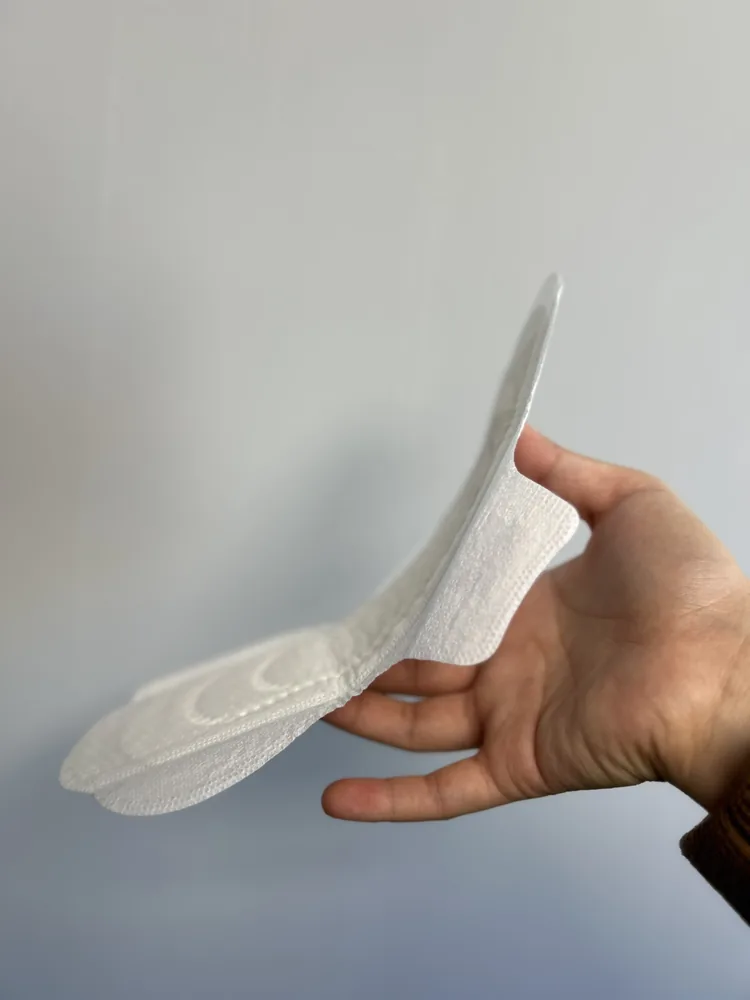
- Not thick. Bulk shows under a fitted uniform. A pad that prints a line through her pants is a returned product.
- Side-leakage kept in check. The long sit means more time for a weak edge to fail. This is the complaint that actually drives returns.
- Not embarrassing. No rustle, no odor, no visible outline. Teen buyers churn on shame faster than on comfort.
Why "shrink it" fails
A scaled-down adult core often leaks sooner, not later, because the wear window is longer than the capacity math assumes. And a thin-but-wrong structure pills or shifts — exactly the tail problem we catch with the pinch test. Long wear also raises the humidity load, which is why the humidity story matters more for this segment than for anyone else.
"The teen requirement is higher than the adult one: not thick, not leaky, not embarrassing." That's the whole spec in three words, and none of them is 'smaller.'"
What we actually change
When we build a student line, the brief is scenarios, not dimensions. We'll usually spec a thinner but structured core, a lower-profile wing, a narrower-yet-secure adhesive for tight clothing, and a topsheet tuned for the long sit. Then we test for the long-sit scenario, not the flat lab position that misses it.
If you're planning a teen or student SKU, tell your factory the school-day length and the uniform type before you talk millimeters. At our OEM line that scenario brief is where the real spec work starts — the size is the last thing we lock, not the first.
FAQ
Can't I just scale down my bestselling pad?
No, and this is the most common miss in the category. The longer wear window and tighter clothing change the failure mode — a shrunk adult core often leaks sooner and shows through clothing. The student SKU needs its own structure.
What's the #1 teen-pad complaint?
Side-leakage during long classes. Embarrassment drives returns and churn faster than comfort does, so we weight leak control and a low profile above almost everything else.
Does a teen pad need different adhesive?
Often yes — a lower-profile, narrower-but-secure bead suits fitted uniforms better and reduces the "I can feel it" feedback we get from this age group.
How should I brief the factory on a student line?
Lead with scenario: school-day length, uniform type, change frequency. Give dimensions last. A factory that only asks for size is guessing at the constraints that actually cause returns.
Turn this guide into an OEM brief
Share your product direction, target market, packaging idea and sample questions. Nafei can help translate the buying guide into a practical RFQ discussion.
- Product type: period pants, sanitary pads or mixed OEM project
- Target country, channel and buyer positioning
- Size range, material preference and sample review focus
- Private label artwork, pack count and estimated quantity