How Real Product Photos Build Trust on B2B Feminine Hygiene Sites
2026-08-04
When a buyer evaluates a feminine hygiene manufacturer, they are not only comparing prices — they are deciding whether to trust a factory they may never visit. On a B2B site, real product and factory photos are often the difference between a quick exit and a qualified inquiry. This article explains what credible supplier photography looks like and how it supports verification before purchase.
What B2B buyers look for before they inquire
A procurement manager sourcing disposable menstrual pants or sanitary pads typically asks three questions before sending a message: Is this a real factory? Can they control quality? Will they deliver what they promise? Stock-style illustrations cannot answer those questions. Verifiable, on-site photography can.
Photos are not decoration here — they are evidence. The more a site shows its actual facility, process, and product, the lower the perceived risk of working with that supplier.
Factory and workshop photos
Genuine exterior and workshop images show the scale of operations. For a manufacturer, this might include modern standard workshop buildings and a clean, organized production floor. Concrete details — such as workshop area and annual capacity — become believable when a photo supports them.
Nafei operates a 260,000+ m² production base with 35+ automated production lines and 5 billion+ pieces of annual capacity. Presenting real workshop images lets a buyer see the scale rather than take the number on trust.
Production line and cleanroom evidence
For hygiene products, how the product is made matters as much as what it is made of. Photos of automated high-speed production lines and dust-free workshop management show that output is consistent and handled in a controlled environment. This is especially relevant for buyers in markets with strict hygiene expectations.
When evaluating a supplier, look for images that show the actual line layout and handling discipline, not just a generic machine close-up.
R&D lab and testing photos
A laboratory photo signals that the supplier tests materials and finished products rather than shipping blind. Credible R&D imagery includes raw material inspection, sample testing, and finished product performance review areas. This reassures buyers that absorbency, fit, and comfort claims are checked, not assumed.
See how Nafei frames its capability on the factory capability page, which connects workshop, lines, and testing into one story.
Certification and compliance visuals
Certifications are easy to claim and hard to verify. Showing the actual certificate wall — for example quality (ISO 9001), environmental (ISO 14001), occupational health (ISO 45001), and GMP systems — lets a buyer cross-check the claim. Keep certificate images clear enough to read the scope and validity where permitted.
Real product and packaging shots
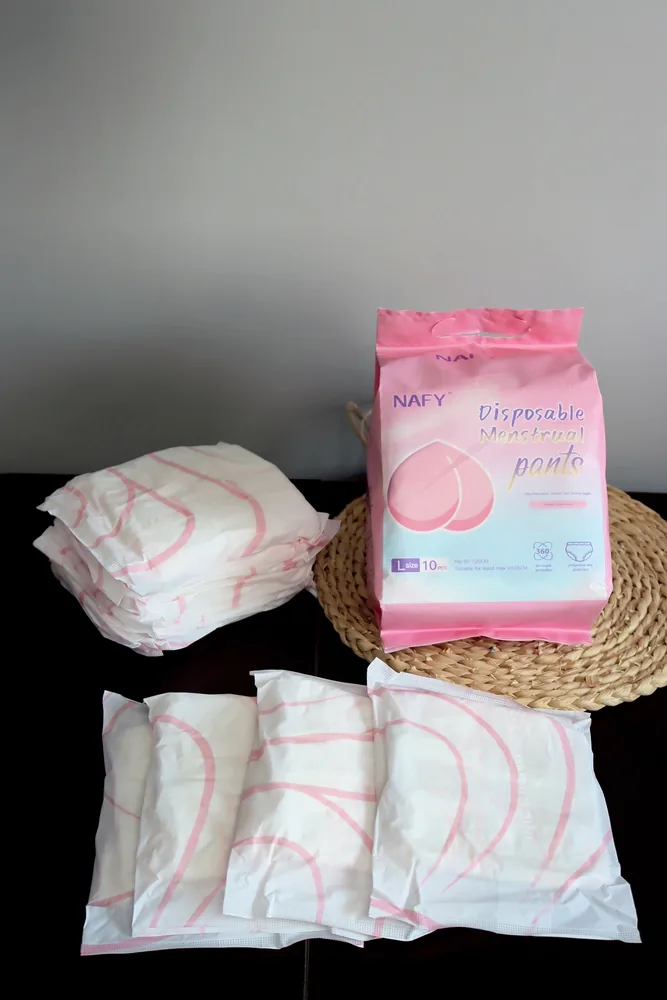
Product photography should match what will actually ship. For disposable period pants and sanitary products, this means showing the real waistband, topsheet texture, pack format, and any variant (such as a cool-feel version). Buyers use these shots to judge finish quality and to plan their own listing images.
Consistent, unretouched product angles also reduce returns and expectation gaps after bulk delivery.
How to read a supplier's photo credibility
Not all supplier galleries carry equal weight. Use this quick checklist:
| Signal | What it tells you |
|---|---|
| Consistent location across photos | Likely one real site, not mixed stock images |
| People and equipment in frame | Operational facility, not a showroom render |
| Readable certificates | Willing to be verified |
| Product matches the catalog | What you see is what ships |
| Recent, dated context | Current capability, not archive shots |
If a gallery is all illustrations or obviously reused stock, treat capability claims with caution and request a live video tour or a third-party audit report.
How Nafei presents verifiable evidence
Nafei's B2B presence is built around transparent, on-site evidence: real factory exterior and workshop images, automated production lines, an R&D and testing setup, and certification systems. The About page and factory capability page let buyers review the operation before they ever send an inquiry.
For brands exploring production, the OEM/ODM page explains how concept, material, sample testing, packaging, mass production, and export delivery fit together.
Frequently asked questions
Why do real factory photos matter for B2B feminine hygiene sourcing?
They let a buyer verify that a supplier is a real, operating manufacturer with controlled production — reducing the risk of working with an unknown trading intermediary.
What should I check in a supplier's photo gallery?
Look for a consistent real location, equipment and people in frame, readable certificates, and product shots that match the catalog. Mixed stock images are a caution sign.
Can I request a live factory tour instead of photos?
Yes. Many manufacturers offer a live video tour or accept third-party audits. A serious OEM will usually accommodate a verification request before a large order.
Are certification photos enough to trust a manufacturer?
They are a strong starting point. For high-value orders, ask for certificate numbers and consider an independent audit or sample testing before committing.
Does Nafei show real production and product images?
Yes. Nafei presents on-site workshop, production line, R&D, and product imagery across its About, factory capability, and product pages so buyers can review the operation first.
Want to verify a feminine hygiene manufacturing partner?
Contact Nafei to request a factory overview or discuss your OEM project.
Turn this guide into an OEM brief
Share your product direction, target market, packaging idea and sample questions. Nafei can help translate the buying guide into a practical RFQ discussion.
- Product type: period pants, sanitary pads or mixed OEM project
- Target country, channel and buyer positioning
- Size range, material preference and sample review focus
- Private label artwork, pack count and estimated quantity