Building a Private-Label Sanitary Range: From Hero SKU to Pants
2026-06-06
A buyer came to me wanting "one product, private label." Two months later she was scrambling because retailers wanted a range and she had a single SKU. Build the range on specs from day one — even if you only launch one — and the ladder is already there when the buyer asks.
A private-label line isn't a pile of SKUs. It's a spec ladder: each product earns its place by doing one job better than the last.
Start with the hero SKU
Pick the product your market actually buys first — usually a day pad or a night pad, not the clever one. Get its spec right (SAP load, topsheet, backsheet, wing). The hero proves the line; everything else ladder from it.
Don't launch five weak SKUs. Launch one strong one, then add. A retailer would rather see a pad that works than three that sort of do.
Build the range on specs, not SKU count
| Step | Product | What changes from hero |
|---|---|---|
| 1 | Hero (day or night) | The baseline spec |
| 2 | The other (night or day) | Different SAP load + length |
| 3 | Liner | Thin, low SAP — repeat hook |
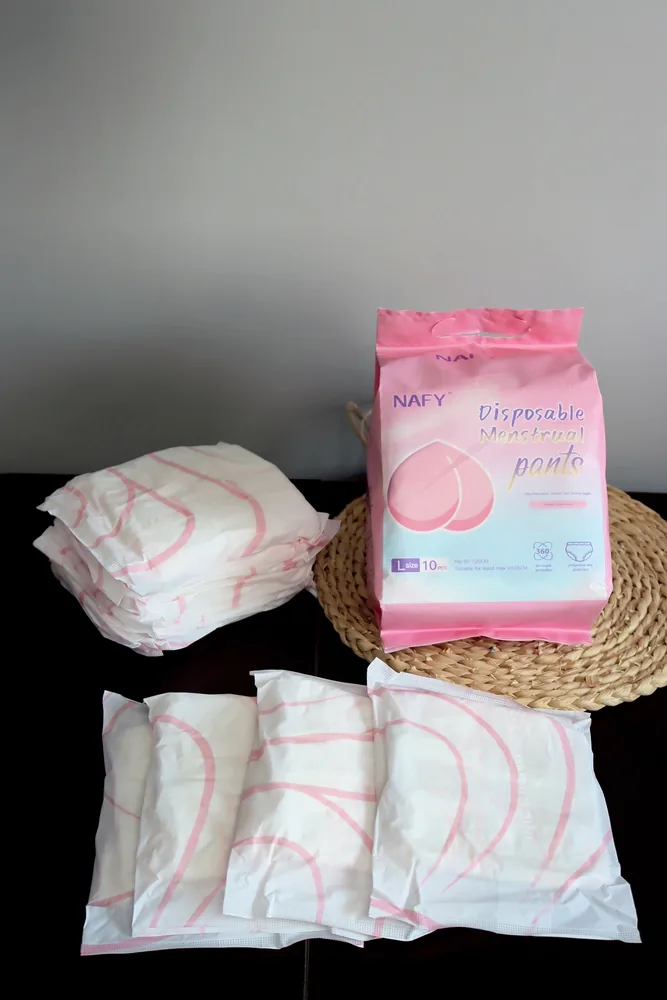
| 4 | Period pants | Structural; new tooling |
Avoid SKU sprawl
The trap is adding sizes and scents until the line is ten SKUs nobody asked for. Each SKU is a changeover, a carton, a QC line. Ladder by job (day→night→liner→pants), not by flavor. A tight four-SKU range outsells a loose ten.
Naming the range
Private-label naming should map to the job, not the factory's internal code. "Day," "Night," "Liner," "Overnight Pants" — the buyer sees the ladder, not your SKU list. Keep the names consistent across markets so the line travels.
For spec benchmarks, our napkin line and pants line show how a range ladder in practice.
Questions buyers actually ask
Should I launch the whole range at once?
No. Launch the hero, prove it, then ladder. A strong single SKU beats five weak ones. Retailers ask for the range after the hero sells — have the ladder ready, don't force it day one.
How many SKUs is too many?
When a SKU doesn't do a job the hero doesn't, it's clutter. A tight four-SKU range (day, night, liner, pants) usually beats a loose ten. Each SKU is a changeover and a QC line — make it earn its place.
Do pants belong in the same range?
Yes, but they're structural — new tooling, not a spec tweak. Ladder them in after the pad range proves, not as SKU two. Our pants line shows the spec difference.
How do I name a private-label range?
By job, not factory code: Day, Night, Liner, Overnight Pants. Consistent across markets so the line travels. Our team can help map the ladder to your spec.
Building a private-label sanitary range?
Contact the Nafei team to ladder the spec from hero to pants.
Turn this guide into an OEM brief
Share your product direction, target market, packaging idea and sample questions. Nafei can help translate the buying guide into a practical RFQ discussion.
- Product type: period pants, sanitary pads or mixed OEM project
- Target country, channel and buyer positioning
- Size range, material preference and sample review focus
- Private label artwork, pack count and estimated quantity