
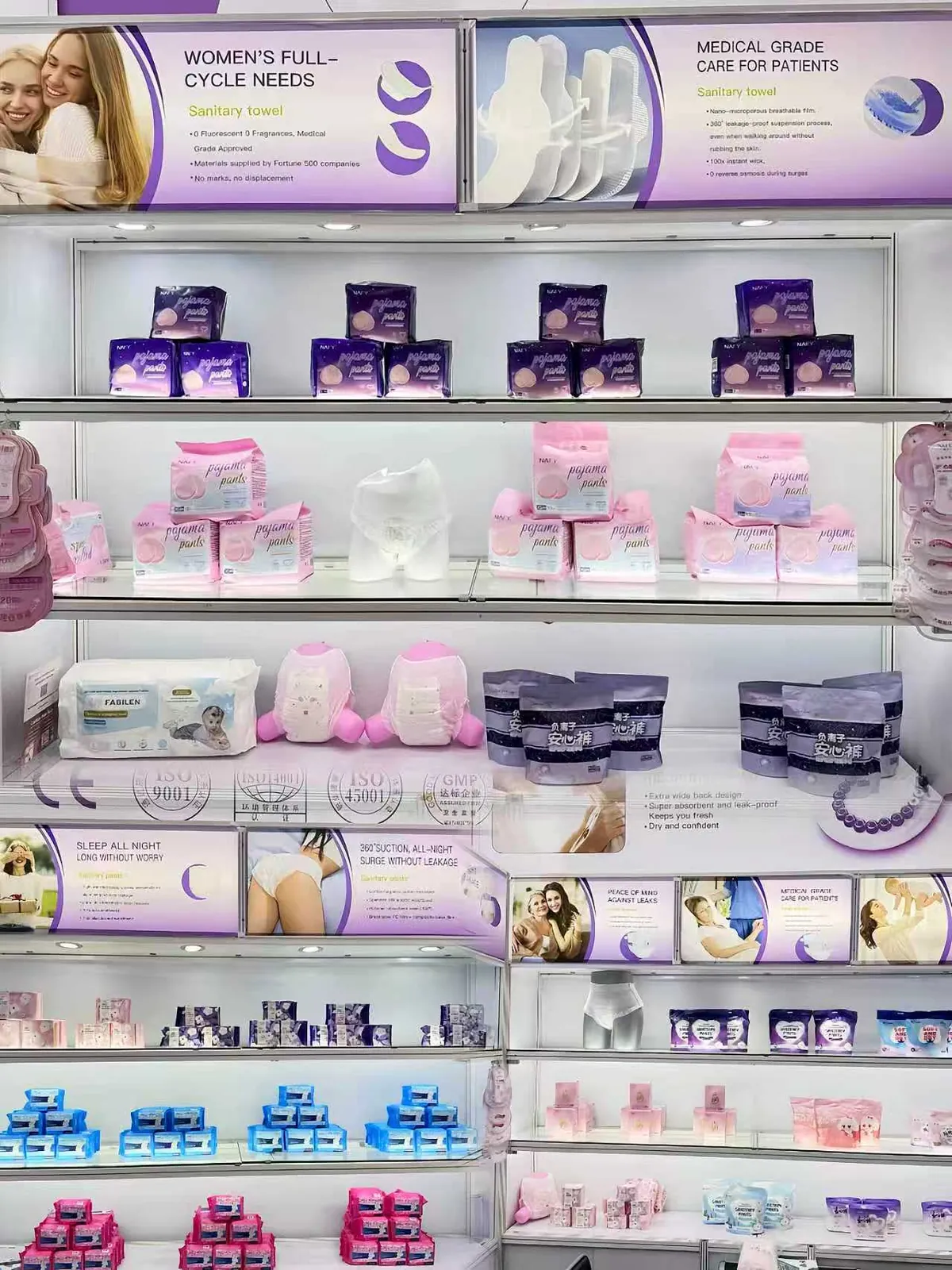
One shelf photo from the last show carries three different pack shapes. Pads sit in the middle rows. Pull-up style pants sit lower down. A visitor who came to talk about one format ended up holding both. That is the reason we bring the two ranges to the same stand.
Buyers rarely arrive with a single finished specification. A distributor building a feminine care line often starts with a pad, then asks whether the same brand can carry an overnight pants format. Answering that question across two emails is slow. Answering it across one shelf is immediate.
The shelf answers a format question before pricing does
A pad and a pair of menstrual pants do not share a bill of materials. They use different cores, different waistband components and different converting steps. When both packs are in front of a buyer, that difference becomes concrete. It is easier to discuss why one format needs a separate size run when the physical packs are side by side.
We usually see the same three questions at this shelf. Can both formats carry one visual identity? Does a smaller first order make sense for the second format? Which pack count should launch first? None of those can be settled from a catalogue image alone.
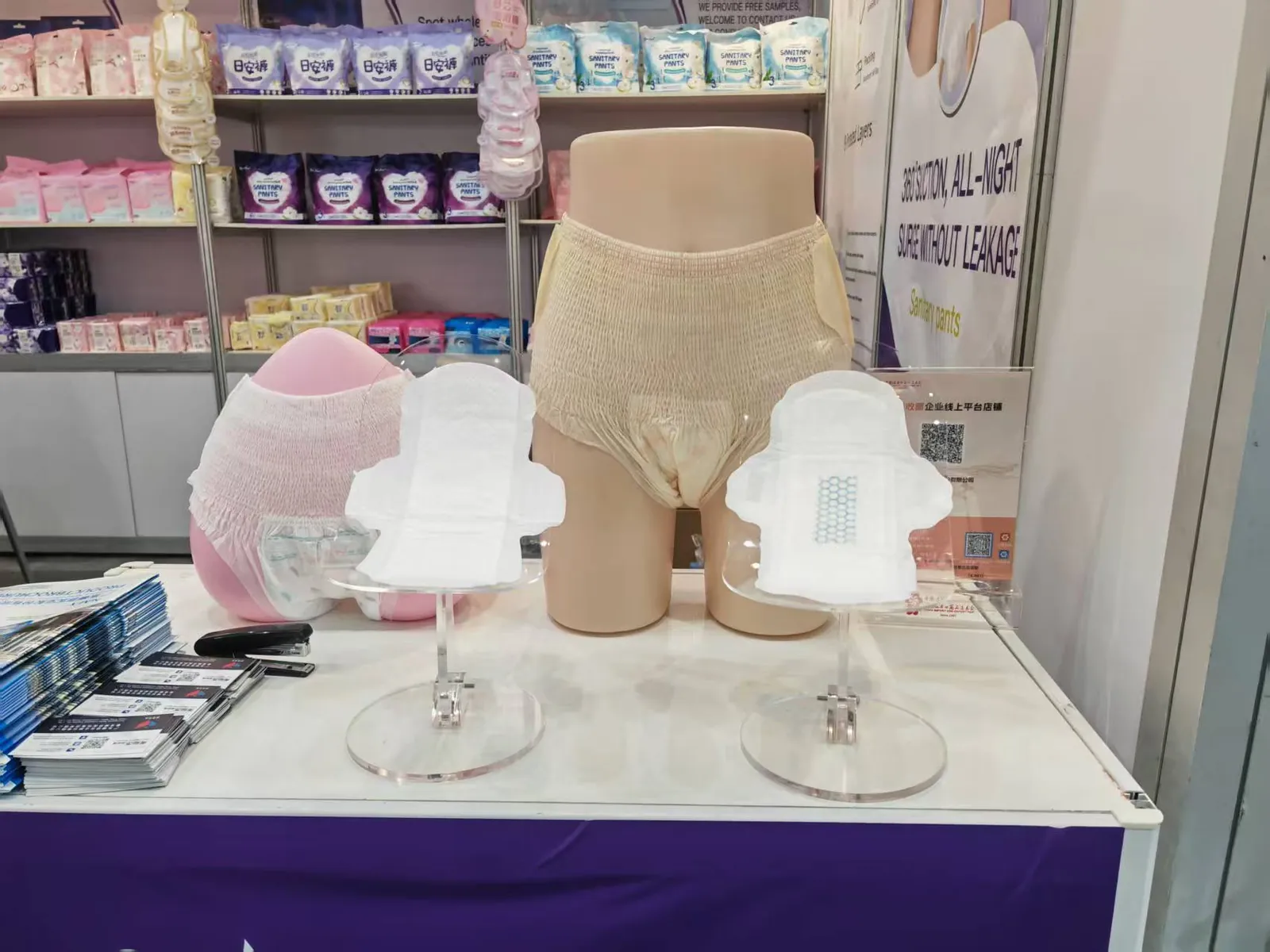
One brand, two production conversations
Sharing a stand does not mean sharing a specification. In our experience it is better to keep two clearly separated sample sets on the same table than to blend them into one story. A buyer who wants pads should not have to search past pants samples to find the pad core.
We label the two sample groups separately and keep the discussion in two parts. The first part covers the format the buyer asked about. The second covers whether a second format belongs in the same launch or in a later one. That order keeps the meeting short and the sample request accurate.
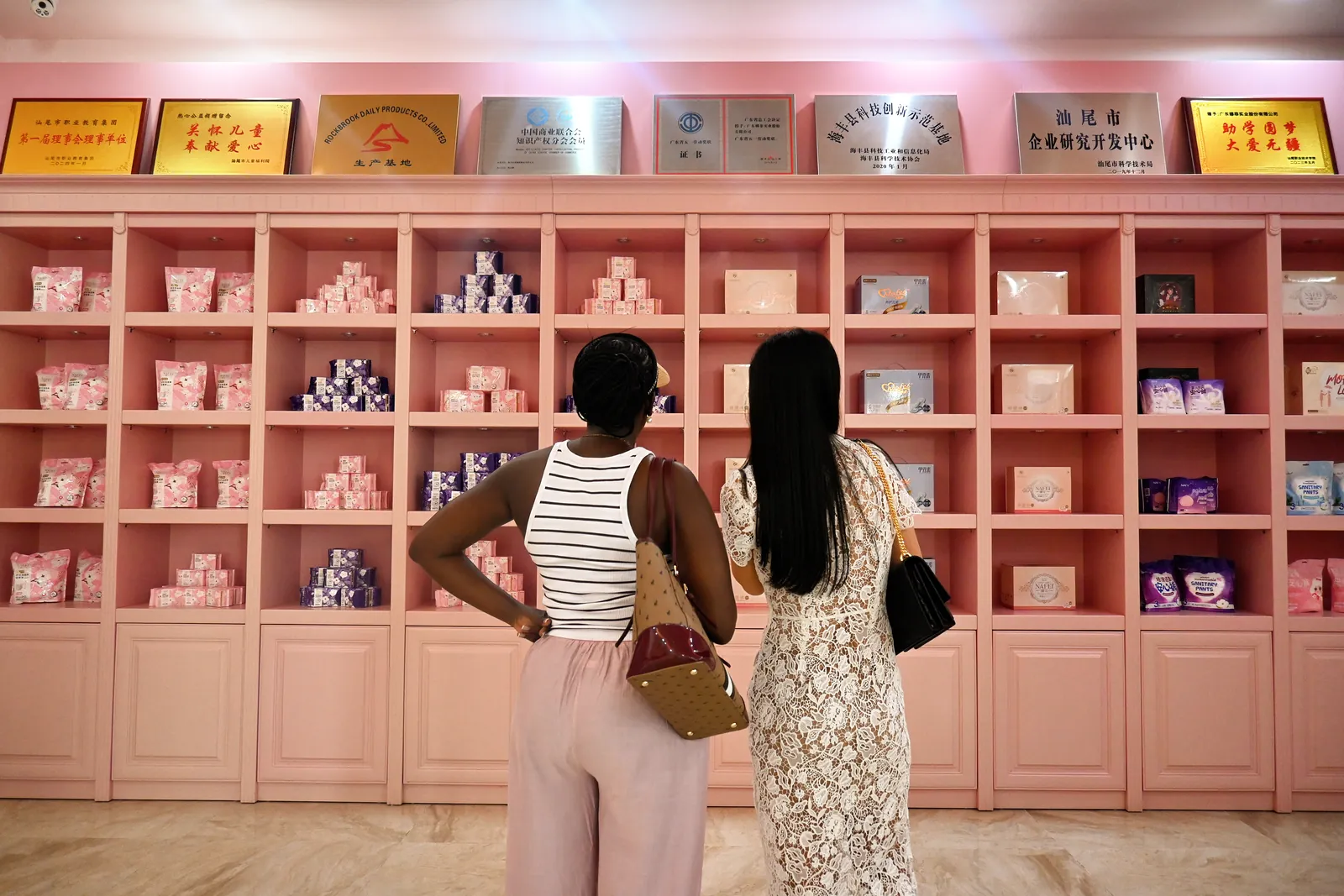
What we write down after the show
Three photos are enough to rebuild the shelf layout months later. We note which row sat at eye level, which format visitors picked up first, and how many packs were opened during the day. Those notes feed the next sample kit, not a brochure.
A mixed shelf is a small operational decision. It saves a buyer a second meeting and saves our team a round of clarification emails. For a private-label project that is still deciding its range, that is worth the extra carton of samples.