
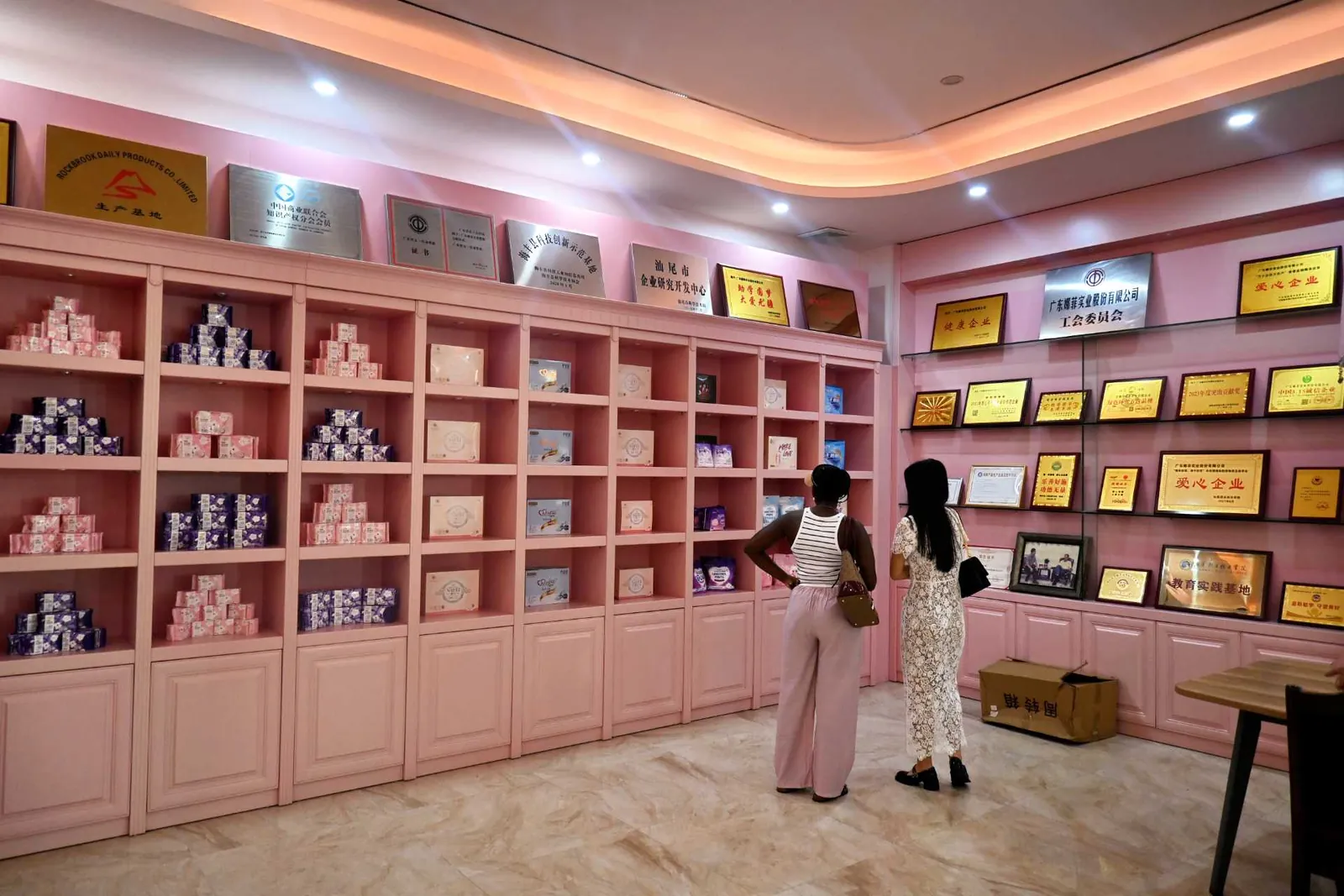
A single image shows a showroom with products on shelves and framed items on the wall. It is the frame most first-time visitors see before a tour starts. We use it to set expectations, not to make a claim.
A showroom is a place to handle samples and ask questions. It is not a production area, and a photograph of it should not be read as one.
What the layout is designed for
Products sit where a visitor can pick them up. A table is close enough to open a pack. The wall behind carries company history rather than technical detail. Those three choices make a first meeting more productive than a walk through a corridor of framed items.
Our team starts a visit in this room for a simple reason: a buyer who has handled the samples asks better questions on the factory floor. The order of the two rooms matters more than either room on its own.

What a visitor should not infer
A showroom photograph does not show a production line, a warehouse or an inspection bench. It also does not show the current artwork version of a pack, because display samples can sit on a shelf for a long time.
When a buyer refers back to a showroom image months later, we check the sample ID before discussing it. Two packs can look identical in a wide photograph and belong to different specifications.
A better first question
Instead of asking what a company makes, ask to see the sample that matches the brief you brought. A showroom is most useful when it answers one specific question quickly. The photograph is just the invitation.


