
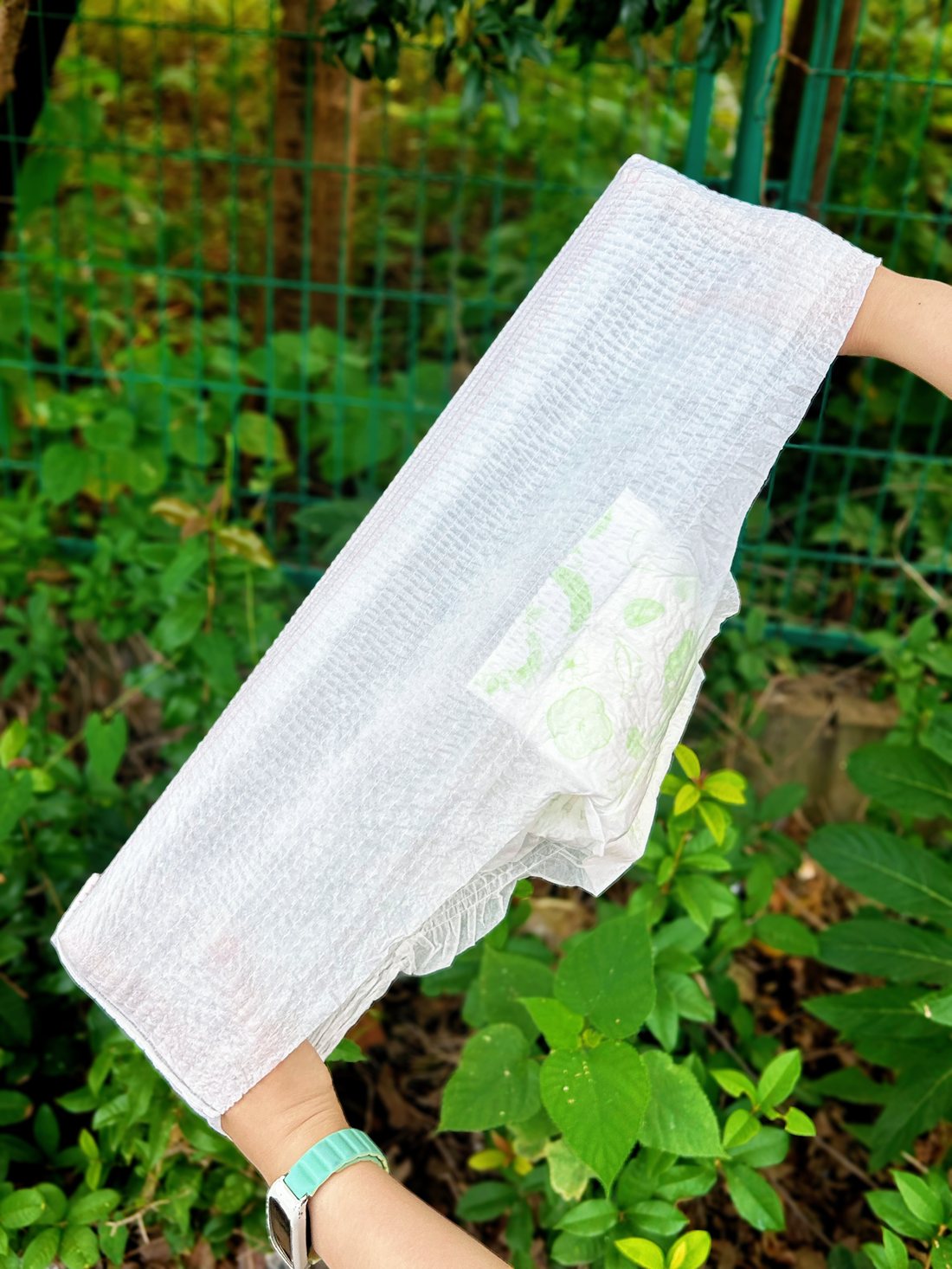
"Cooling" is the most over-promised word in this category. It appears on packs in every hot market, it usually means nothing measurable, and buyers have learned to discount it. That is an opportunity rather than a problem: a supplier who can say precisely what the pant does — and show the test behind the claim — sells into the same shelf with a claim that survives scrutiny.
This note separates the three material decisions that get bundled into the word, what each one costs on the line, and what to test before the word goes on the bag.
What "cooling" actually describes on a pant line
Three separate things get sold under one word, and they are specified, costed and tested differently:
- Cool-feel backsheet — a film or nonwoven with a high thermal-conductivity filler or a silkier surface, so it feels cool to the touch on contact. It changes the first impression in the hand, and almost nothing after that.
- Breathable backsheet — a microporous film that passes water vapour, which is what actually reduces the trapped-humidity feeling over hours of wear.
- Thin core — less material between the body and the air, which reduces bulk and the heat that bulk holds.
None of these is a chemical coolant, and none of them should be described as one. A pant sold as "cooling" because it contains a menthol-style additive is a different and much riskier product; on a B2B programme the safer and more defensible position is a material story, not an additive story.
Thin core versus overnight absorbency
An ultra-thin core carries more superabsorbent per gram and less fluff pulp. Capacity can be held at the same level, so on paper the thin pant absorbs what the thick one absorbs. What changes is behaviour under load: a thin core that is fully wet has less structure to keep the top sheet away from the skin, and that is felt as wetness rather than measured as leakage.
So the thin core and the acquisition layer have to be specified together. A thin programme that keeps the standard top sheet usually produces a pant that feels dry at hour two and damp at hour six; changing the acquisition layer is what buys back the difference. Ask for a rewet figure under load rather than a capacity figure, because capacity is the number that stays the same while the wear experience changes.
Breathable film and the leak question
A breathable backsheet passes vapour, not liquid, so the leak story is not the obvious one. The real trade-offs sit elsewhere:
- Strength — microporous film is weaker in tensile than a solid PE film, so it is more sensitive to puncturing from a saturated core and to the sealing window on the line.
- Line behaviour — breathable film runs at a narrower heat-sealing window, which usually costs speed. That cost lands in the quote even when the material price looks similar.
- Ambient humidity — vapour transfer depends on the difference between the humidity next to the skin and the humidity outside. In a market where ambient humidity is already high, the gradient is smaller and the benefit shrinks. This is why a breathable pant that performs in a dry climate can feel no different in a monsoon one.
The backsheet comparison note covers the line-level trade-offs in more detail; for a hot-climate programme the useful question is not "is breathable better" but "how much vapour transfer does this market actually reward".
Heat and humidity in transit
Most cooling programmes are specified for the shelf and forgotten in the container. A sealed container crossing the tropics will hold temperatures well above ambient for hours at a time, and the effects show up as complaints that have nothing to do with cooling:
- Adhesive softening — construction adhesive that creeps at 45 °C lets the core shift, which reads as "the pad bunched up".
- Film blocking — breathable film on a roll can stick to itself under heat, which shows up as line stoppages at the buyer's factory, not yours.
- Carton compression — a thinner pant compresses further, so stack height and pallet pattern need rechecking after the material change.
The humidity and adhesive note covers the production side of the same problem. The transit side is a matter of specifying an adhesive grade for the climate the goods will cross, not the climate they are made in.
What to test before the word goes on the pack
| Test | What it answers | Where it usually fails |
|---|---|---|
| Vapour transmission | Whether the backsheet moves moisture at all | Film specified for feel, not for transmission |
| Rewet under load | Whether the thin core stays dry at hour six | Standard top sheet kept with a thinner core |
| Thickness recovery | Whether the pant still feels thin after packing | Compression in the carton, not in the sample |
| 24 h at 40 °C / 75% RH | Whether the pack survives the crossing | Adhesive and film chosen for a temperate climate |
| Wear trial in ambient heat | Whether the wearer reports less trapped heat | Trials run in air-conditioned rooms |
The last row is the one that gets skipped. A cooling claim tested in a cool room is a claim about a cool room.
How the claim is read in a hot market
In most hot, humid markets the buyer is not looking for cold — she is looking for "not sweaty", and she has been disappointed by the word before. That changes what belongs on the pack. "Breathable backsheet, ultra-thin core" is a narrower claim than "cooling", and it is the one that survives a repeat purchase, because it describes what the product does rather than how it feels at the moment of purchase.
For a private label programme the practical route is to keep the cooling language for the front panel where it earns attention, and put the material facts on the back: backsheet type, core thickness, length. Buyers comparing two suppliers in the same market will read the back panel, and that is where a programme wins on repeat orders rather than on first impressions.
What to put in the brief
- Market and climate — not just the country, but the humidity band the goods will sell and ship in.
- Which of the three decisions you actually want — cool-feel surface, breathable backsheet, thin core, or a stated combination.
- Absorbency target and wear occasion — a daytime pant and an overnight pant do not take the same thin-core decision.
- Pack claim — the exact words you intend to print, so the tests can be chosen to support them.
- Transit route — the climate the container crosses, which sets the adhesive grade.
The OEM programme page covers sampling and packaging confirmation, and the period pants range page shows the formats these material decisions are applied to. Where the same market also wants a plus-size overnight variant, the plus-size overnight note covers the build changes that come with it.
Nafei runs cool-feel, breathable and ultra-thin constructions as separate specifications rather than a single "cooling" option, which means the sample you approve can be tested against the claim you intend to print.