

Two images sit together in this set: a standalone logo file and a photograph of people in front of a reception wall. One is a production asset. The other shows the mark in a real setting. A private-label artwork handover needs the first and benefits from the second.
A logo file on its own does not settle how a mark behaves on a pack. Size, clear space, colour on a specific film, and its position next to required printed information all have to be decided against the actual artwork.

Four things we ask for at handover
A vector file, the colour values, the minimum size at which the mark should be used, and any rule about clear space. Four items, all easy to send, all capable of preventing a round of corrections later.
Our team also asks which language version of the pack the mark belongs on. A logo approved for one market's artwork is not automatically the version used for another, especially when the printed panel changes.

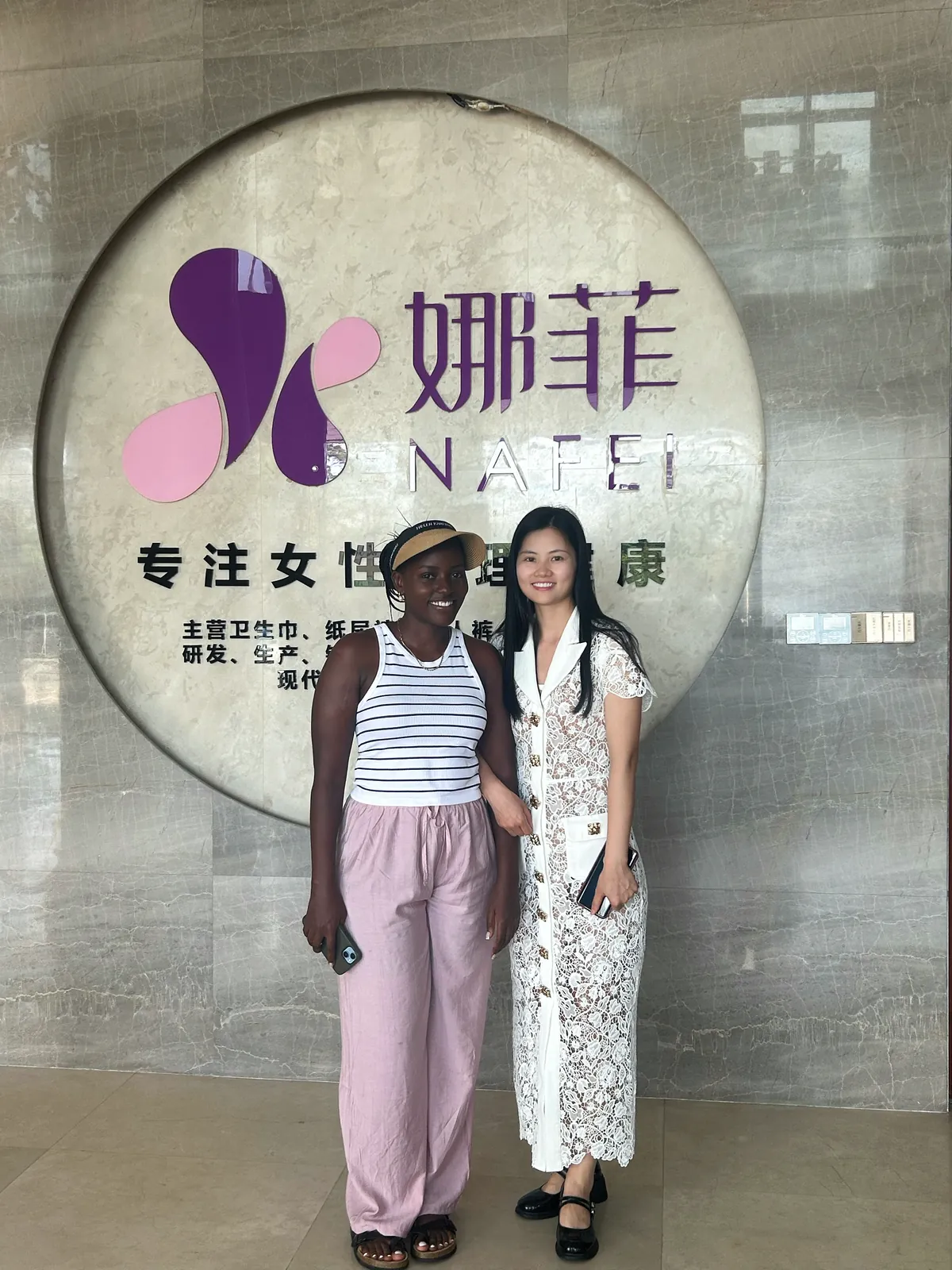
Why the context photograph is useful
A logo that looks balanced on a white artboard can appear too small beside a product name on a printed pack. A photograph of the mark on a wall gives a designer a rough sense of scale before the first print proof.
It is a design aid, nothing more. We would not use a reception photograph to claim anything about a product or a production site.
The part that belongs in the brief
Logo files, colour values and placement rules go into the artwork brief with a version number. When a buyer changes a pack count six weeks later, that version number is what tells us whether the artwork on file is still the right one.


