

These four photos were taken at the same table over two days. In each one the people are different, but the objects on the table barely move: a few packs, a sample of the topsheet, and a notebook. The pictures are useful because they show three separate stages of a sourcing conversation.
The first stage is a general enquiry. A visitor asks what we make and picks up a pack. The second is a comparison. Someone turns two packs over and reads the back panels. The third is a specification discussion, when the notebook opens and a buyer starts writing down pack counts and sizes.
Where the conversation slows down
Most delays appear at the second stage. A buyer who has a retail brief often needs to know whether a claim on an existing pack can be repeated on a new one. That is not a design question. It depends on the product specification and the market the pack will be sold in.
Our team has learned to keep a short list of items that cannot be confirmed at a fair. Printed claims, language versions and regulatory wording all go back to the office. Saying so at the table is faster than promising an answer later and then changing it.

From a photo to a sample request
The third stage is the one we try to reach. A useful sample request names the format, the absorbency level, the pack count and the destination market. Four lines in a notebook are worth more than a long conversation about general capability.
We photograph the table because it reminds us what was physically available to show. If a buyer asked about a backsheet option and no sample was on the table, we add that option to the next kit. In our experience, a missing sample is the most common reason a promising enquiry goes quiet.
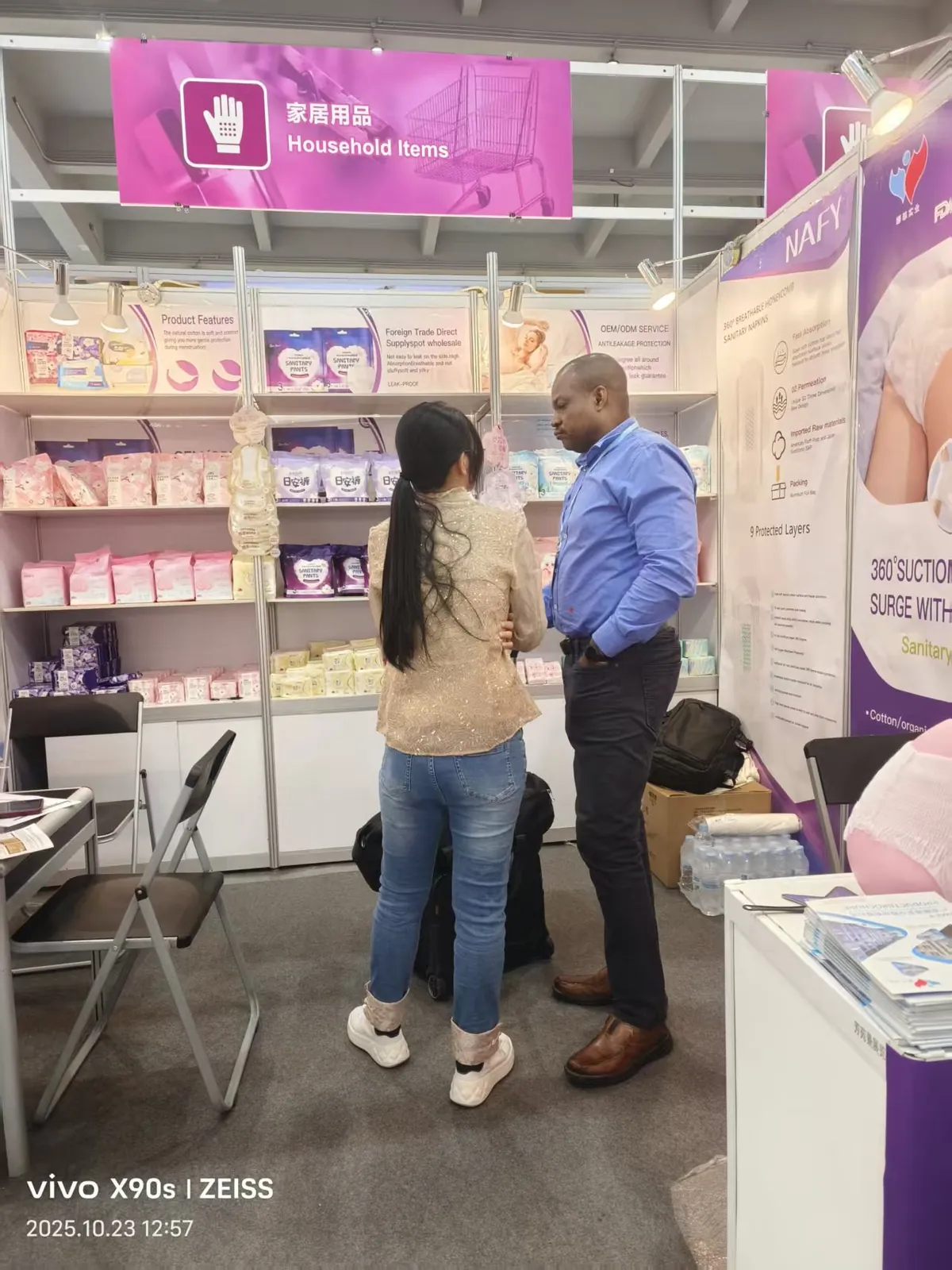
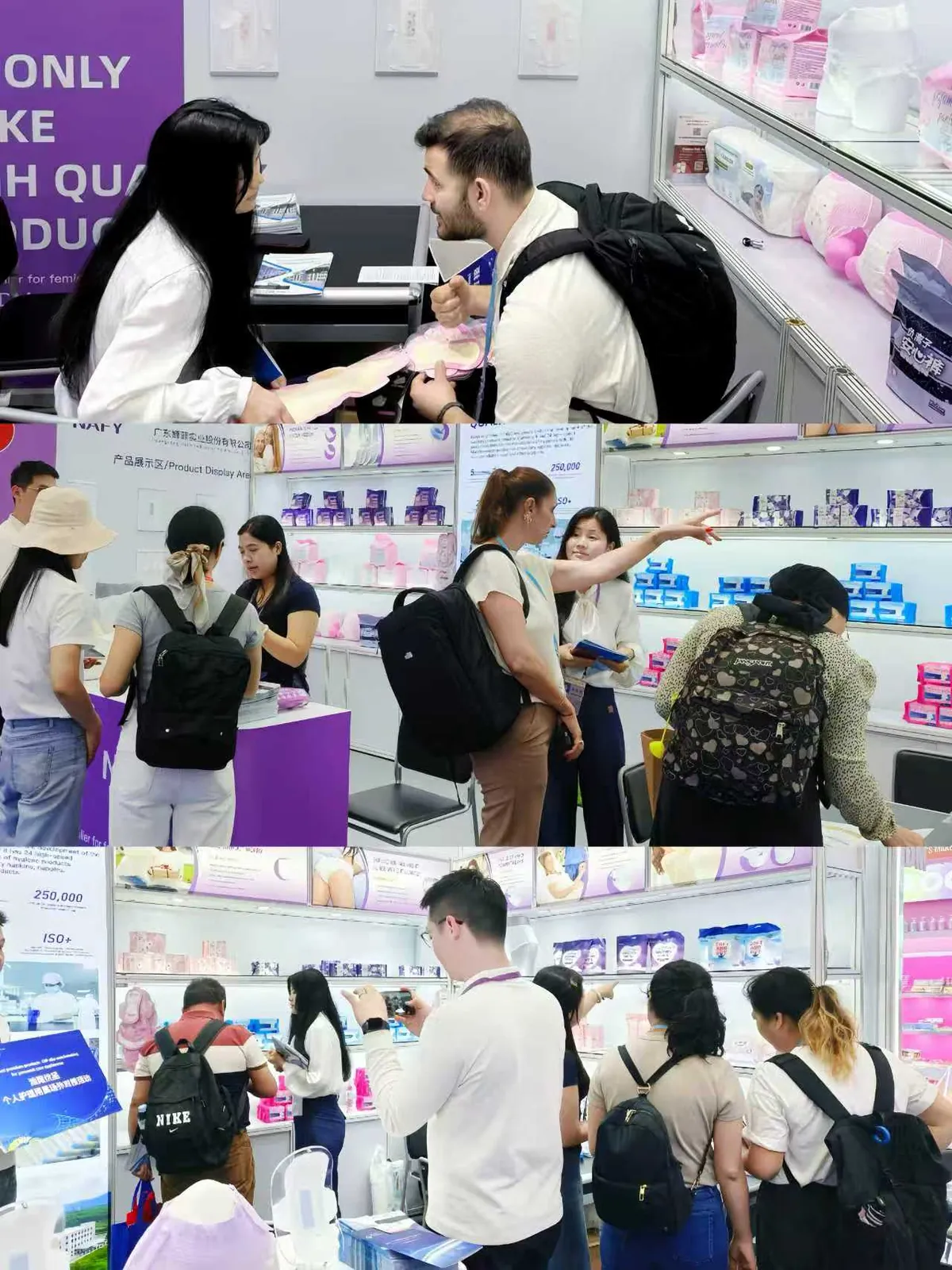
A note on what these photos do not show
None of these images records a price or a commitment. A fair is where a brief becomes specific enough to quote, not where an order is placed. We keep the photos with the enquiry notes so the two can be read together later.
Three stages, one table, four pictures. The value for a buyer is simple: the earlier the specification is written down, the sooner a realistic sample can be sent.


