
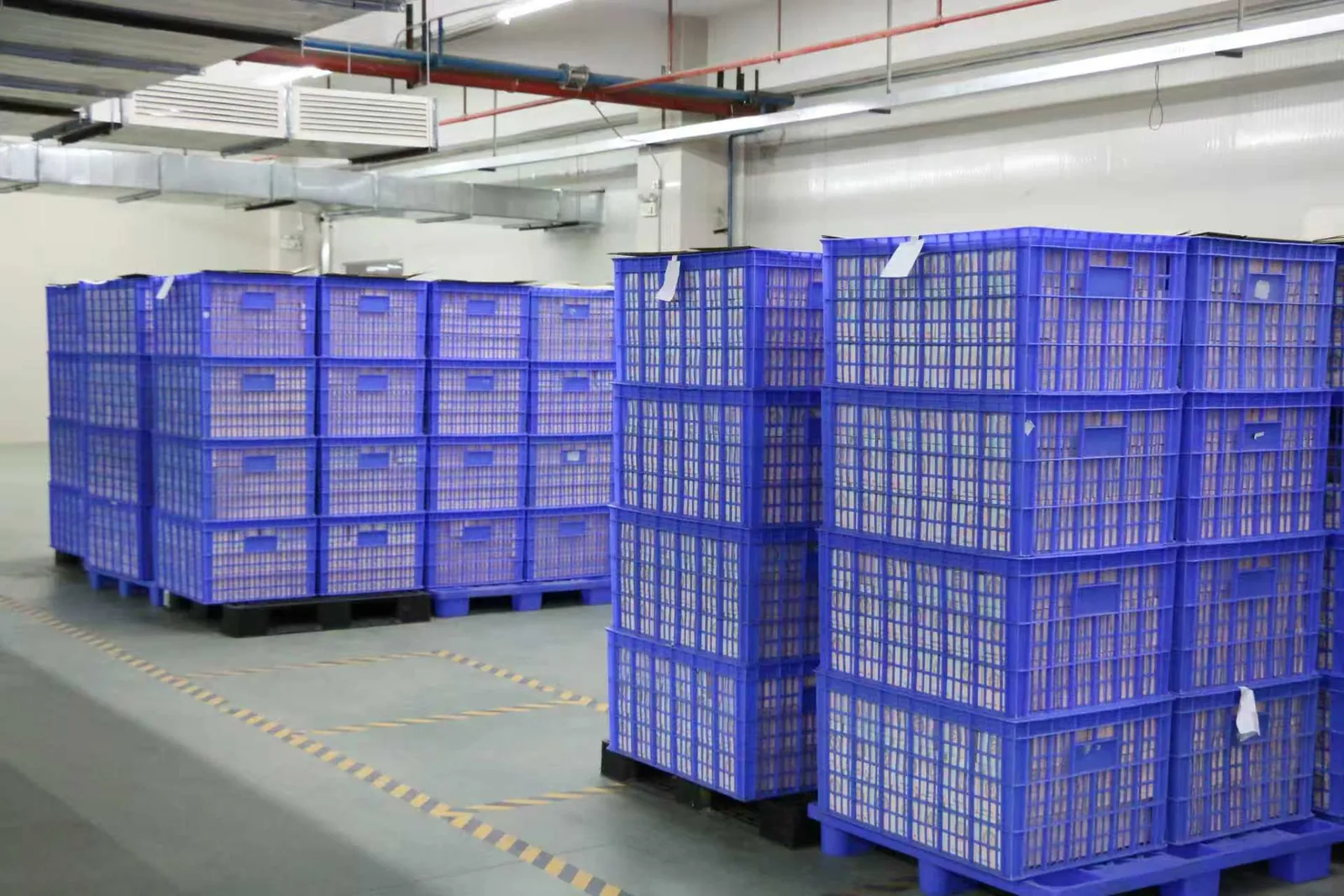
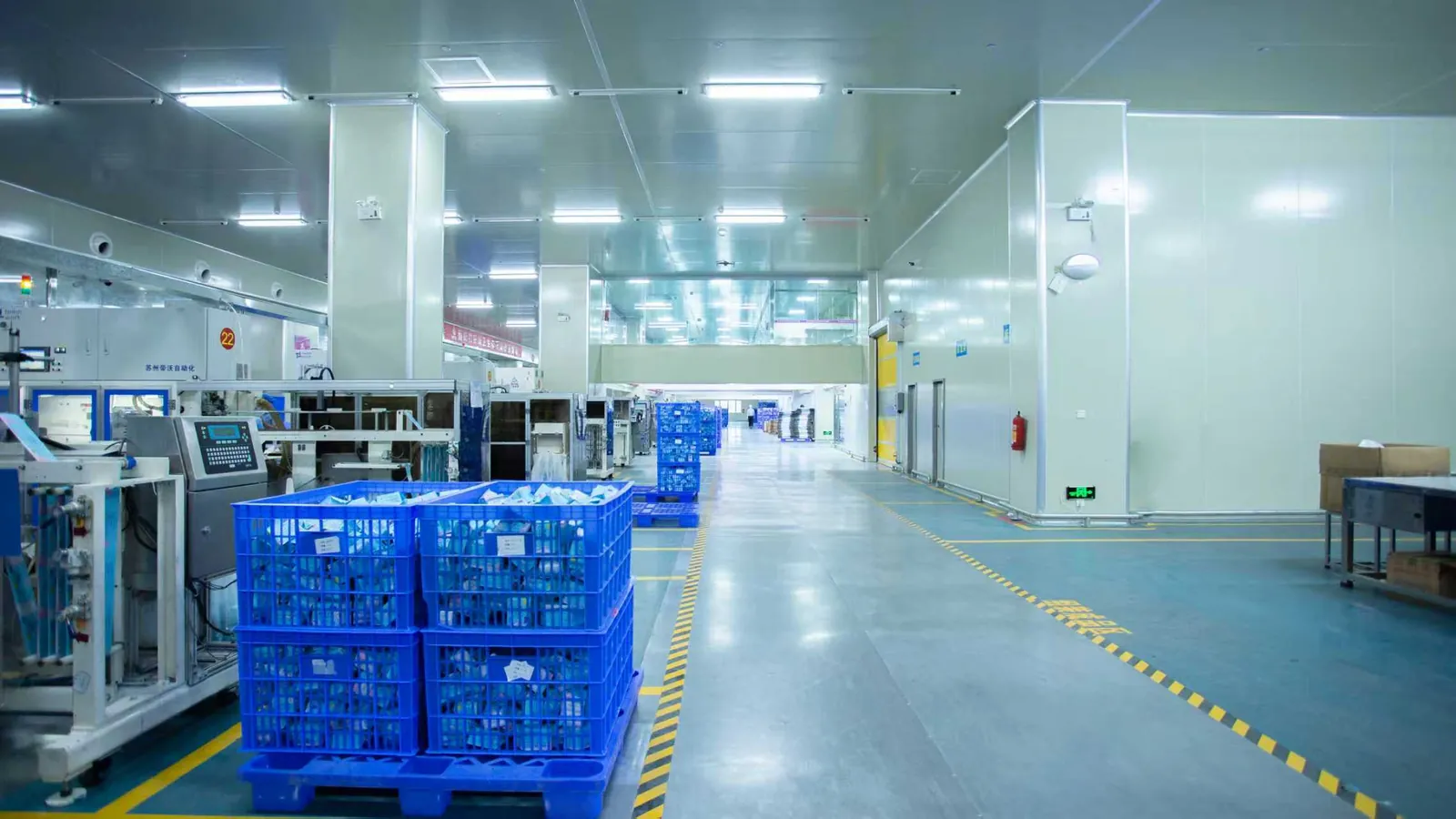
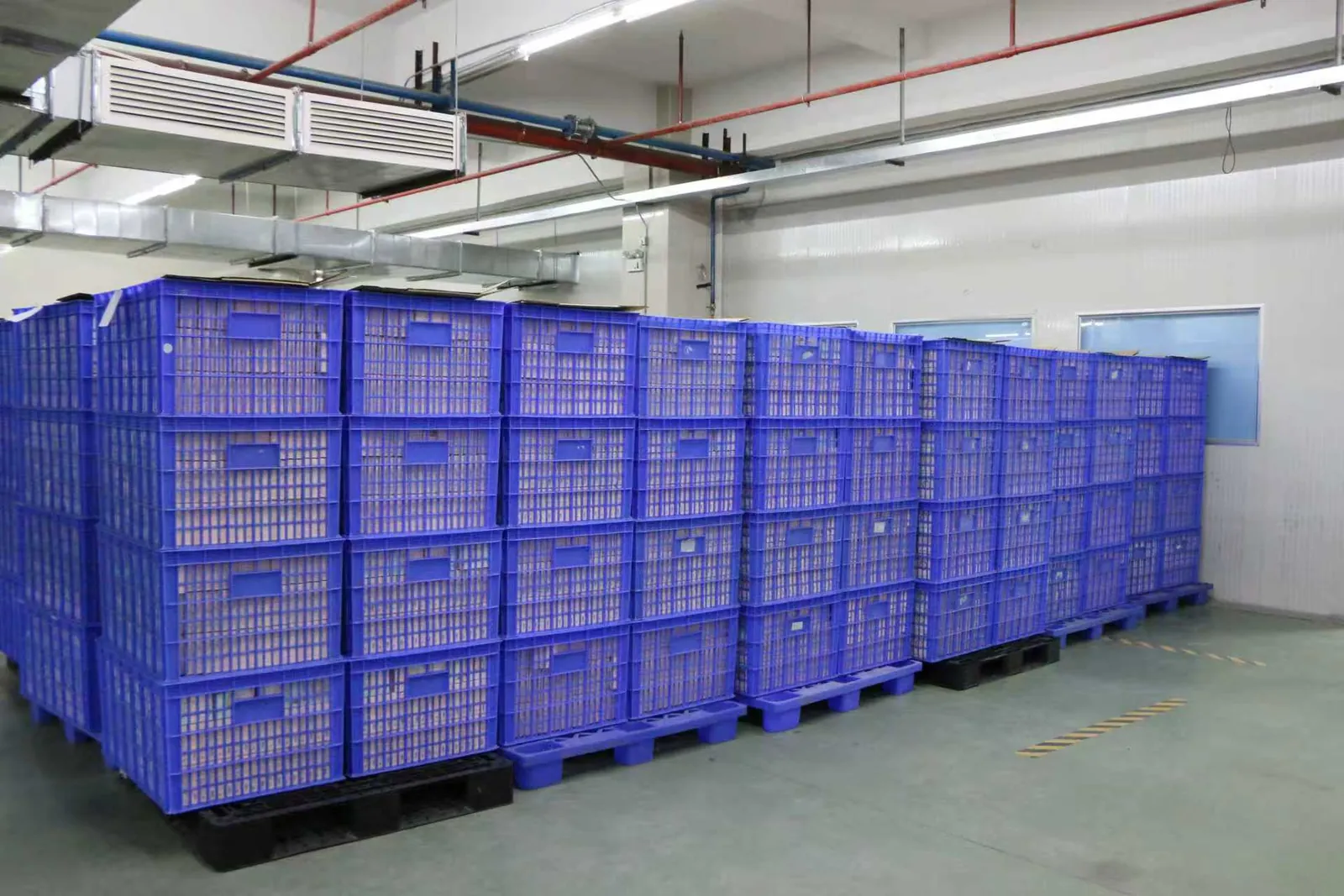
Three photographs from the same production area show blue crates stacked along a corridor and inside a store. They are ordinary images. They also show one of the simpler controls we have: a place for work in progress that is not the floor.
A converting area produces offcuts, part-finished batches and samples waiting for checks. If those items share a surface with finished goods, traceability becomes a matter of memory. Crates give each state a visible location.
The colour is a control, not a design choice
One colour for work in progress and another for finished cartons is easier to check than a label on every container. A supervisor walking the floor can see a misplaced batch without stopping to read anything. That is the whole point.
Our team uses the same rule in the warehouse photos in this set. A blue crate in the finished goods row is a question, not a minor untidiness.
Why the aisle stays empty
Clear lanes look like wasted space in a photograph. In a running plant they serve three purposes: material movement, safe access to equipment and a quick visual check of what is staged where. A blocked aisle hides all three.
We check the lane at the start of each shift rather than at the end of an audit. A blocked aisle at 9 am usually means a batch was staged in a hurry, and that is worth knowing early.
What this means for a buyer
Housekeeping photographs are not a quality certificate. They are evidence of a habit. A buyer asking about traceability is really asking whether a batch can be located and identified at any point, including the unglamorous part between two machines.
Three frames of blue crates will not answer that on their own. They do show the place where the answer would start.


