
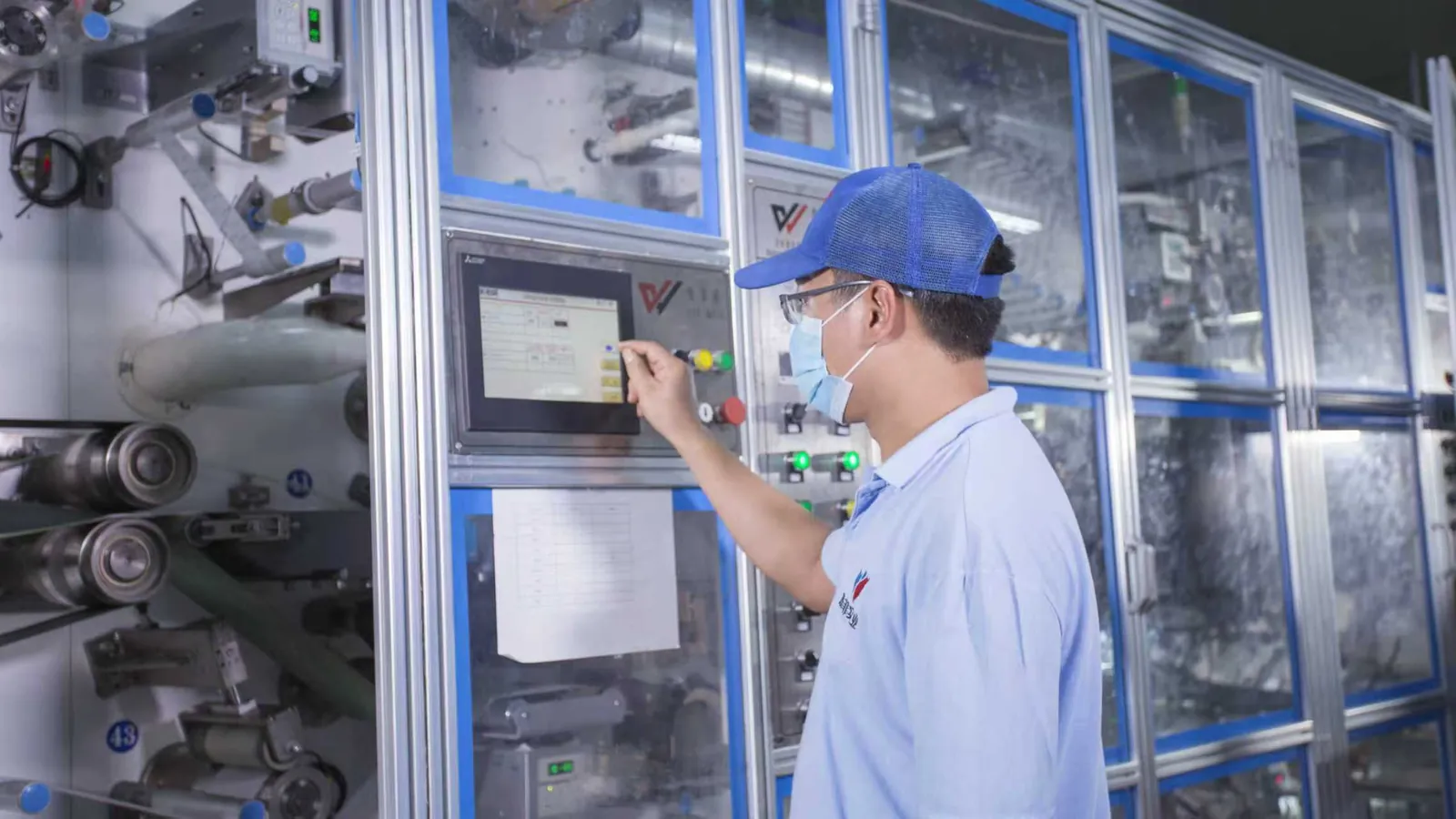
A production line photograph usually shows the whole machine. The more informative frame is the operator panel. Five images in this set show panels, guarded equipment and the points where someone stops to check what the line is doing.
A line does not run unattended from a settings sheet. Speed, tension, sealing temperature and material alignment are watched while the run is in progress. A panel photograph is a reminder of which of those values a person can actually see.
The numbers an operator reacts to first
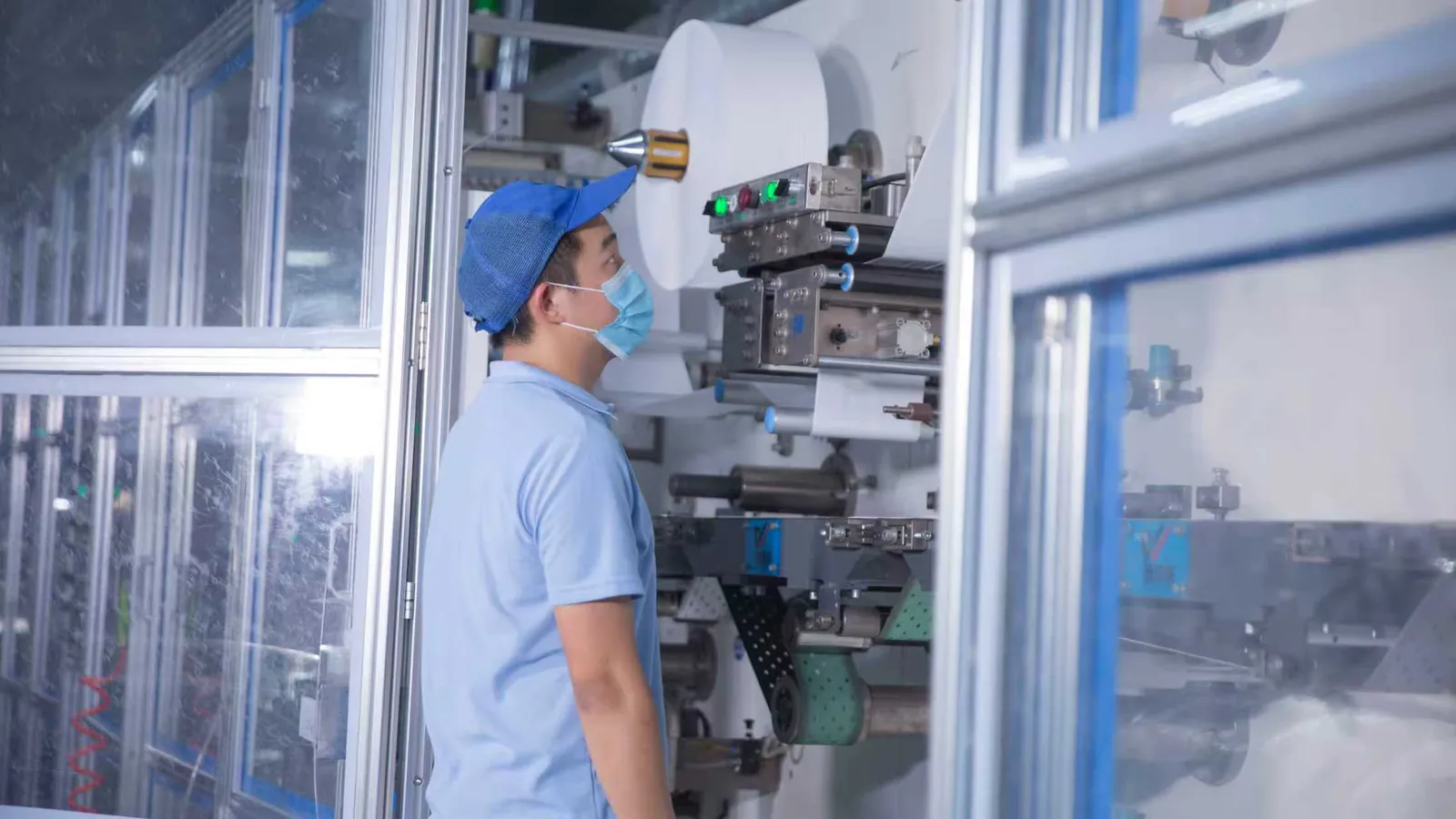
When a new specification starts, the first minutes are about stability. Material tracking, side seal appearance and pack alignment are checked before output volume matters. A line can hit its nominal speed and still produce packs that need to be pulled.
On our lines, the operator keeps one sample from the start of a run and one from after any adjustment. Two physical packs say more about a change than a screen trend does.
Why guarded equipment appears in these photos
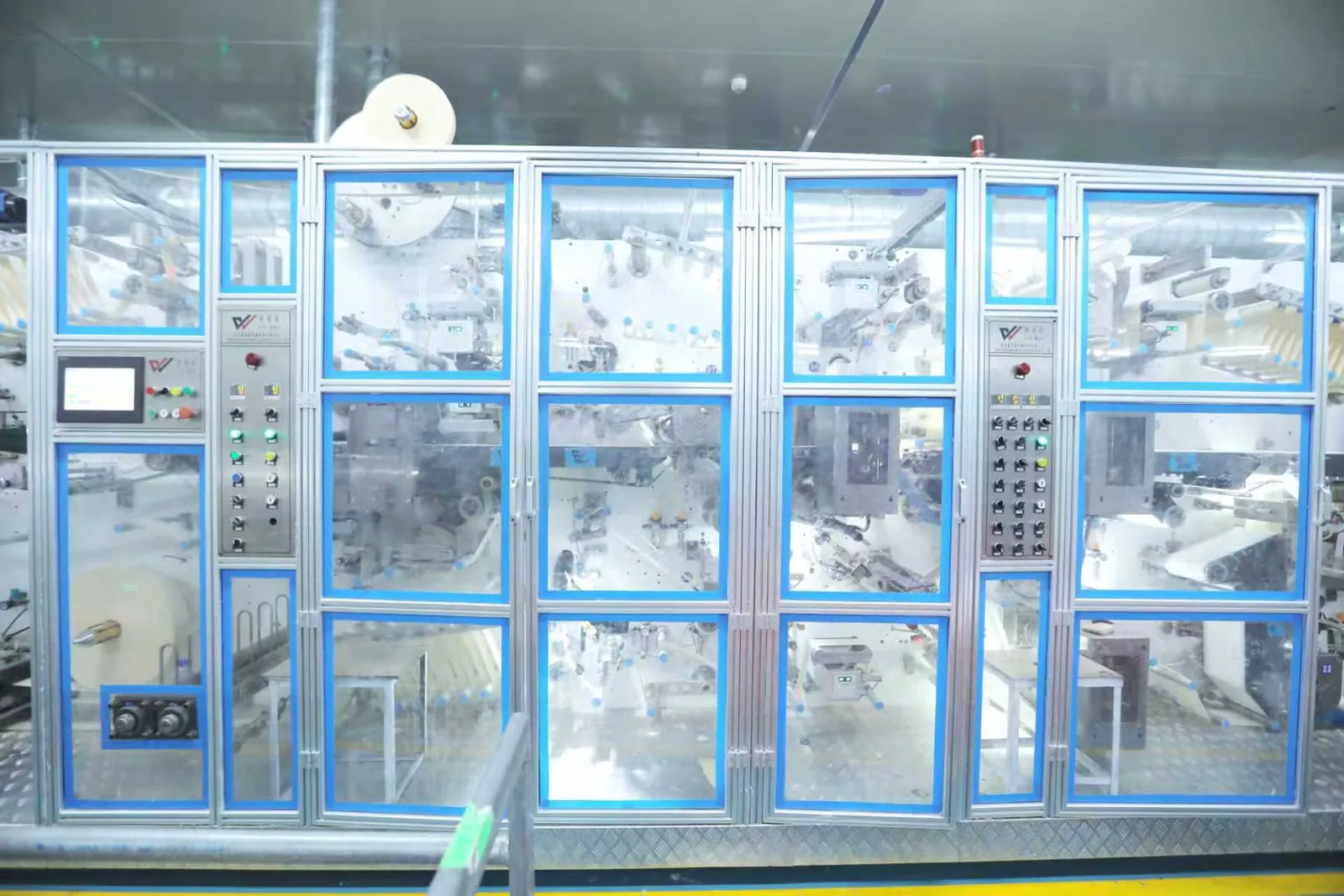
A transparent guard is not a studio detail. It lets an operator watch the material path without opening the machine. Several of the frames show that same arrangement from different angles because we use them when explaining a line to a visiting buyer.
Buyers often ask to see the point where a specification can drift. The honest answer is that drift is watched at several points, and the panel is only one of them. A visit is more useful when the conversation starts from the machine rather than from a brochure diagram.
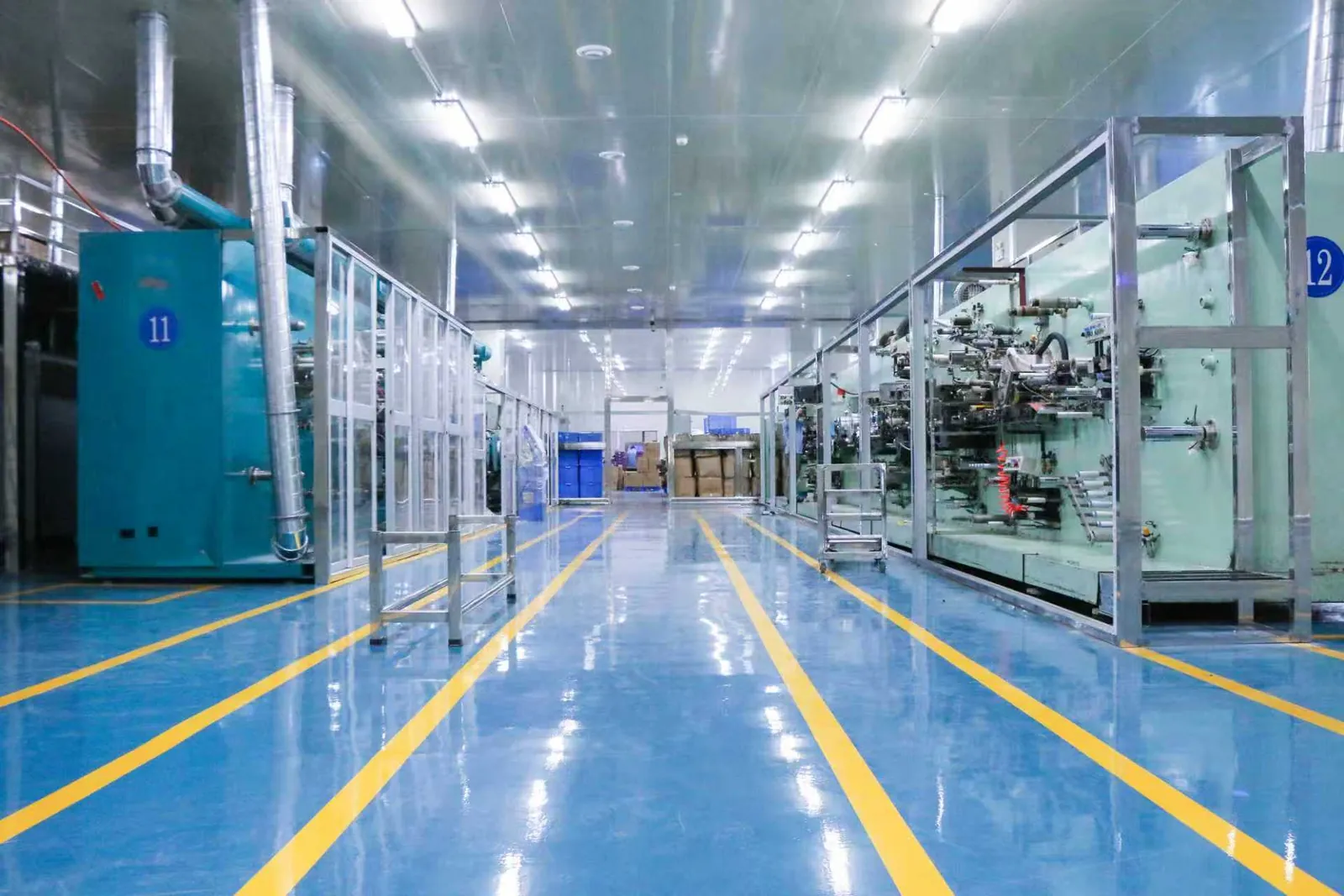
What a factory visit changes
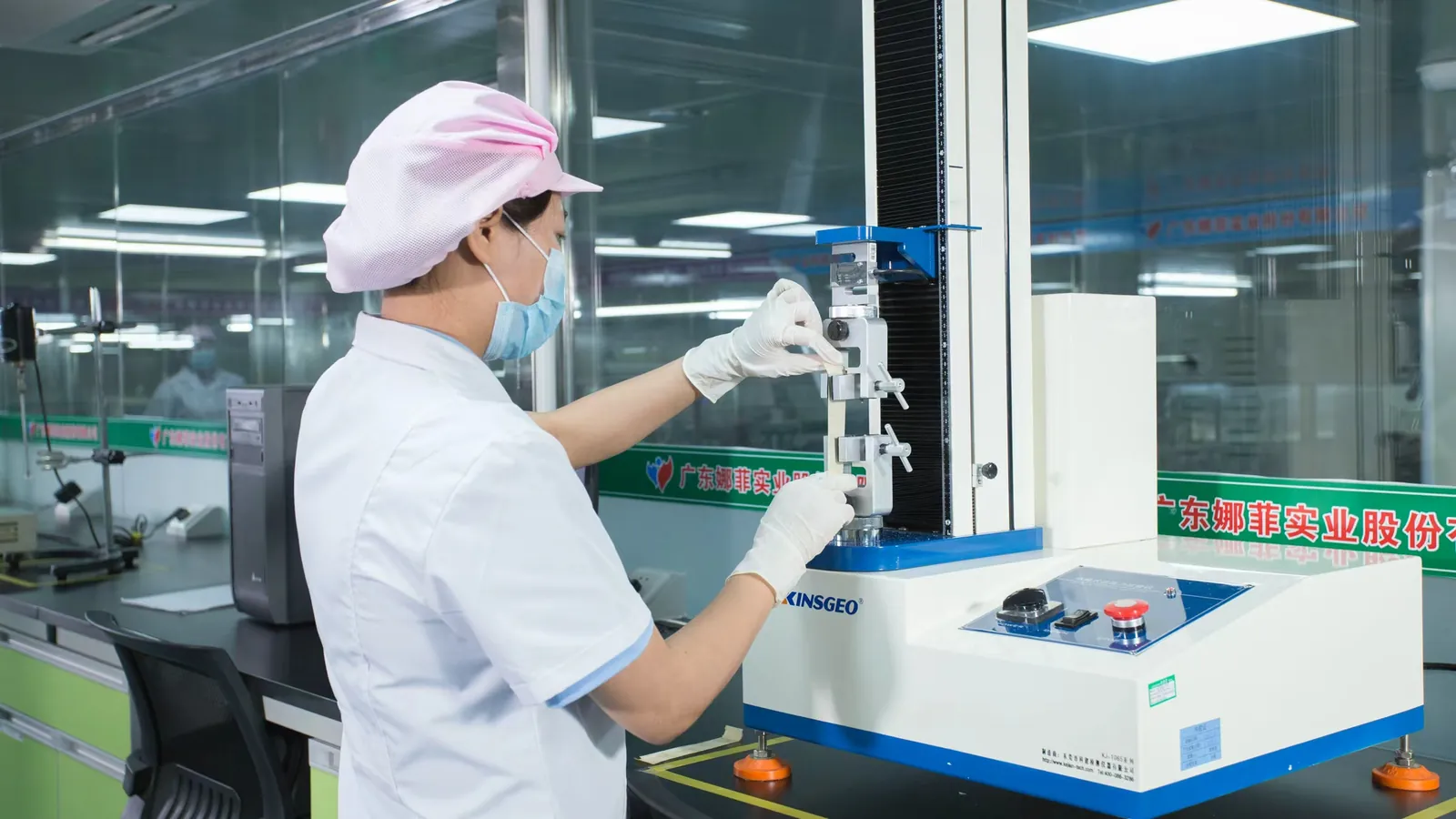
A buyer who has seen a panel asks different questions afterwards. Changeover time, tolerance on a size range and the reason a sample is pulled at the start of a run all become easier to discuss. Our foreign trade team prefers to walk the line before sitting down with a specification sheet.
Five photographs do not teach anyone to operate a converter. They do show where the watching happens.


