
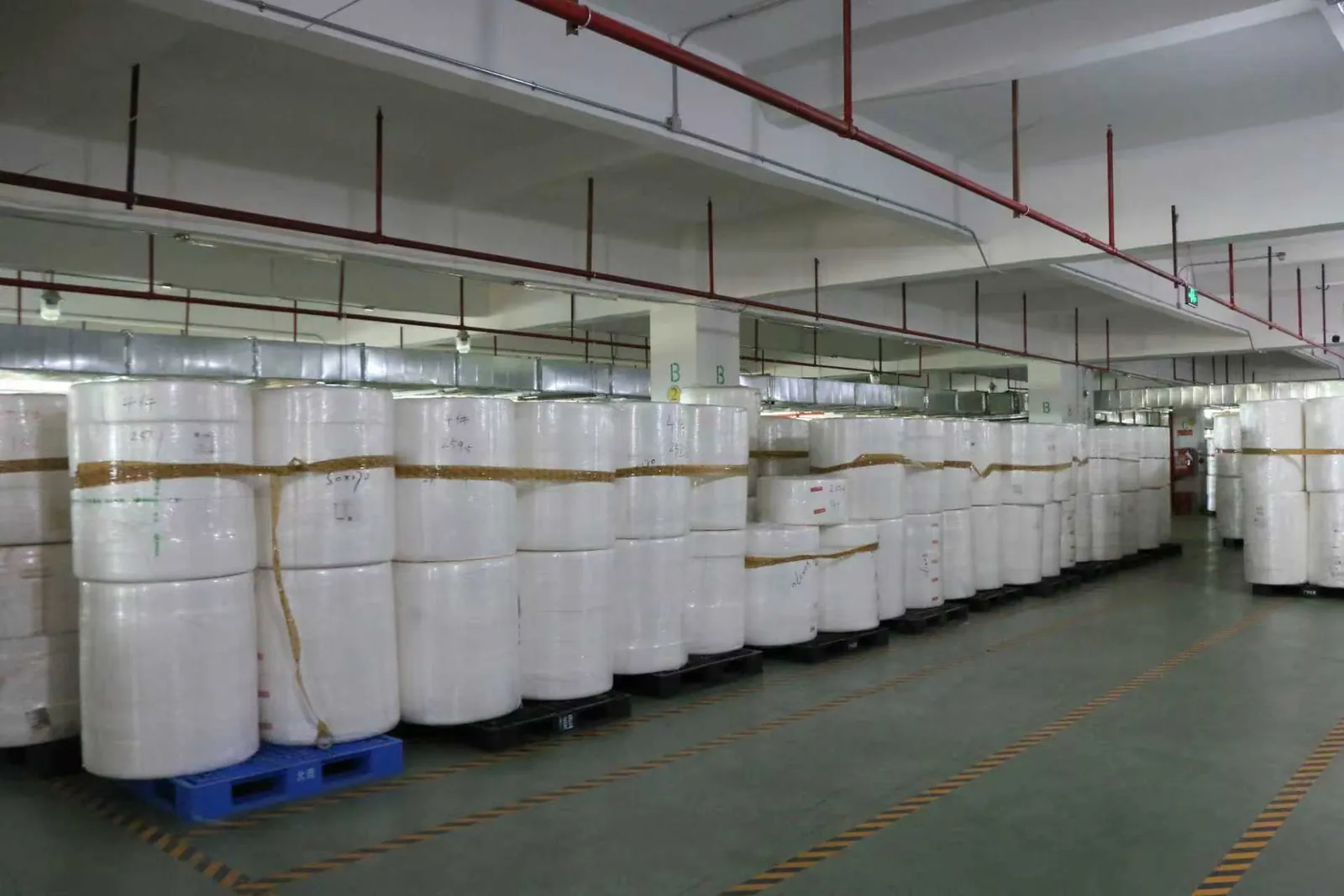
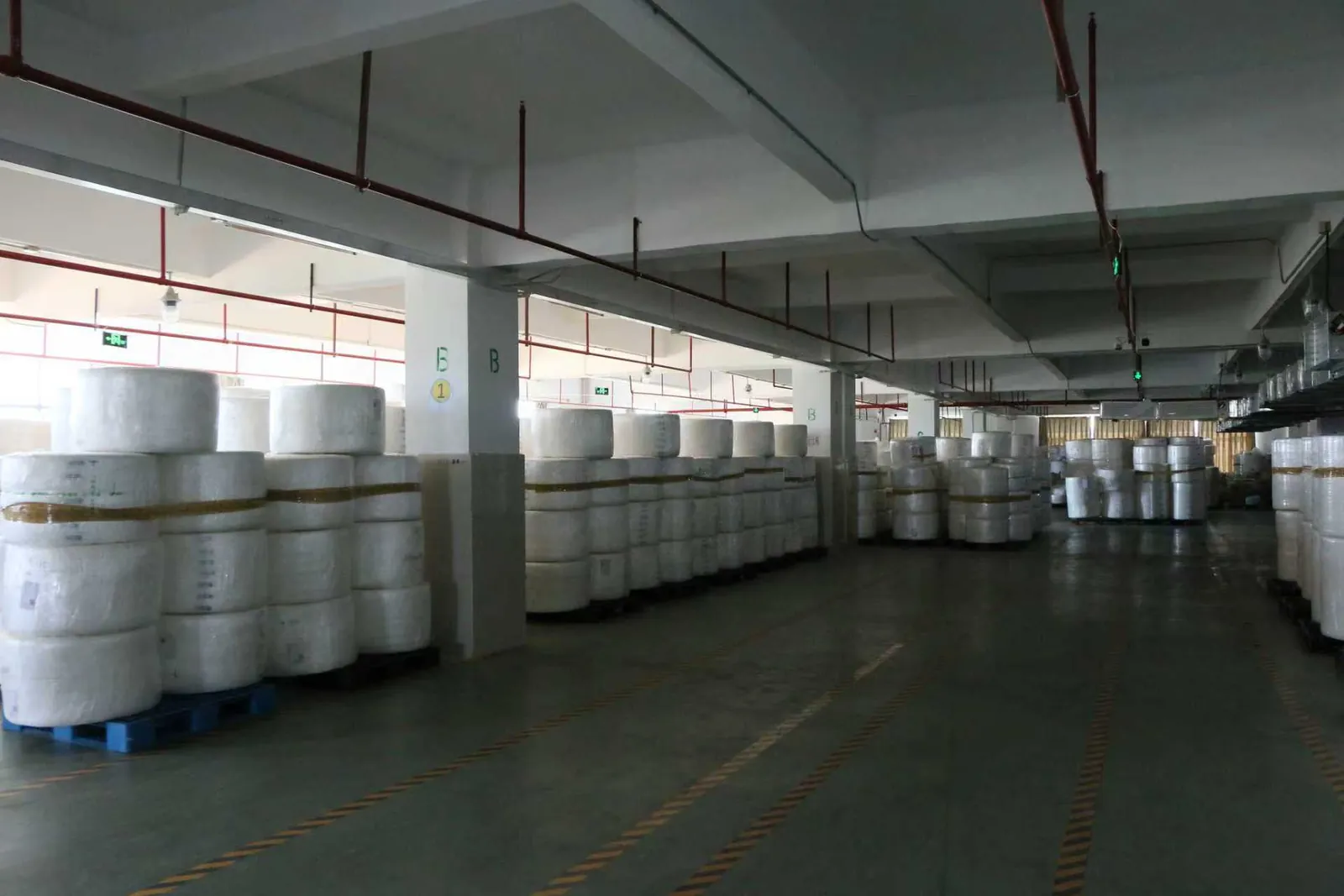
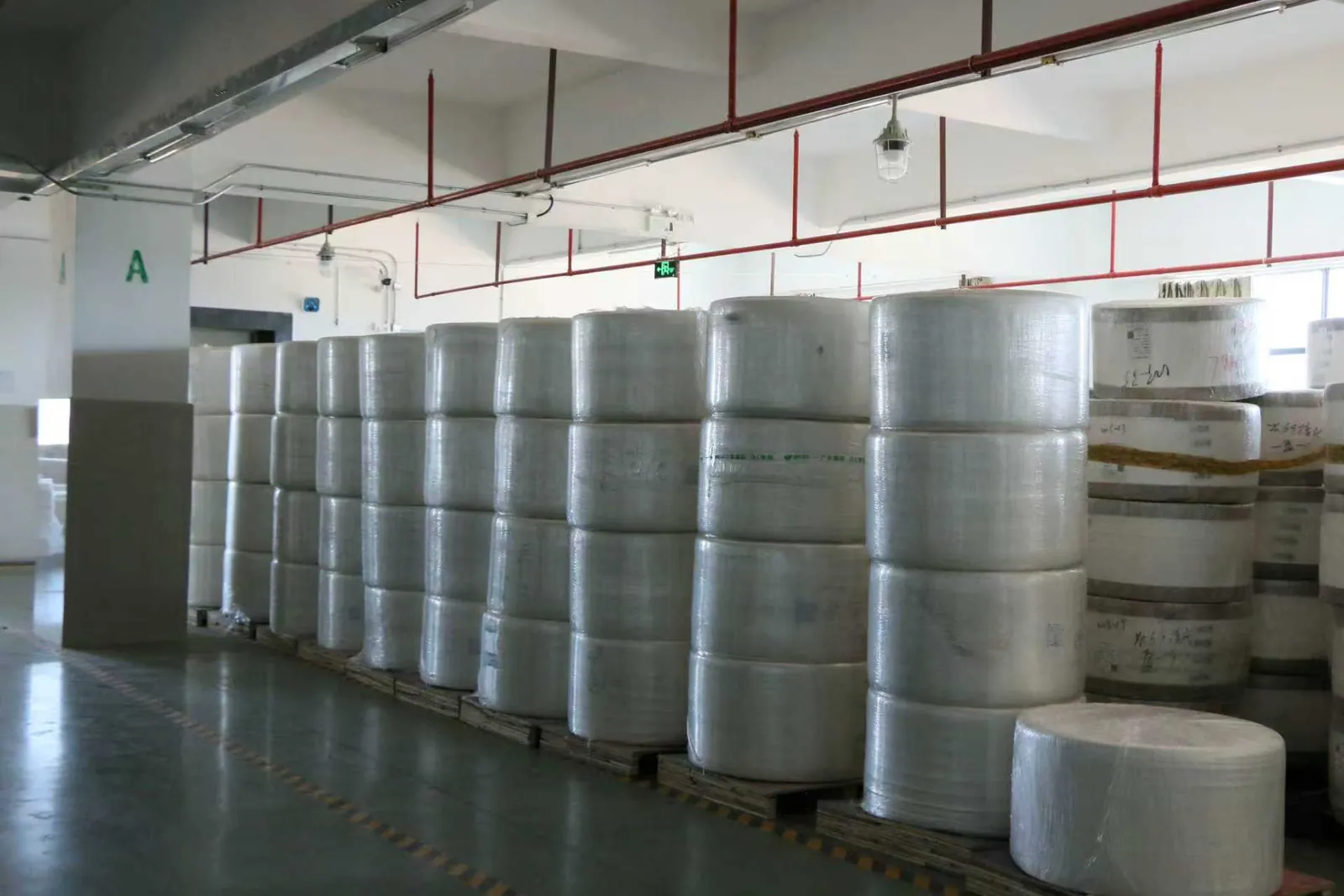
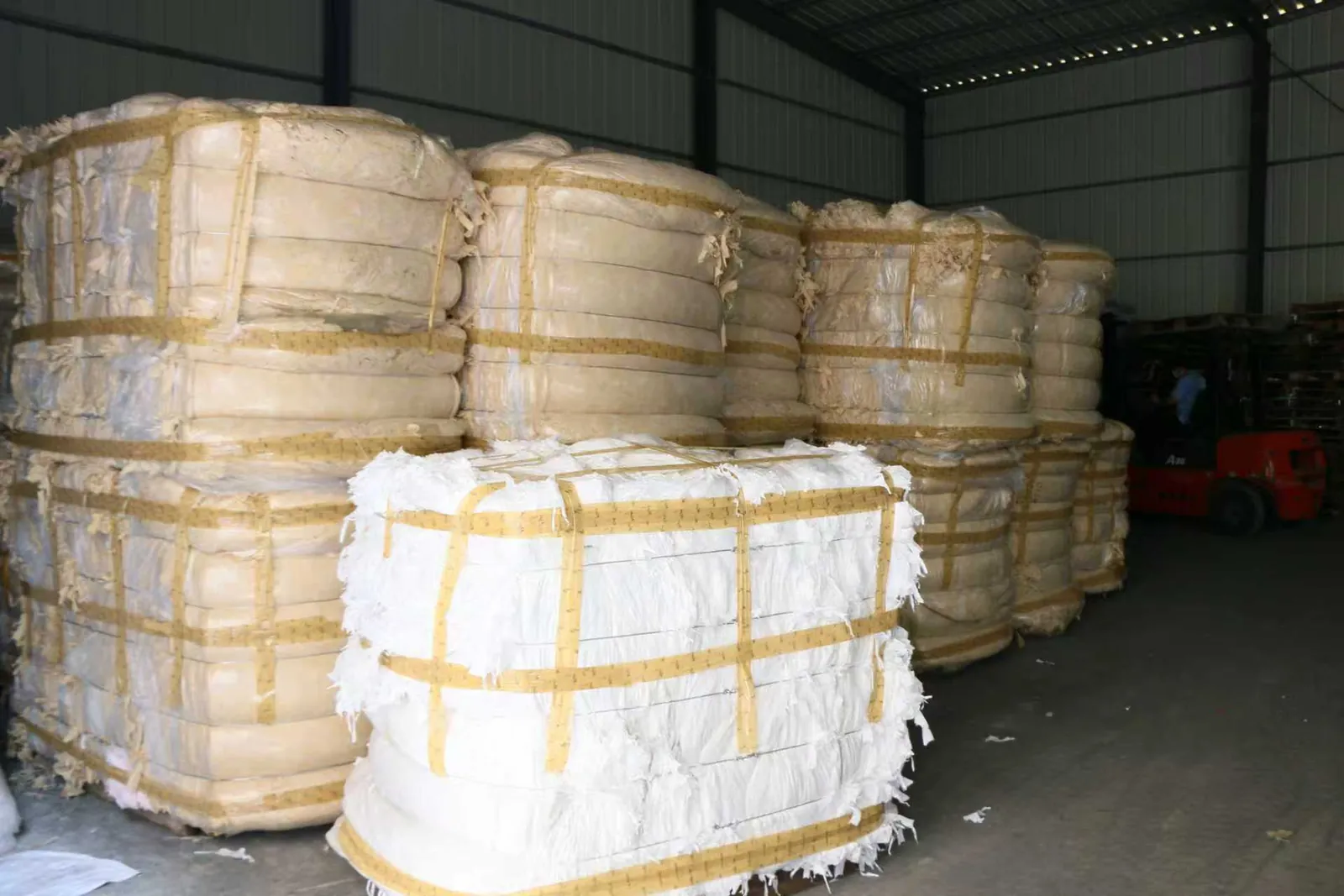
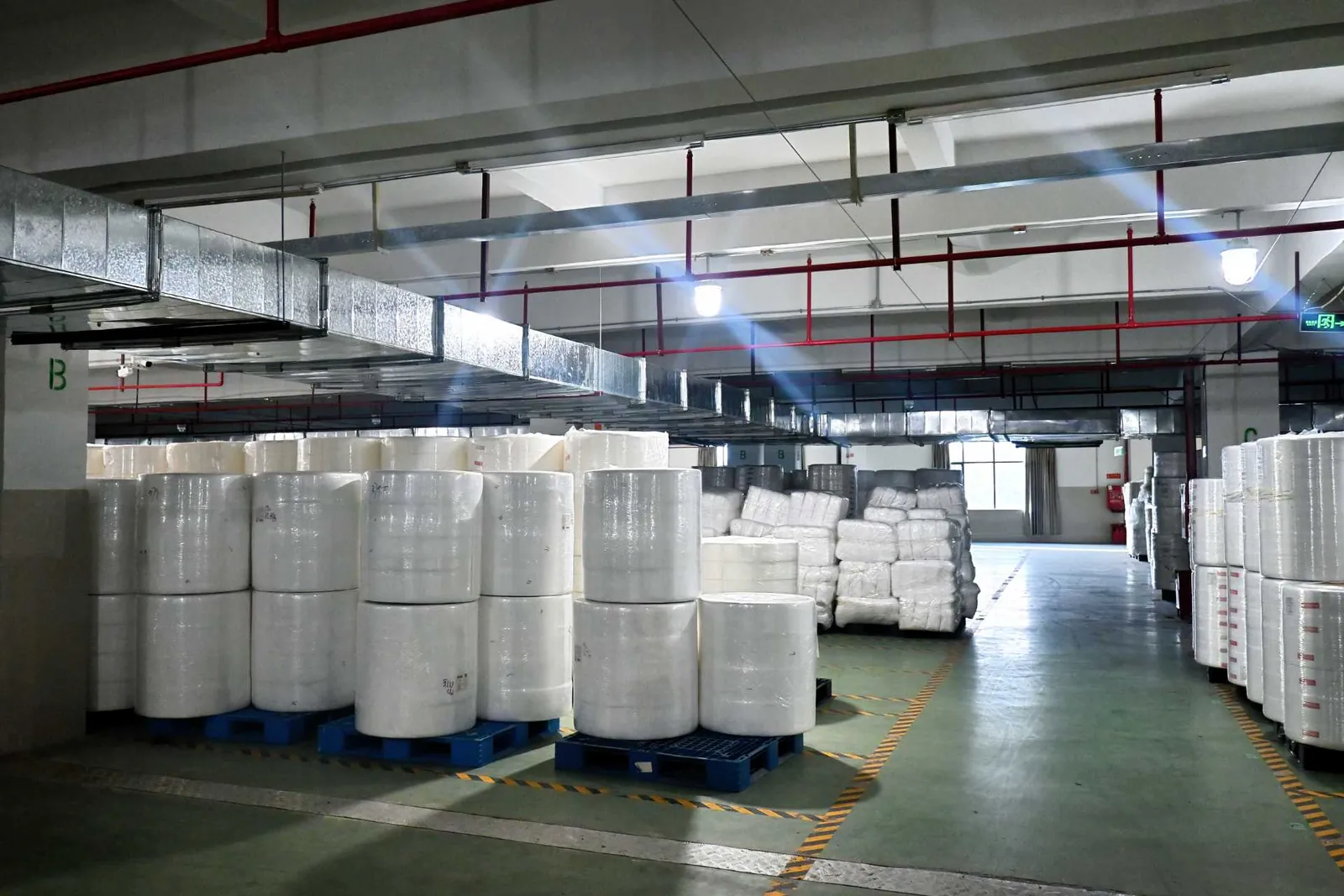
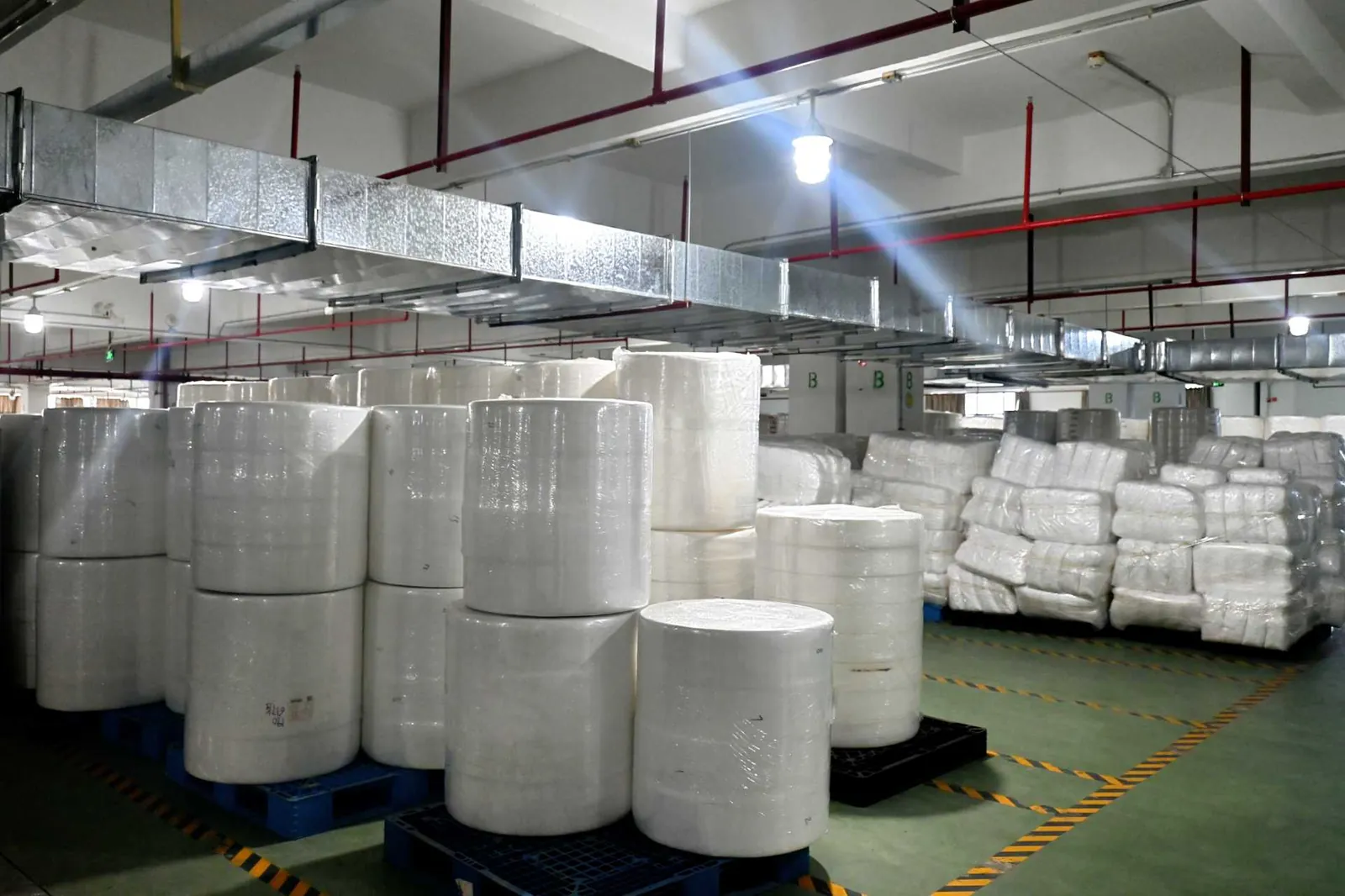
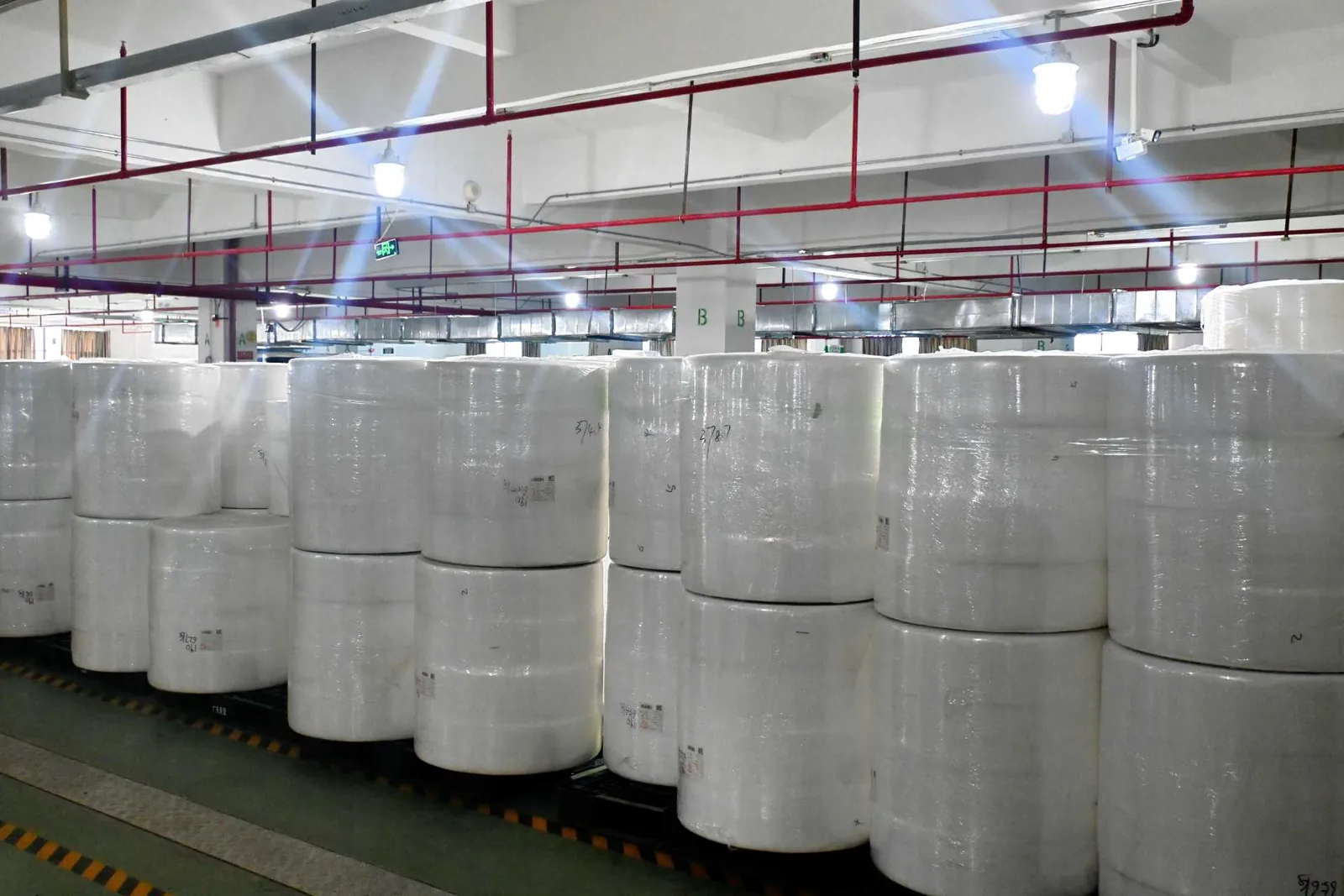
Eight photographs of the same warehouse show white rolls stacked in rows, wrapped pallets and aisles kept clear. None of them shows a finished pad. They are still the most useful images we have for explaining lead time to a buyer.
A production slot is only as firm as the material behind it. Core components, topsheet, backsheet film and packaging all arrive on different schedules. When a buyer asks for a date, the first check is not the machine calendar. It is the stock in these rows.
Why roll width matters more than roll count
A full warehouse can still be the wrong warehouse for a given order. A new pad width or a different backsheet specification may need a material that is not on the shelf. Counting rolls tells us very little. Checking the width and the specification tells us whether a date can be held.
Our team confirms three items before a slot is offered: the material specification, the quantity available for that width, and the arrival date of the next batch. Two of the three are visible in these photos; the third comes from the purchase plan.
The difference between storage and staging
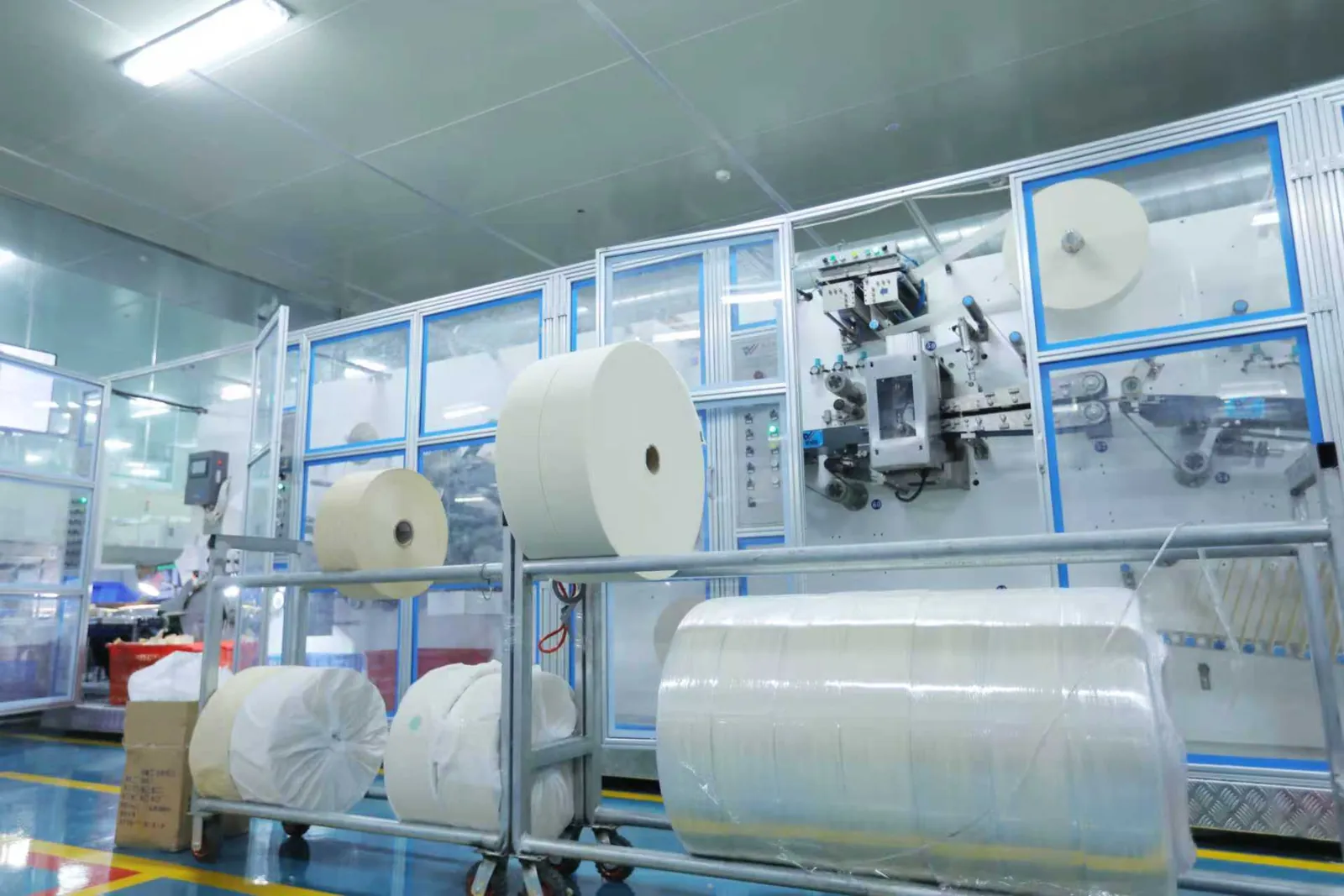
Several of these frames show rolls in a store; others show rolls already positioned for a line. That distinction is easy to miss in a photograph and important in planning. A roll in the store is available in principle. A roll staged beside a line is committed to a run.
We keep the two areas visually separate for that reason. When a buyer changes a pack count late, the question is not only whether the machine can be adjusted. It is whether the staged material still matches the new specification.
What we tell a buyer at the quoting stage
A date given before the material check is a guess. We would rather confirm a specification, check the rows and then give a date that holds. In our experience buyers prefer one firm answer to two optimistic ones.
These eight photographs are not a capacity claim. They are a record of the first question we ask internally: is the right material here yet?


