

Most exhibition galleries show the middle of the day. These eight frames were kept for a different reason. They record the team, the quiet moments and the collages of many small interactions. They are the closest thing we have to a picture of the two hours at either end of a show.
Setup and breakdown are when sample kits get mixed, display rows get rebuilt and notes get lost. They are also the hours that decide whether the next day starts cleanly. No visitor sees them, which is exactly why they are worth writing down.
Setup is a specification check, not decoration
Packs are placed by format and by size, not by colour. If a row is built from whatever came out of the carton first, the first buyer conversation of the day starts with an apology. Our team walks the shelf once with the sample list in hand before the doors open.
That check takes about twenty minutes. It catches the two errors we see most: a size that never made it out of the box, and a display pack printed for a different market than the one being discussed.


Handover between shifts
Two people cannot cover a stand for a full day and still remember every enquiry. The handover is where detail disappears. A short written note per conversation works better than a verbal summary at the end of a shift.
We have found that the note needs only three things: what the visitor handled, which question stayed open, and whether a sample was promised. Anything longer does not get written during a busy hour.


Breakdown tells you what to pack next time
What is left on the table at closing time is as informative as what was taken. Packs that were never opened belong in a different kit. Packs that ran out need a spare. A tally at the end of the day takes five minutes and saves a round of guessing before the next show.
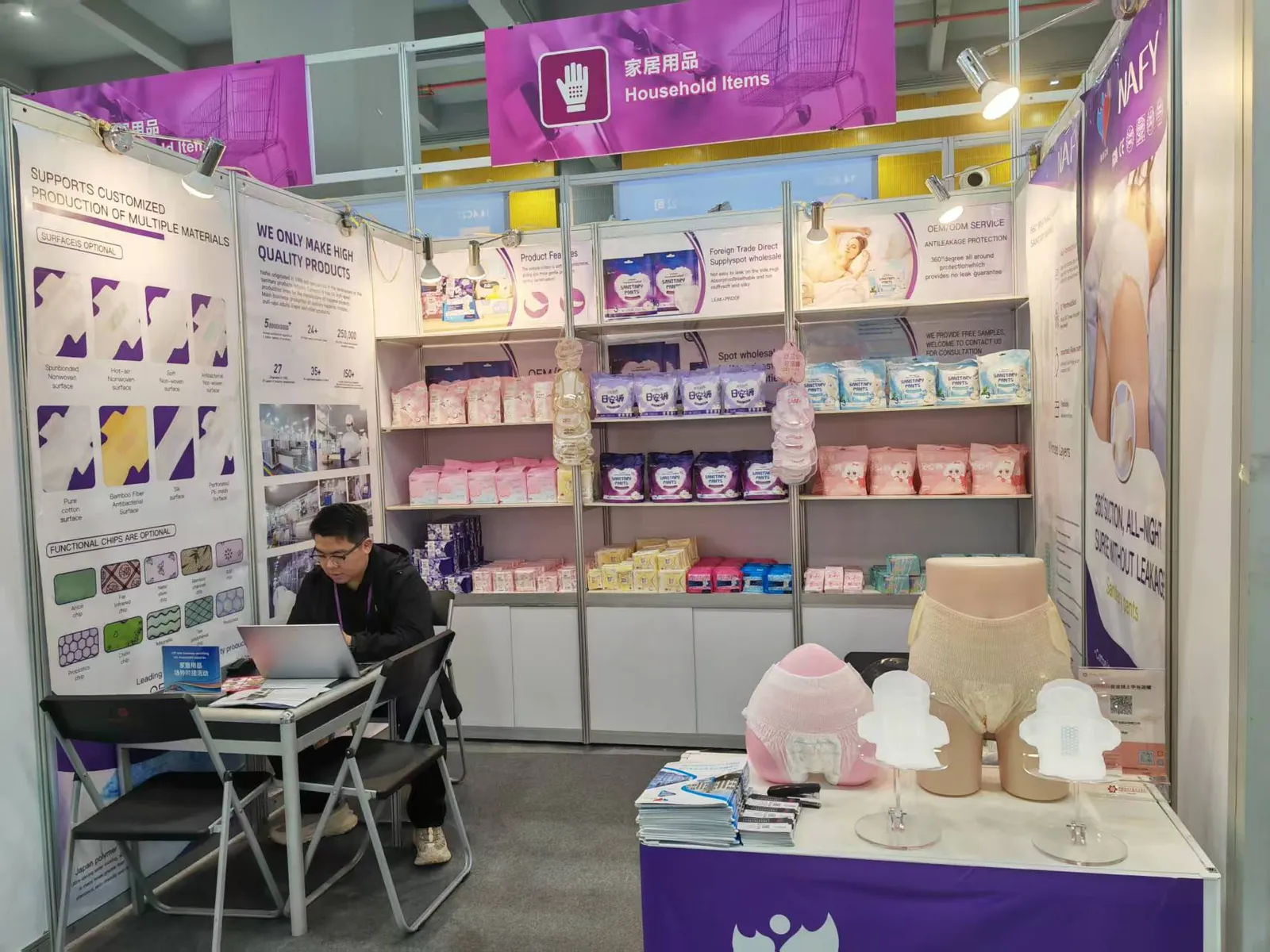


Eight pictures cannot show a setup checklist. They do show why we keep one. The middle of the day belongs to visitors; the two hours around it belong to the sample kit.


