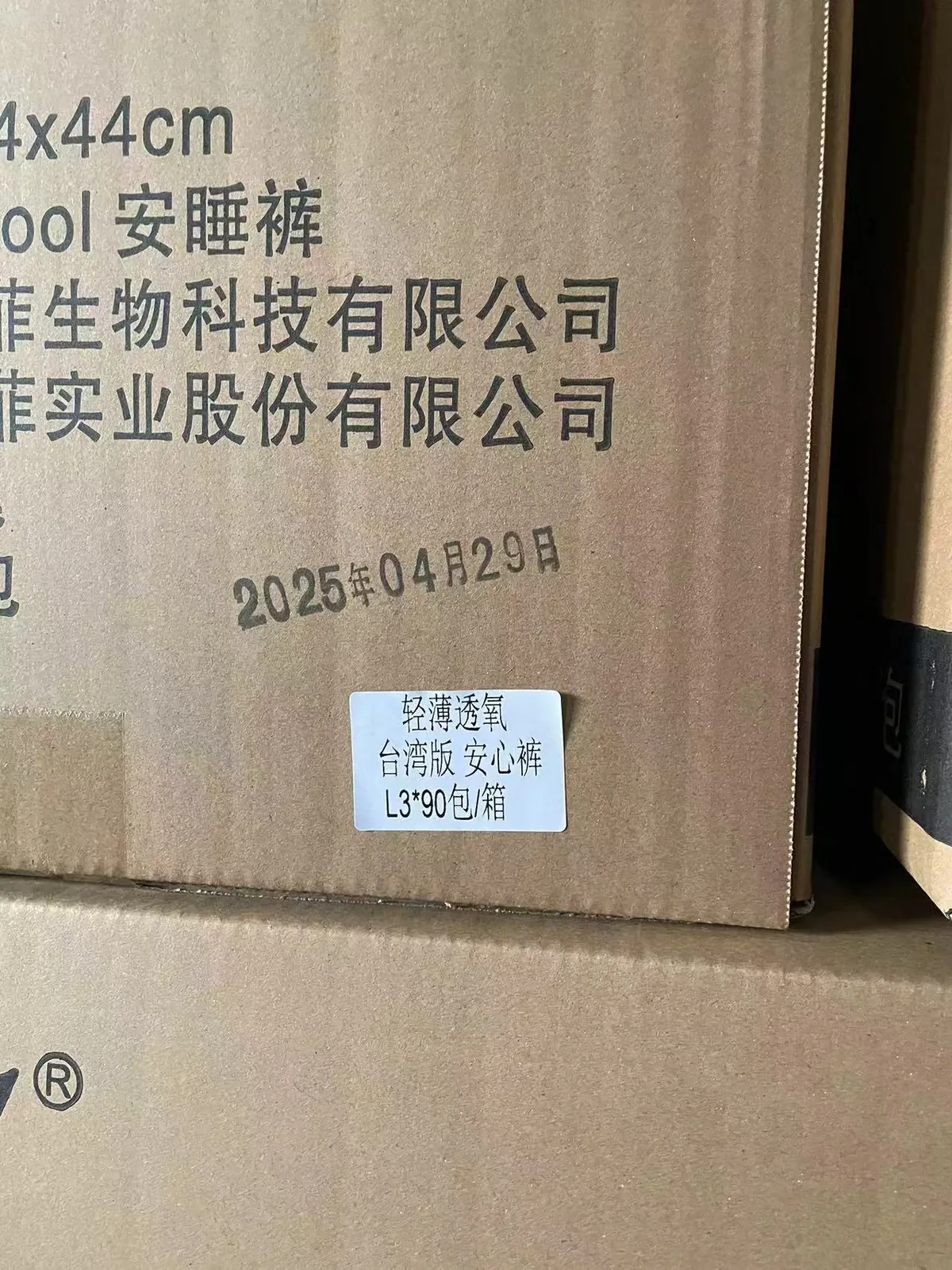
A single close photograph of an outer carton carries more operational information than a wide picture of a warehouse. The printed mark shows the product specification, the quantity and the production date. Those are the fields a receiver reads first.
Carton marks are not design work. They are the only specification text available to someone unloading a container who has never opened the artwork files or the order confirmation.

Why the production date field matters
A receiver sorting a mixed shipment needs to know which production run a carton belongs to. If a question arises about a pack, the date and the batch reference are the starting point. A carton without them turns a small query into a search through the whole container.
Our foreign trade team confirms the mark text in writing before the outers are printed. Once cartons are produced, a correction means reprinting or relabelling every unit. It is a cheap check and an expensive fix.

Three fields we ask a buyer to approve
Product specification and format, pack count and carton quantity, and the wording required for the destination market. The third one varies. Our team does not assume that a mark used for one shipment can be reused for another country without review.
A photograph of the printed carton is then sent before dispatch. It gives the buyer one last chance to catch a transposed number or an outdated artwork version, while there is still time to correct it.
The wider point
Loading images show that a container was filled. A carton mark shows what is actually inside it. Both belong in the dispatch record, and neither replaces the packing list.