
A single pack is a product. A wall of packs is a range. One image in this set shows a presenter standing in front of a full display of products. It is the frame we use when the conversation moves from one specification to a launch plan.
Buyers who arrive with a single format often leave with a different question: how many formats should launch together. A wall makes that question concrete, because it shows the shelf space a range occupies rather than the isolated appeal of one pack.
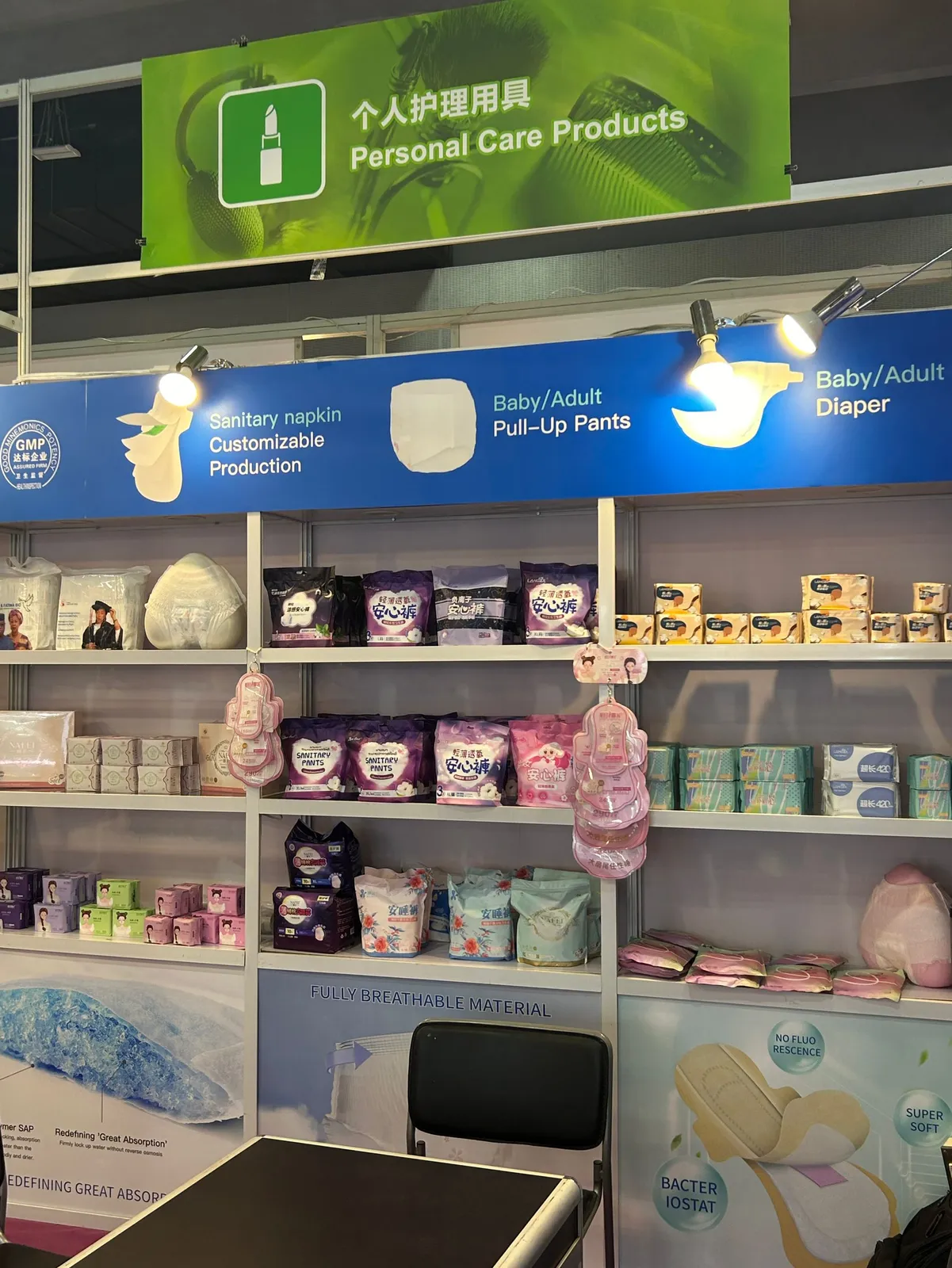

A range is a production plan, not a design moodboard
Every additional format brings its own material width, its own size run and its own packaging print. A wall that looks cohesive can still represent four separate setup sequences. That is the part a photograph cannot show, and the part a first order has to pay for.
Our team asks one question at this point: which single format has to be right on the first shipment. Once that is fixed, the other packs can be planned as a second phase. A launch built around a wall tends to be more expensive than one built around a confirmed format.

Where the visual genuinely helps
Three things are easier to settle with a full display in front of you. Whether one colour system works across pad and pants packs. Whether the size hierarchy reads at a distance. Whether a second format looks like part of the same brand or like a separate product.
Those are design decisions, and they are worth resolving before artwork is produced for several SKUs. A change to a shared visual system costs far less at this stage than after three sets of print files exist.
What we write down after the meeting
One photograph and four lines: the lead format, the second format if any, the shared visual elements, and the fields still open in the specification. The wall starts the conversation. Those four lines are what our foreign trade team works from.


