

A sample table tells you more by what gets touched than by what gets displayed. At the last show we kept four photos of the display area and a short tally of which packs visitors picked up. The tally changed how we pack the next kit.
The most-handled item was not the newest format. It was a standard pad pack that could be turned over quickly to read the back panel. Visitors wanted to see the printed information before they wanted to see a new shape.
The back panel gets read before the front
This surprised no one on the team, but it is easy to forget when designing a sample kit. A buyer checks pack count, size designation and the wording used on the pack. A front-of-pack design wins attention; the back panel supports a decision.
We now put one fully printed sample in every kit, even when the main purpose of the kit is to show a material or a core. In our experience, a material sample without a printed pack leads to a second round of questions that could have been avoided.
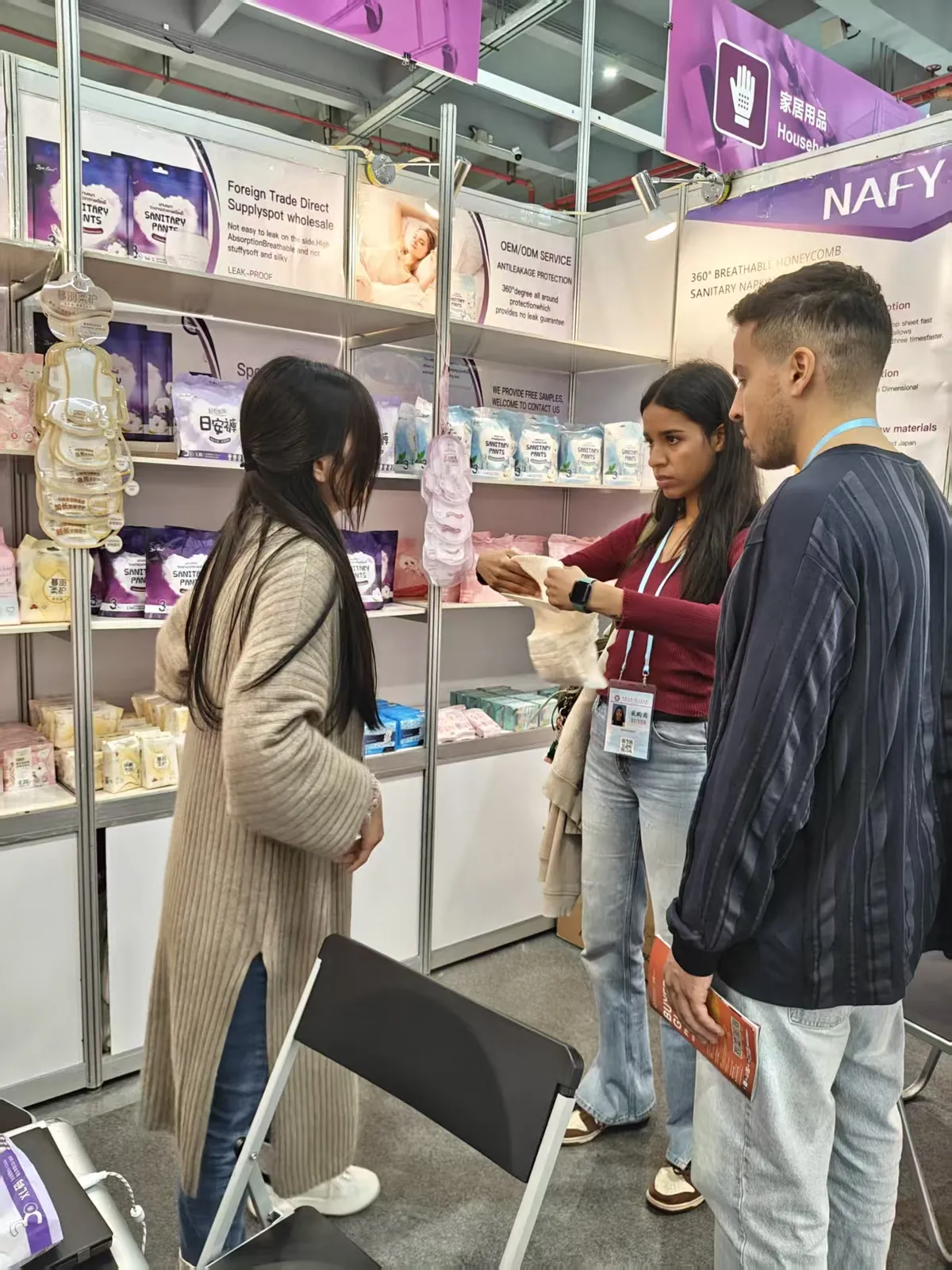
Small handling details we now plan for
Three practical adjustments came out of the photos. Sample packs need to be easy to lift from a crowded table. A second copy of the most-handled pack prevents a gap in the display. A flat surface for opening a sample is worth more than another vertical shelf.
None of these are product changes. They are decisions about how a buyer physically interacts with a specification. When a visitor spends two minutes with one pack instead of ten seconds, the questions get more precise.


How the observation feeds the next kit
Our foreign trade team reviews the tally before each show. If a format was rarely handled, we ask whether it was in the wrong place rather than whether buyers were uninterested. If a pack was repeatedly opened, we add a spare.
Four photos and one tally are a modest amount of evidence. They are enough to keep a sample kit aligned with what buyers actually do at a table, rather than with what looks tidy in a display plan.


