
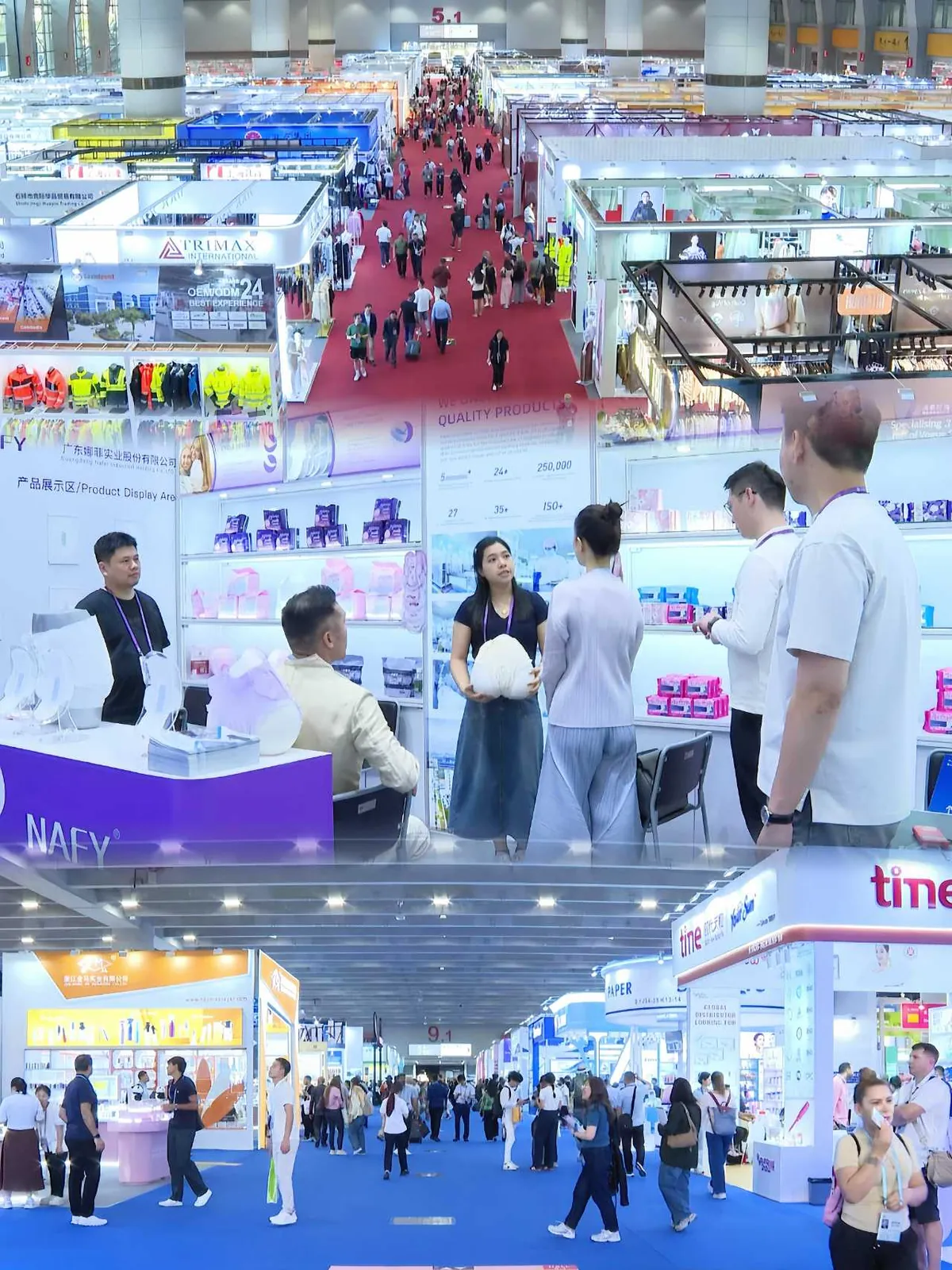
A single booth photograph cannot show why some hours are busy and others are empty. Four wider shots from the same hall do. They show the overhead view, the main aisle, a quiet corner and a general floor scene.
We look at these images when planning the next show because crowd flow is not random. Visitors tend to arrive in waves from one entrance, slow down near junctions, and pass quickly along long straight aisles with no visual break.
Position changes the type of enquiry
A stand near an entrance gets more general enquiries early in the morning. A stand deeper into a hall tends to receive fewer visitors, but a higher share of them arrive with a written brief. Neither position is better on its own. They suit different goals.
In our experience, a first-time exhibitor benefits from traffic. A supplier looking for detailed OEM discussions often does better with a quieter position and a larger meeting table. We plan the sample table size with that in mind.
What the quiet photo is for
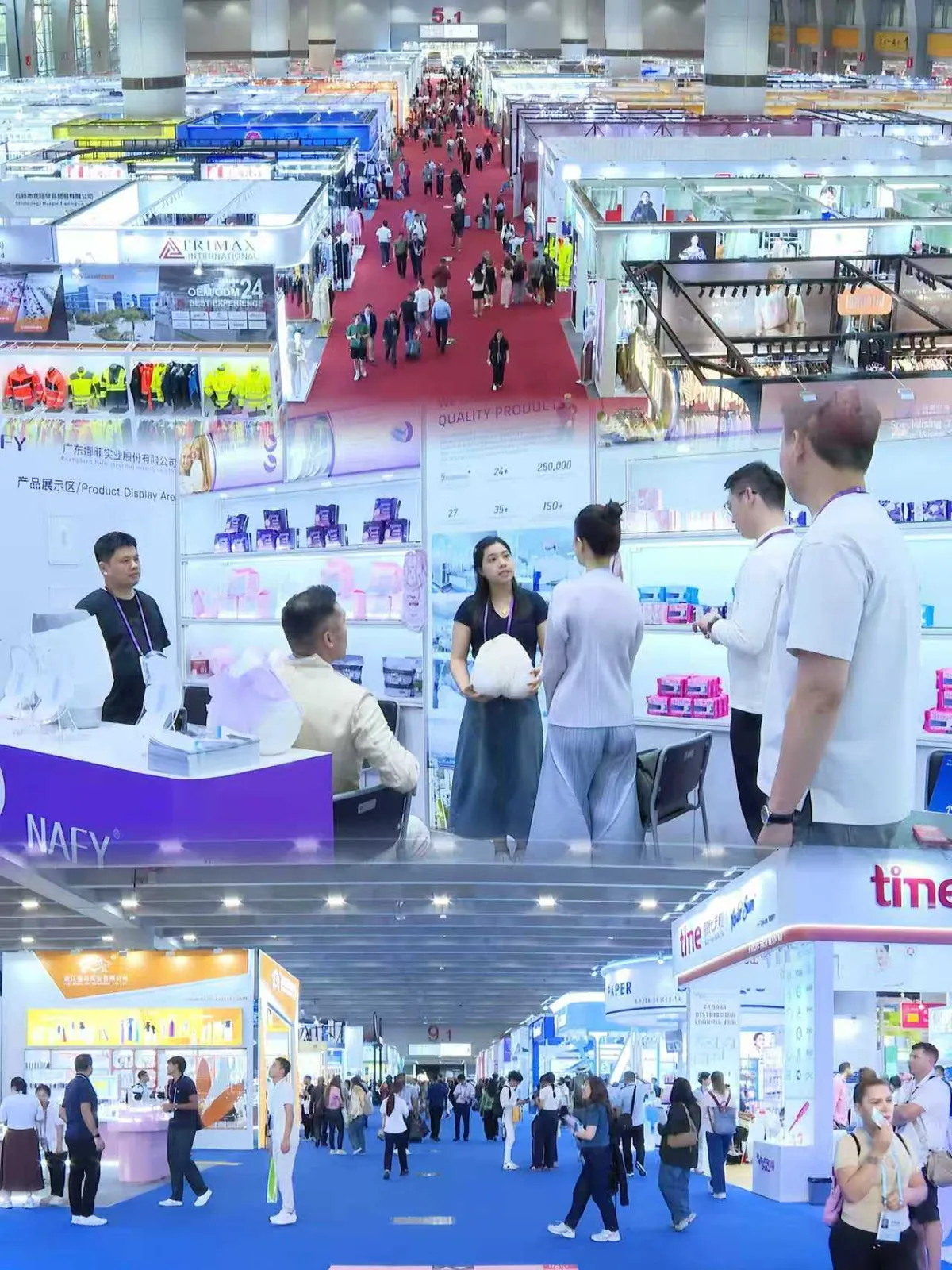
One of the four frames shows the hall with very few people. We keep it deliberately. It records the layout without the crowd, so the position of signs, columns and neighbouring stands is readable.
That frame is the one we use when deciding where to place the tallest display element. A banner that works in a busy photo may block the entire stand when the aisle is empty and a buyer is walking alone.

Turning the photos into a plan
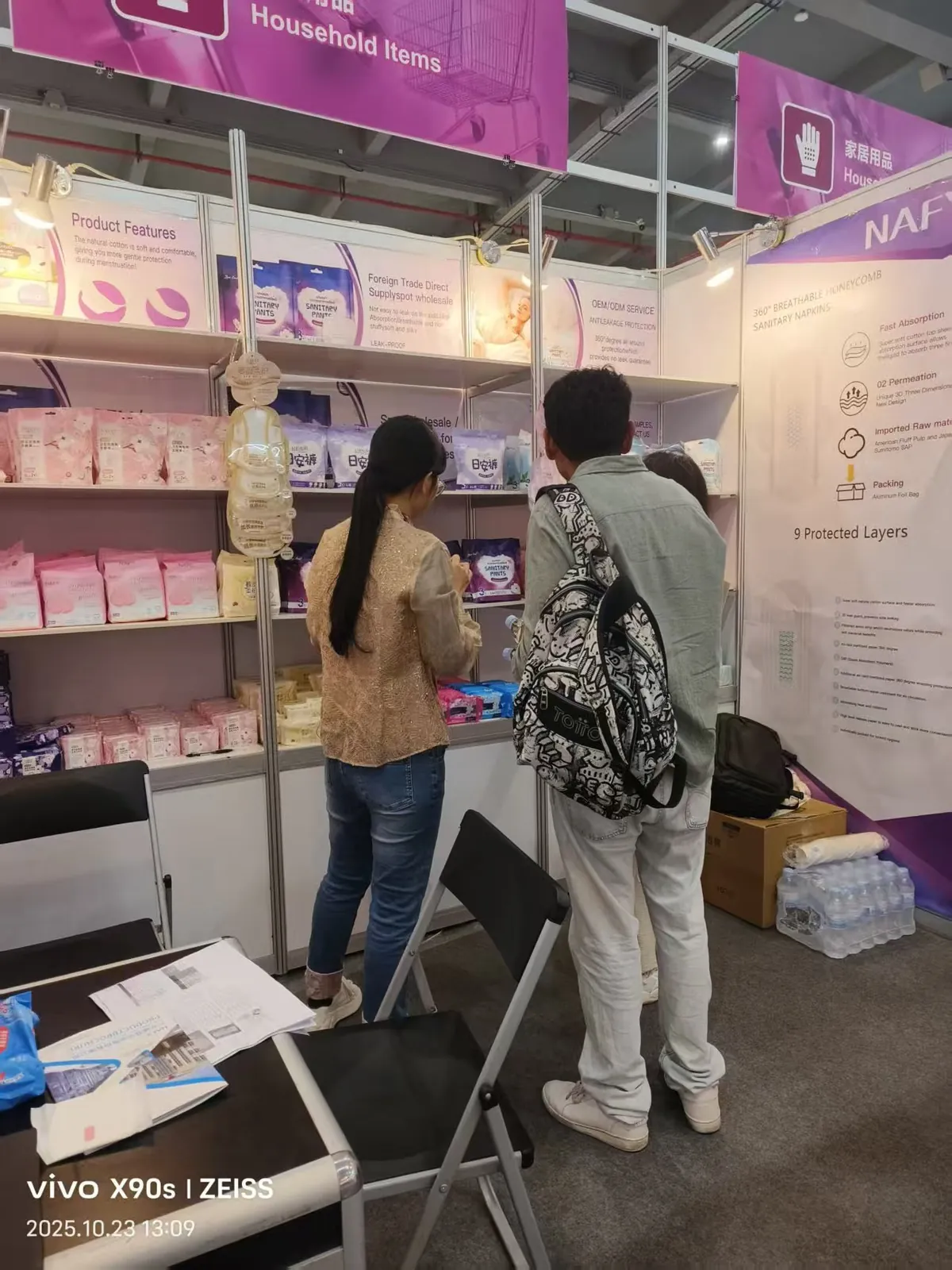
Before each show we mark three things on a printed hall view: the entrance visitors are likely to use, the nearest junction, and the point where our stand first becomes visible. Then we decide what goes at eye level at that point.
Four photographs will not predict a busy show. They do help avoid the two mistakes we see most often: a display planned for a photograph rather than a sightline, and a meeting table placed where the crowd never slows.


