

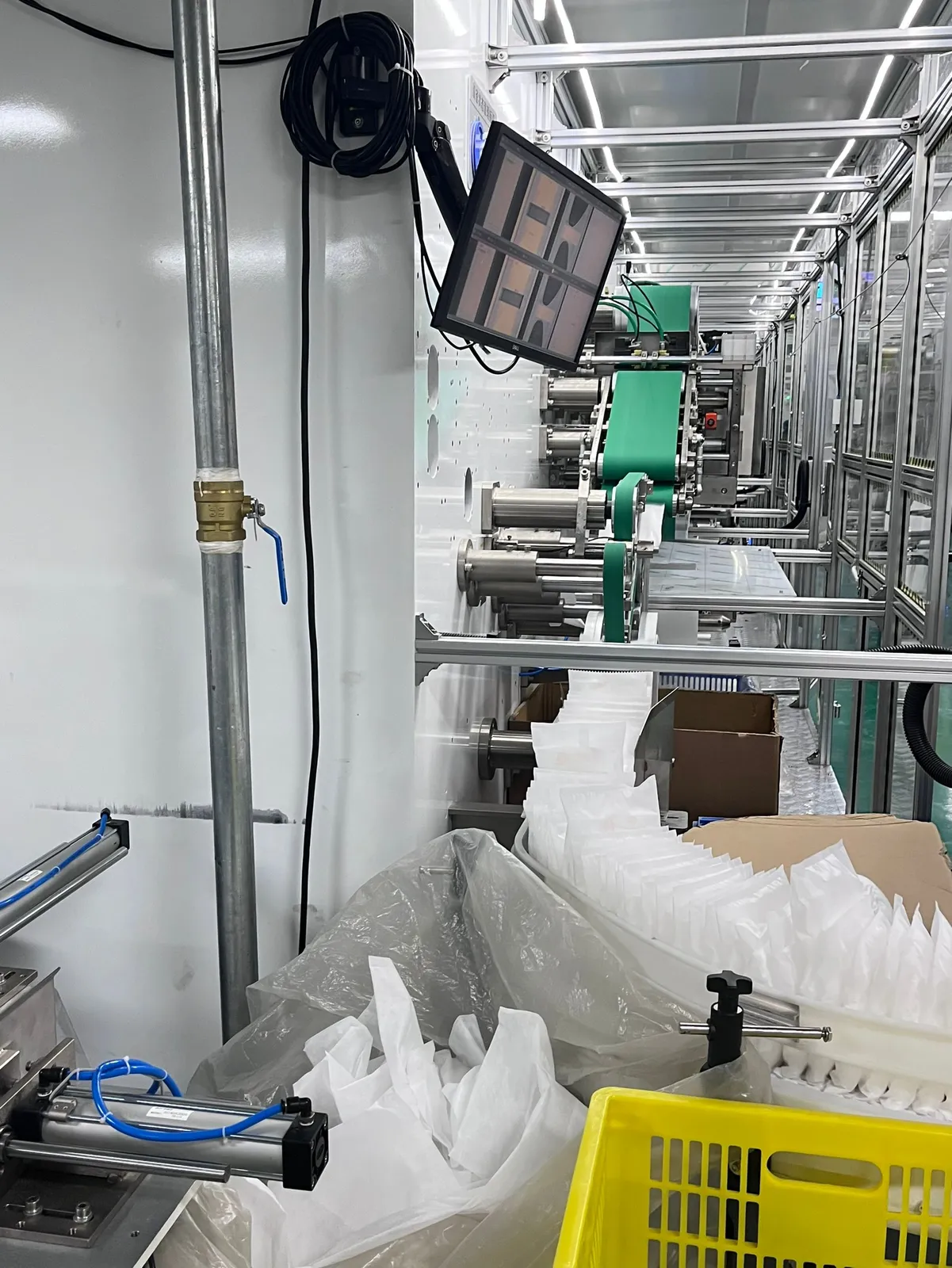
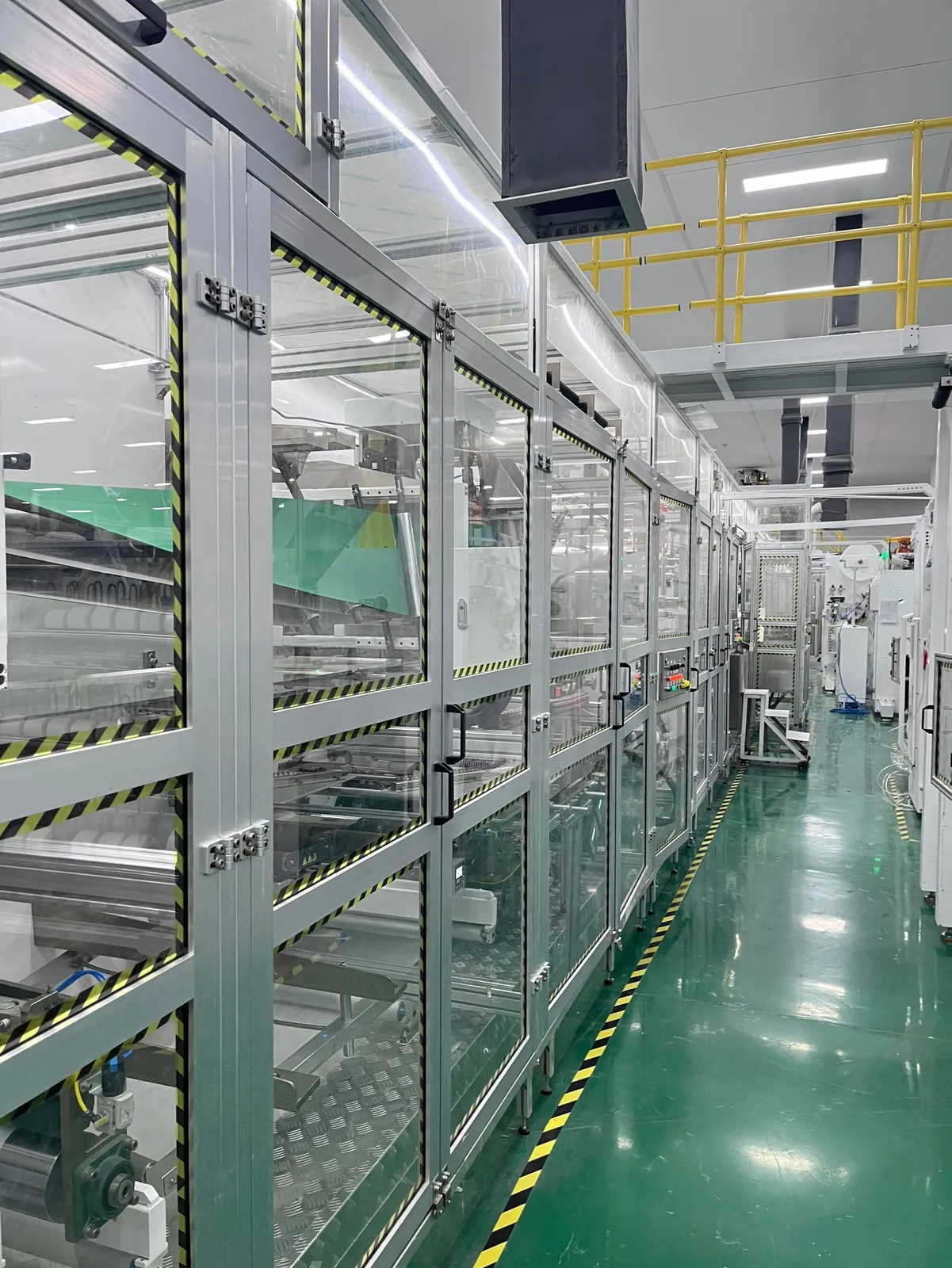
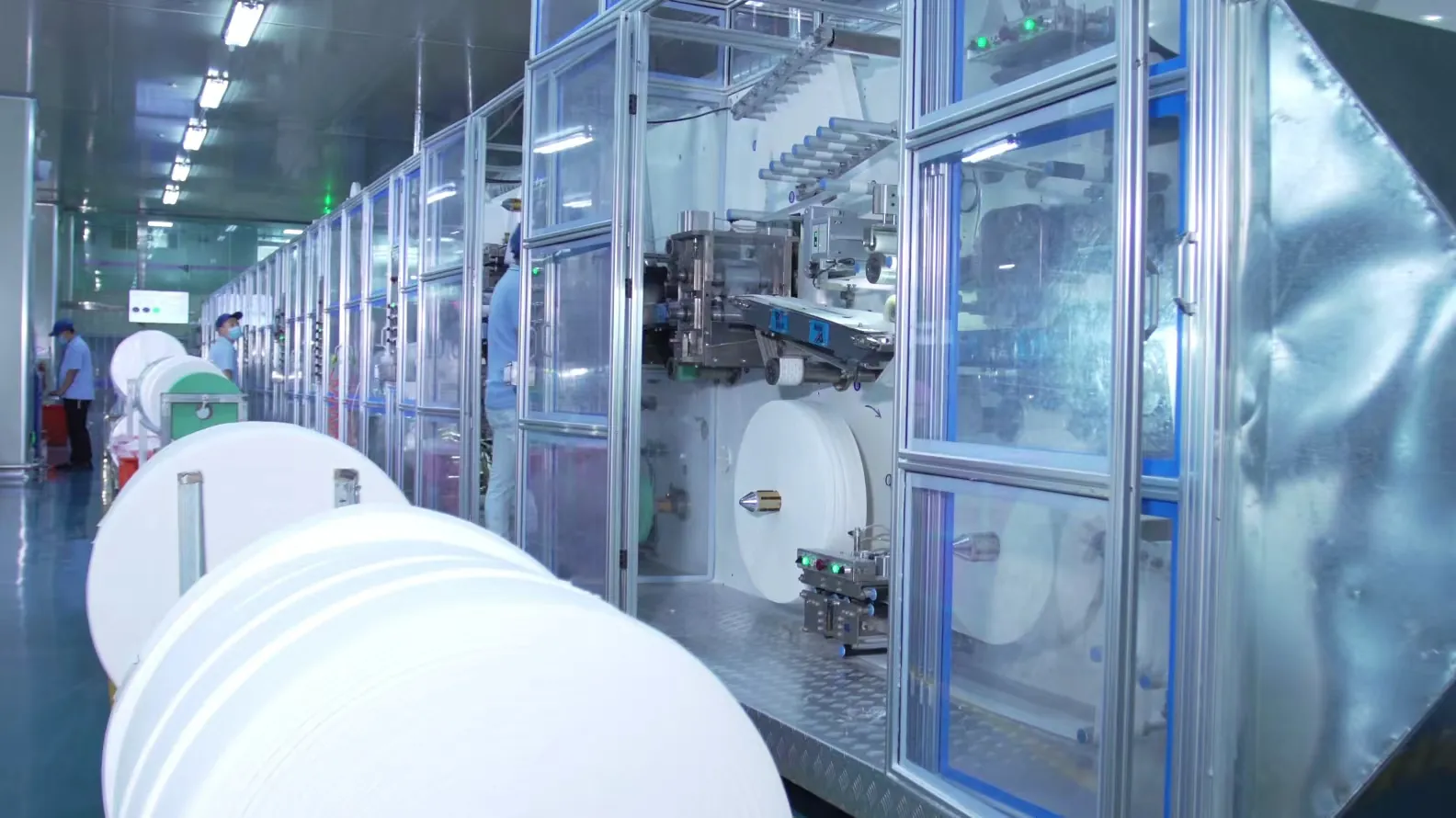
A line running one specification looks calm in a photograph. The interesting part happens between two specifications, and it rarely gets photographed. These two frames show the equipment involved: automated machines arranged in a row, and a large machine processing a white roll.
A changeover is not a single adjustment. Material rolls, size settings, sealing parameters, pack count and printed packaging can all move at once. The more SKUs an order carries, the more often that sequence repeats.
Why a wide range costs more than it appears to
Two packs that look similar on a shelf may need different material widths and different settings. A buyer planning a launch with day, night and pants formats is planning three setup sequences, not one long run.
Our foreign trade team raises this at the quotation stage. A smaller first order with one format often reaches a more predictable unit cost than a larger order split across many small SKU runs. That is a production fact, not a sales preference.
What we record at each switch
An operator keeps a sample from the start of the new run and compares it with the reference pack. One pack from before the switch stays on the table too. Two physical references make a drift in seal appearance or pack print obvious.
Buyers sometimes ask whether a changeover can be eliminated by grouping sizes. Sometimes it can, if the sizes share a material width. That is worth checking against the specification before the order is placed, because it changes both the schedule and the cost.
The part a photograph cannot show
These two images show equipment, not downtime. Changeover time is measured in a run sheet, not in a frame. When a buyer asks about it, the honest answer starts with the number and the specification, not with a picture of a clean machine.