
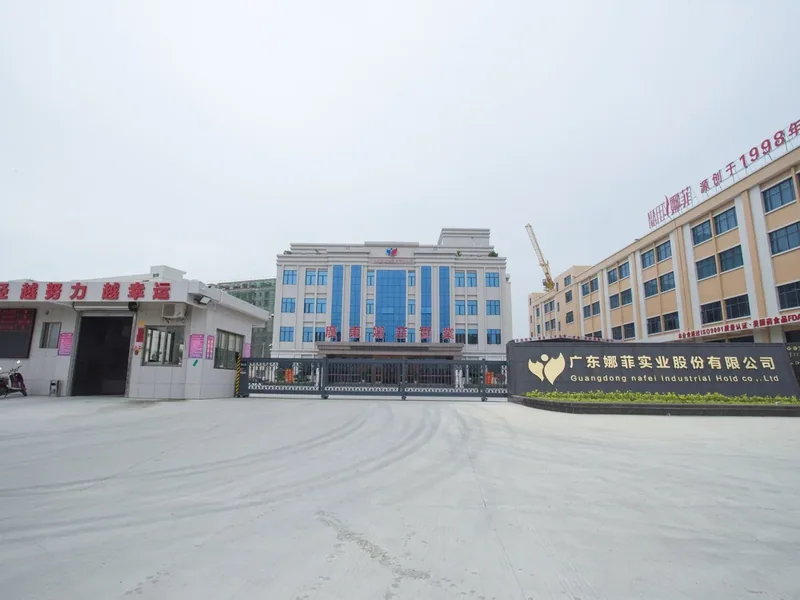
Most specifications are written before anyone has seen the factory. They are assembled from catalogues, samples and email exchanges, and they tend to describe a product rather than a process. A day on the floor usually changes several lines of them.
This is not because factories are hiding things. It is because the constraints that shape a product are physical, and they are easier to see than to describe.
What to look at, in order
A useful visit moves upstream, not downstream. Start where the material enters and finish where the goods leave.
- Incoming material storage. How rolls are stored, how they are labelled, whether there is quarantine for non-conforming stock. This tells you how much of the quality system is real.
- The line itself. Not the machine — the space around it. Is there room for changeover? Are settings visible and recorded? Is there a written set-up sheet at the station?
- Inline inspection. Ask to see the reject bin and the reject log. Both should exist and agree with each other.
- The lab. Which tests are run in-house and which are sent out. A factory that runs absorbency and bond tests itself controls its own quality; one that sends everything out is measuring late.
- Packing and warehouse. How finished goods are staged, labelled and loaded. Most transit damage originates here, not in the container.
- Retention samples. Ask to see goods from six months ago. If they exist and are labelled, the quality system has memory.
The questions that only work in person
- "Show me the last changeover." Not a description of one — the set-up sheet from the most recent event.
- "What did you reject last week, and why?" The answer, and whether the supervisor answers without checking, tells you how close they are to the line.
- "Which format is hardest to run on this line, and why?" A candid answer here is worth more than a capability brochure.
- "What would you change about my specification?" Often the most valuable question of the day, and one that is rarely asked.
What usually changes in the spec afterwards
Three things come up repeatedly:
Tolerances get realistic. A dimension written as a single number becomes a number with a band that the line can actually hold. This prevents a future argument rather than creating one.
Formats get consolidated. Seeing two similar formats run as two separate set-ups makes the cost of range breadth concrete in a way a quotation never does.
Packaging gets specified properly. Film gauge, carton configuration and pallet pattern are usually underspecified until someone watches a container being loaded.
What a visit does not prove
A clean, well-run plant on a good day is not evidence of consistency. The visit should be paired with documentation: process capability data, batch test records, and a sample retention history. Together they cover what the visit cannot, which is every day you were not there.
The factory audit and evidence page lists the documents a buyer can reasonably request, and the factory capability page covers the plant itself. If you are planning a visit, the sample and specification review guide is worth reading first — it makes the questions sharper.