
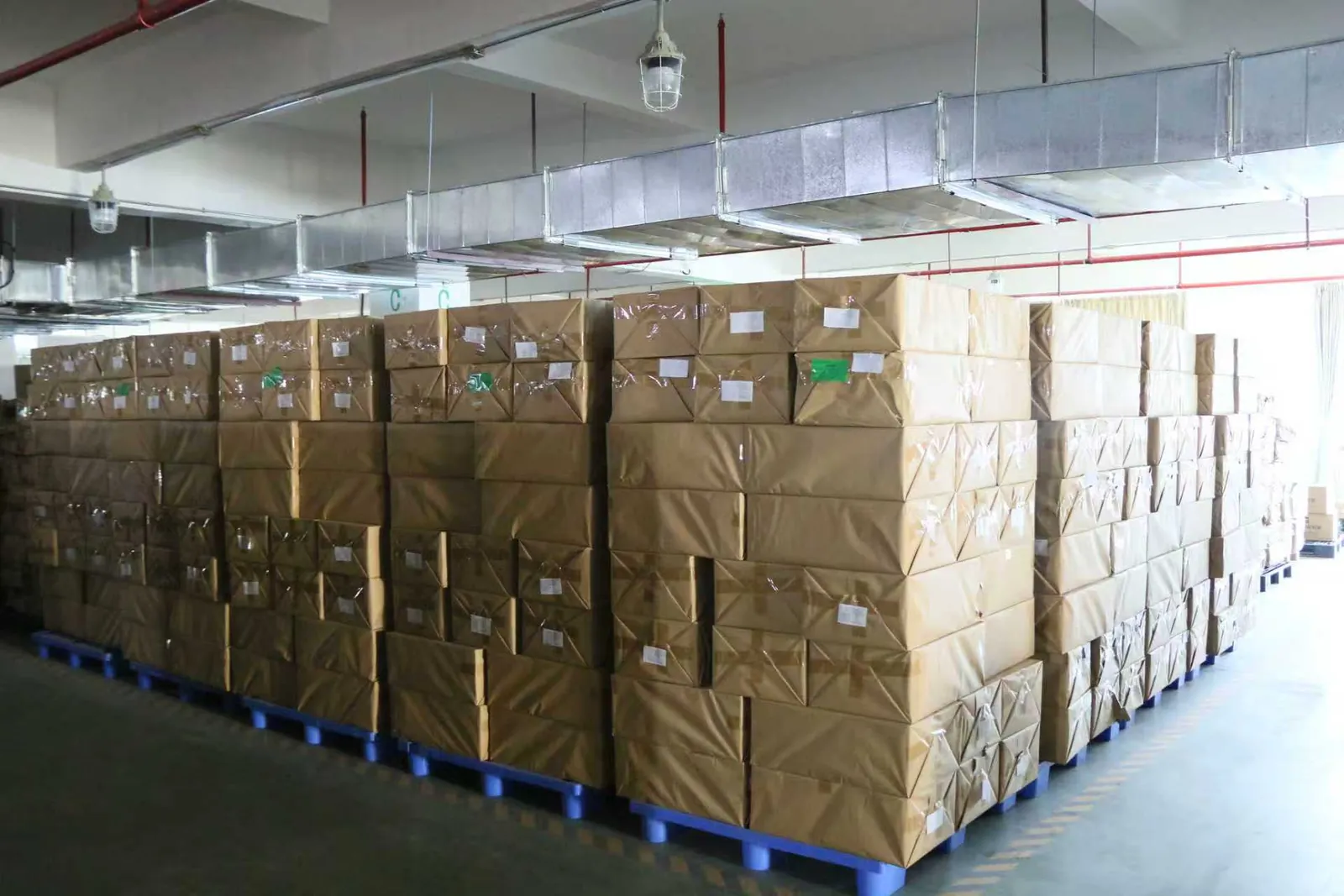
The email usually arrives four weeks before the first booking, and it holds four requests in one paragraph: blank cartons, no factory name, no Chinese address, and a second set of documents for the buyer's own customer. Three of those are printing jobs. The fourth decides whether the container can be declared at either end, and buyers in Dubai rarely separate them.
Two Requests That Look Like One
Blank packaging is a brand request. Origin marking is a customs request. They arrive in one email because the same trader writes both, but they are settled by different parties: the first by whoever owns the print cylinder, the second by the tariff heading the goods carried when they left the plant.
A trader in Dubai supplying supermarkets in Sharjah, and re-exporting part of the consignment to Mogadishu, has an ordinary reason to keep a factory name off the shelf. He is buying a product, not a shared supplier relationship.
The trouble starts when that request stretches to cover the origin mark. A carton with no brand and no origin is not neutral packaging. It is cargo whose marks no longer support its declaration, and the person who discovers that is usually standing beside the container at the destination port.
What Neutral Packing Genuinely Removes
Carton markings serve two audiences. The carrier reads them to match cargo against the bill of lading. The buyer's customer reads the retail pack on a shelf. Neutral packing removes the second audience's information and leaves the first untouched: shipping marks, carton count, gross weight and dimensions all stay as declared.
What a plant can legitimately blank is a short list: the brand name and logo on the film and carton, its own name when the buyer supplies artwork without one, and the retail barcode once the buyer issues a GTIN it is entitled to use. A buyer asking a sanitary pads supplier in United Arab Emirates for that list is asking for a printing change, not a different product.
Every item on it is artwork. It changes at the printing stage, before the film is mounted on the line, and it costs a new cylinder or plate set. That is the entire cost of a blank carton, paid once per design rather than once per container.
Origin Is a Fact, Not a Line of Print
Origin rules ask one question: where did the goods take their essential character? For a pad or a pair of disposable menstrual pants, that is where the absorbent core was formed and bonded, not where the carton was printed. Repacking, relabelling and re-branding appear in non-preferential origin rules as operations that do not confer origin.
The mechanical reason is the tariff heading. Pads and pants both sit under heading 96.19, so a consignment unpacked and repacked inside a free zone does not change heading, and goods that do not change heading do not change origin. A re-export declaration therefore cites the same heading as the inbound one, and an officer reads the two together.
That asymmetry is the argument. The brand is a claim the trader owns and can withdraw. The origin is a property of the goods, fixed before anything was packed, and it stays with the plant that formed the core.
Sanitary Pads Supplier in United Arab Emirates: What the Role Really Is
A buyer who searches for a sanitary pads supplier in United Arab Emirates is rarely looking for a plant inside the country. He wants a party that can hold a specification across three production runs, combine two plants into one container, and absorb paperwork a supermarket group in Riyadh will not handle itself.
That role is real and worth paying for: aggregation, credit and document handling. It is not manufacturing, and the difference shows the moment a buyer asks the plant to invoice in the trader's name.
A sanitary pads manufacturer in United Arab Emirates can exist as a converting operation that buys cores and laminates, cuts, and packs. What it cannot do is turn Chinese-origin goods into local ones by repacking them, and a supplier who offers to try is selling a document problem.
The Second Invoice Is Not Yours to Issue
Re-export needs a second set of shipping documents, and the request that reaches the factory is usually phrased as re-invoicing the shipment to the buyer's customer. This is where the chain breaks. The plant sold the goods once, and its invoice number sits inside the export declaration filed at the Chinese end. A second invoice from the same plant, against one declaration, is a mismatch nobody explains cleanly later.
The switch bill of lading works differently, because the carrier is not the seller. The carrier issues a second set naming the end buyer, against surrender of the first set. No goods change hands and no price is restated. The invoice layer belongs to the trader, who buys and resells, while the plant's documents stay tied to the first sale.
Why the Printed Marks Must Match the Declaration
Customs compares three things: the marks on the carton, the description on the invoice, and the origin declared. When the first is blank the comparison is not skipped, it is postponed to the examination bay. Unmarked cargo is not neutral cargo; it is cargo nobody has described, which is slower and costlier to handle.
The barcode is the quiet part. A GTIN belongs to whoever registered the brand. If the retail pack keeps the original barcode while the outer carton is blank, pack and carton no longer describe the same product, and a buyer scanning at intake reads the original brand, not the trader's. Blanking the carton without issuing a new barcode is the commonest half-measure here.
A search for sanitary pads wholesale in United Arab Emirates returns traders and forwarders rather than plants, which is an accurate picture of the market. It also explains why artwork requests cluster there: the party closest to the shelf has a reason to change what is printed.
The Free Zone Pairs Two Declarations
A free zone is a place where duty is deferred, not a place where goods are cleared. The mechanism is a pair: an inbound declaration when the container enters the zone, and an outbound declaration when it leaves for a third country. The authority reads them as a pair, and that pairing lets the goods leave without duty.
Break the pair and the goods quietly become imports. A quantity that shrinks between the two filings, a description rewritten from sanitary pads into hygiene products, a consignee with no chain back to the first: each turns a transit movement into a domestic import with duty and a fresh registration.
For the plant this argues for an exact packing list. If the inbound declaration says 1,200 cartons and the outbound says 1,180, somebody must account for twenty cartons, and the request reaches whoever packed them.
What to Put in the Specification Instead
The practical move is to answer in writing, line by line, so the boundary is visible before the print run rather than after it. The same layout works for a wholesale order with four sizes and three print versions, and for a private label brief where the artwork is itself the product.
| Request from the buyer | What the plant can do | What stays outside its control |
|---|---|---|
| Blank carton, no brand | Print to the buyer's artwork on a new plate set | The origin mark, which has to remain visible |
| No plant name on the film | Run the buyer's design without our name and address | The shipper named on the bill of lading |
| Second invoice for the end buyer | Issue a packing list and an origin declaration in our own name | The invoice number already filed in the export declaration |
| Barcode of the buyer's brand | Print any GTIN the buyer is entitled to use | The registration of that barcode, held by the brand owner |
Written out this way the request usually shrinks. Most traders drop the origin item once they see the mark has to stay, and keep the brand item, which was the point.
A Short Check Before the Carton Is Printed
Five questions are worth settling with the importer before artwork goes to plate. None needs a regulation quoted back at you; each needs a yes or a no, and the FAQ page covers the ones that arrive after the container has sailed.
- Whether the origin mark stays on the outer carton and on the retail film
- Whose GTIN is printed, and whether that party is registered to use it
- Whether the shipping marks reconcile with the carton count in the packing list
- Whether the trader or the end buyer is named as consignee on the bill
- Which party holds the first bill of lading, and who releases it on arrival
We have made pads and disposable menstrual pants since 1998, we ship from China and we do not hold stock locally in the Gulf. There is no local warehouse of ours to walk through and no consignment to draw from, so a schedule question returns a production slot.
If you are weighing a sanitary pads supplier in United Arab Emirates against a mainland plant, the artwork question usually arrives before the price question does.
If you plan to import sanitary pads from China to United Arab Emirates, send the carton artwork and the consignee name before the plate is cut, and we will mark which of the five items above will change your print run. The wholesale buying guide covers the rest of the brief.
Frequently Asked Questions
Can a factory ship to the UAE with blank cartons and no brand?
Yes, provided the origin mark stays on the goods. Blank cartons remove the brand, the plant name and the retail barcode. They do not remove the country of origin, because origin follows where the core was formed, not what was printed.
Does repacking inside a free zone change the country of origin?
No. Repacking, relabelling and adding a new brand are listed in non-preferential origin rules as operations that do not confer origin. Pads and pants share heading 96.19, so the heading does not change either, and origin stays where the absorbent core was made.
Who should issue the second invoice for a re-export shipment?
The trader who buys and resells, not the plant. The plant sold once, and its invoice number is already inside the export declaration, so a second invoice from the same plant puts two values against one declaration. The switch bill of lading belongs to the carrier.
What happens if the carton count changes between the two zone declarations?
The pairing breaks and the goods stop being transit cargo. The zone authority then treats the difference as an entry into the domestic market, which brings duty and a new registration. Even a gap of twenty cartons has to be explained by the party that packed them.
How long does a blank carton take to arrange before a first order?
It depends on the plate set rather than the carton. Artwork without a brand needs a new cylinder or a new plate before the film can run, and that step is paid once per design. Everything downstream then follows the production schedule.


