
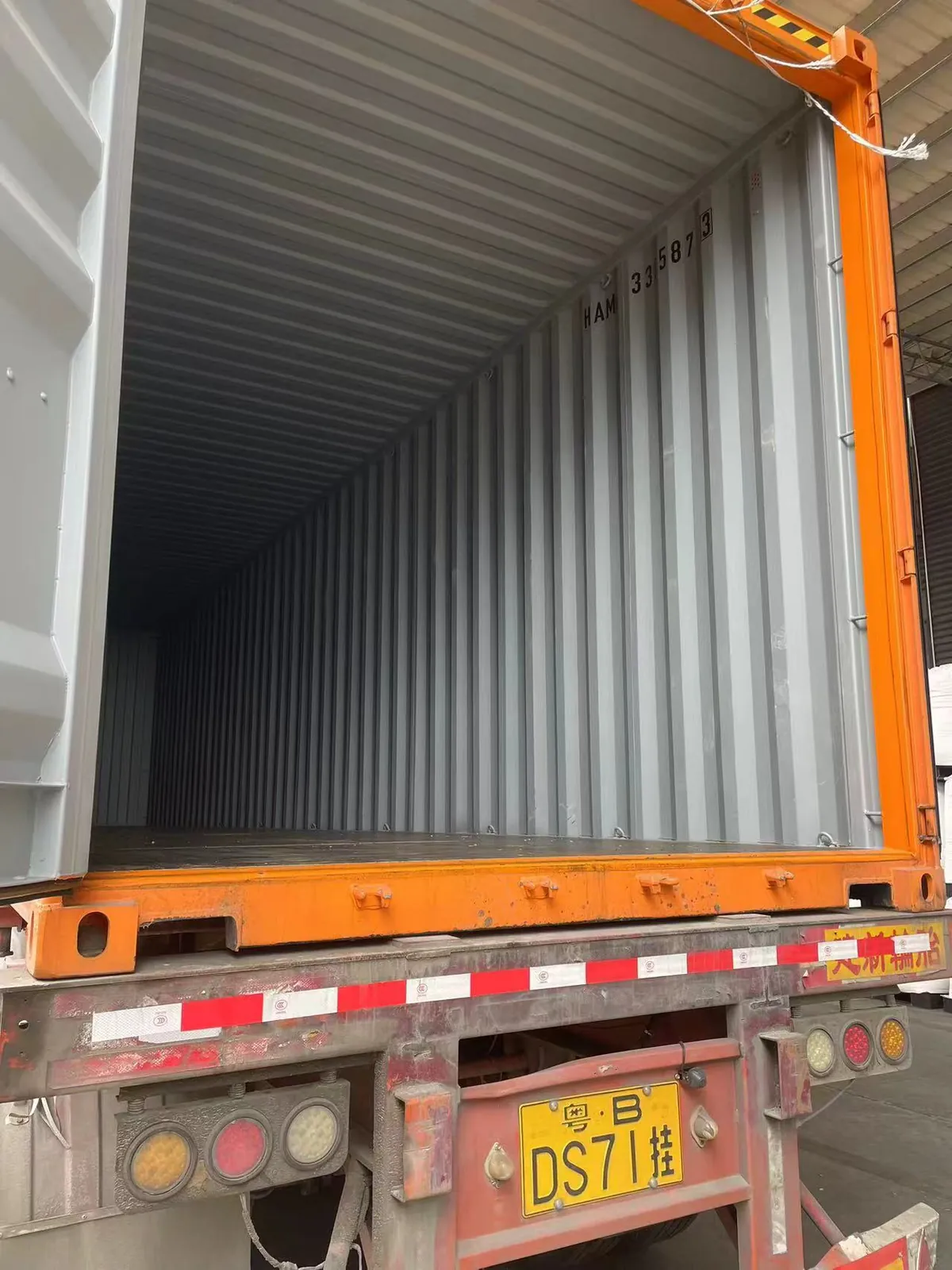
Every first enquiry from a South African buyer has two lines. The first asks for a unit price. The second asks how soon we can deliver from stock already inside the country. Only one of those questions has an answer that gets better with negotiation.
What a Local Stock Position Really Costs
Most buyers who ask for a sanitary pants supplier in South Africa are asking for two things at once: a price, and a delivery date they can plan a promotion around. Those come from different places, and one of them is not for sale.
A company holding local stock is running a different business from ours. It buys in dollars, sells in rand, and carries the gap between the two on its own book. It also carries the slow end of the size curve, because the ratio that suits a factory run rarely matches the ratio a shelf sells. You can see the whole arrangement on our product pages, where the sizes are listed but the shelf is not.
None of that is a complaint. It is a price structure. Buying from a local holder means buying their capital, their currency position and their dead stock, and the margin has to cover all three. The unit price is higher because the product is different: you are buying certainty of timing, not pants.
Sanitary Pants Supplier in South Africa: The Pipeline Is the Inventory
The stock you own is not only what sits in your building. It is everything you have already committed to: units in a production slot, units on the water, units waiting at a gate, and units on a truck to your distribution centre.
Each stage is a queue, and queues add rather than average. A plan built on average transit is a plan that misses, because a slow tail in one stage cannot be offset by a fast day in another. This is the arithmetic error behind most stockouts that were publicly blamed on the factory.
Queues also hide where the delay lives. A container stuck behind a gate slot looks identical, on a dashboard, to one that missed a vessel. Both read as late. Only one of them is something a supplier can still influence.
The Production Slot Moves; the Ocean Does Not
Our line schedule is set by material arrival and by changeover. Print film, cutting knives and ink batches are prepared against a confirmed design, so a design change after that point is not an edit. It is a restart.
That gives you one cheap lever and one expensive one. Moving quantity or size ratio earlier is cheap, because it only reshuffles a plan. Moving artwork, carton print or product colour later is expensive, because it discards prepared tooling and the material already staged for it.
The ocean has no such lever. Space is allocated against a booking and a sailing, and once the box is on the vessel the only remaining decision is what you do when it arrives. If you import sanitary pants from China to South Africa, the pipeline is your inventory, and the part you can still influence ends at the container door.
One Order, Several Releases, One Setup Cost
A single production run can be released in stages. Setup is paid once because the run is one run; the releases only decide when each part leaves the factory. That is how a buyer gets a staged arrival without paying twice for film and knives. Current thresholds sit on the minimum order levels page rather than in a quote.
| Release pattern | What it saves | What it adds |
|---|---|---|
| One shipment on one date | Freight and handling paid once | All of your capital lands at the same time |
| Staged releases from one run | Working capital spread across arrivals | Each release needs its own booking and document set |
| Repeated small orders | Nothing on setup, because the run repeats | Setup is paid again on every round |
The third row is where buyers lose money without noticing. A small repeat order feels cautious, but it pays setup repeatedly and it rarely holds a price between rounds. The second row is the compromise most importers settle on once they have a listing to feed.
Two Ports, Three Clearances, Three Owners
A box is not free to leave because it has arrived. Three separate releases have to exist before a truck can take it, and they belong to three different owners: customs, the carrier, and the terminal. The sequence is the same whether the box lands at Durban or Cape Town.
Customs release follows a declaration, and a declaration is only as good as the invoice and packing list behind it. Carrier release follows settlement of freight and charges and surrender of the bill of lading, which is why a bill consigned to a bank stalls everything until that bank endorses it. Terminal release is equipment and a gate slot, and it is the one nobody can hurry with paperwork.
They do not run in parallel by default. Each depends on the previous one producing a figure, and the figures are quoted in the order the parties ask for them. An agent who starts all three on the same afternoon usually ends up redoing one of them.
Demurrage and Detention Are Different Invoices
The two words get used interchangeably and they are not the same charge. Demurrage is time the container spends inside the terminal. Detention is time it spends outside, in your custody, still owned by the carrier.
The clocks start at different events and stop at different events, which is why free time is never a single figure. Inside the terminal the clock starts at discharge. Outside, it starts at gate-out and stops when the empty is returned and accepted, not when it is dropped at the yard gate.
If your distribution centre is inland, detention is the larger exposure, because the return leg is a second journey on the same equipment. Plan the return before you plan the pickup. The truck that takes the goods inland is usually not the truck that brings the empty back.
The Working Capital Question Under the Unit Price
Payment terms are normally quoted from the bill of lading date, which is a date on the water rather than a date in your building. Between the two sit the ocean leg, the gate, the inland haul and your receiving bay. Wholesale structures are set out on the wholesale terms page for that reason.
Two suppliers can quote identical terms and leave you with very different cash cycles, because the terms are anchored to different events. Terms measured from arrival are worth more than terms measured from shipment, even when the count printed on the paper is the same.
Currency sits on top of that. A dollar price fixed at order and a rand price fixed at listing leaves you holding the gap in between, and no supplier can absorb that gap for you. It matters most in sanitary pants wholesale in South Africa, where the resale price is agreed before the goods land.
What We Can Commit to From China
We ship from China and do not hold stock locally. That is deliberate. Our plant in Guangdong has run under ISO 9001 and ISO 14001, and has been shipping disposable menstrual pants since 1998; the money that would sit in a foreign warehouse sits in the line instead, which is why a price can hold across a season.
What we commit to is visibility. You get the booked slot date before material is cut, a release schedule you can still change inside the freeze window, and documents prepared against the vessel rather than after it. Details of the line are on the plant capability page. When a document is missing, the cost is never the document; it is the gate slot you lose while somebody emails a correction.
What we will not do is invent a foreign yard to make a quote look shorter. Any supplier who answers the second line of your enquiry without asking for your arrival month is guessing at your answer.
How to Brief Us Before the First Order
Most of the cost in a first order is decided before anyone negotiates. These are the answers that move the quote:
- The month the goods must be on your shelf, not the month you would like them shipped.
- The port, and the consignee name exactly as it will appear on the bill of lading.
- A size ratio in units per size, not a split written as small, medium and large.
- Whether packaging is printed, who owns the artwork, and whether it is already approved.
- Whether you want one release or several dates from the same production run.
- Whether any part of the order depends on a bank, a tender or a retail listing date.
Search results for sanitary pants supplier in South Africa return three kinds of company: trading houses, converters who print and pack, and factories abroad. The question that separates them is who owns the cutting and sealing equipment. If you need a sanitary pants manufacturer in South Africa rather than an importer, ask that question first and read the answer closely. Common variations are covered in our frequently asked questions.
Frequently Asked Questions
Do you keep any stock inside South Africa?
No. We ship from China and do not hold stock locally. Every order is produced against your specification and size ratio, so the first delivery is a production delivery rather than a pick from a shelf.
Can part of an order ship while the rest is still in production?
Yes, within one production run. The print and cutting setup is paid once because the run is one run, but each release needs its own booking, its own documents and its own terminal charges, so releases cost money even when setup does not.
Who clears the goods on arrival, and who pays the terminal?
Your clearing agent files the declaration and handles duty and taxes. The carrier releases the bill of lading once freight and charges are settled. The terminal releases the container against equipment and a gate slot, and each party invoices whoever holds the account with them.
Can our brand be printed on the first order?
Yes, but print is what makes a first order expensive, because film and plates are prepared against an approved design. Approve artwork before the production slot is booked, and treat any later change as a restart rather than an edit.
What should a quote contain so two offers can be compared?
A unit price alone is not comparable. Ask for the port, the release pattern, the size ratio in units, what packaging includes, and which event the payment terms are measured from.