
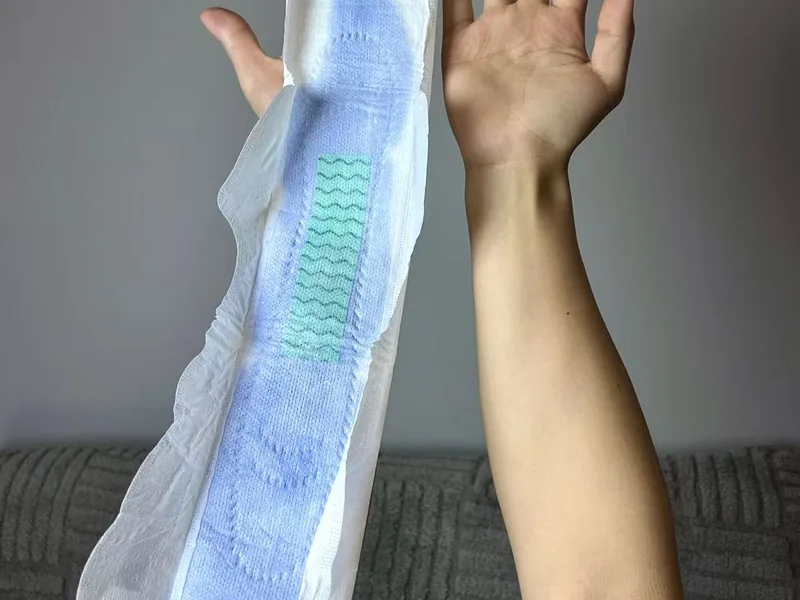
A pilot pack that sells well can still fail as a bulk order, because the pilot measures curiosity and the bulk order measures repeat purchase. The two are decided by different people at different moments. Sample packs for feminine care market testing should therefore be built to answer a narrow question about demand, not to imitate a finished retail range. Most overstock begins when a buyer treats a promising pilot as a forecast instead of as evidence.
What sample packs for feminine care market testing actually measure
Decide the question before choosing the products. A pack handed to a focus group tests whether people understand the format. A pack placed on a shelf tests whether the front-of-pack information works at a glance. A pack mailed to subscribers tests whether the size and the wrapper survive the delivery chain. Each of these needs a different assortment, a different quantity and a different record sheet. Combining all three into one kit produces feedback that sounds positive and predicts nothing.
Write the decision the pilot will support: which single product becomes the first order, which pack count gets printed, or which claim stays off the wrapper. If the pack cannot change one of those decisions, it is a promotional expense rather than a test. That distinction also keeps the quantity small, which is the main protection against stock that has to be discounted later.
How many SKUs a pilot pack needs
The useful number is the smallest assortment that separates the alternatives you are choosing between. If the open question is day use versus a heavier absorbency format, two SKUs answer it. If the question is which pack count a retailer will reorder, the variable is the pack count and the product should stay constant. Adding a third and fourth variant feels thorough but splits the feedback into groups too small to read, and it forces the plant into more changeovers than the test is worth.
There is a second cost on the factory side. Every variant needs its own specification, its own wrapper file and its own carton mark. A pilot with many variants produces a thick document set for a small number of units, and that document set then has to be revised before a real order. A minimum order discussion is easier to keep consistent when the first assortment is deliberately narrow.
Keeping the pilot pack and the production pack on one specification
Pilot units are frequently assembled by hand from available components, while production units come off a line with fixed materials and fixed settings. If the two are not tied to the same written specification, a good pilot result tells you nothing about the product you will actually ship. Record the topsheet, the core construction, the backsheet, the wrapper film and the pack count for the pilot units, and require the same fields in the production specification.
Photographs help but do not replace the fields. Keep one signed pilot sample in a sealed bag with the lot identifier and the date, and keep a second one with the buyer. When the first production cartons arrive, compare them against both. A divergence in hand feel, wrapper print or carton count is much easier to resolve when the reference object still exists.
The three layers of a sample kit
- The product layer: the formats being compared, each with a fixed specification and a lot identifier.
- The information layer: the front-of-pack wording, the size mark and the instructions that a shopper will actually read.
- The record layer: a one-page feedback sheet with the question, the date, the channel and the number of units placed.
The record layer is the one most often skipped. Without a count of units placed and a count of units taken or sold, positive comments cannot be separated from a small sample that happened to like the packaging. Keep the sheet short enough to be filled in at the till or at the end of a community meeting, and keep the same sheet across all pilot sites so the results can be compared.
What to record during a store pilot
| Field | Why it matters | What a weak entry looks like |
|---|---|---|
| Units placed | Denominator for every rate | A rough number remembered later |
| Units taken | Separates interest from shelf space | Comments without a count |
| Variant chosen | Shows which question was answered | Mixed notes across two assortments |
| Question asked | Reveals what the pack failed to explain | No record of shopper questions |
| Reorder enquiry | Closest signal to repeat purchase | Counted as a sale |
Ask the person running the pilot to write down the questions shoppers asked, verbatim where possible. Repeated questions about sizing, absorbency or how to open the wrapper are product information defects, and they are cheaper to fix in artwork than in a reformulation. A pilot that only records a satisfaction score throws away the most actionable part of the exercise.
Packaging artwork that survives two print runs
Give every pilot wrapper a version identifier and a date, even if the design is a placeholder. When the production artwork is approved, the version change should be recorded against the pilot version so that feedback about wording can be mapped to the text that produced it. Without that link, a complaint about a claim may be traced to artwork nobody can reproduce.
Leave claims out of the pilot artwork unless they are already approved for the destination market. A test pack is not a safe place to try wording that a finished product cannot carry. The same applies to barcodes: a pilot unit with a temporary code should be clearly marked as such so it never enters a retail scanning system by accident.
From pilot results to a first purchase order
Translate the record sheet into three decisions: the SKU that goes into production, the pack count that gets printed, and the wording that changes. Anything else is a note for the next pilot. Then write the first order around those decisions with a single specification and one artwork version. Production capacity can then be planned against a known assortment rather than a range of possibilities.
Keep a gap between the pilot and the bulk order long enough to read the results, but short enough that the pilot specification is still the one everyone remembers. A pilot recalled three months later tends to be described from memory, and the details that matter most, such as the wrapper version or the exact pack count, are the first ones to drift.
Where overstocking starts
Overstock rarely comes from one optimistic forecast. It comes from treating a small number of enthusiastic responses as a rate, then adding variants to cover objections that were never measured. Sample packs for feminine care market testing work when the buyer writes down, in advance, what result would lead to a smaller first order or to no order at all. A test that cannot fail is not a test.
Agree the disposition of leftover pilot units before they are made: kept as references, used for follow-up sampling, or counted as a marketing cost. That single line in the plan prevents leftover stock from drifting into a retail channel with a wrapper version that was never approved. If you need the pilot specification turned into a production one, the team is the place to start.
Questions buyers ask about pilot packs
What should sample packs for feminine care market testing contain?
They should contain the smallest assortment that separates the alternatives you are choosing between, plus a fixed written specification and a one-page record sheet. A kit with many variants produces small, unreadable feedback groups and a thick document set for very few units.
Can pilot units be made by hand?
They can, but only if they are tied to the same written specification as the production units. Record the materials, the wrapper and the pack count, and keep a sealed reference sample on both sides so the first production cartons can be compared against an object that still exists.
How do we tell interest from repeat purchase?
Record units placed and units taken separately, then treat a reorder enquiry as its own field rather than as a sale. A pilot measures curiosity; only a later purchase or a repeat request measures whether the format will keep moving off a shelf.
Should pilot artwork carry the final claims?
No. Leave unapproved claims out of the pilot artwork and give every version an identifier and a date, even for a placeholder. Feedback about wording is only useful when it can be mapped back to the exact text that produced it.
What is the most common cause of leftover stock?
Treating a small number of enthusiastic responses as a rate, then adding variants to cover objections that were never measured. Write down in advance which result would lead to a smaller first order, and agree what happens to leftover pilot units before they are produced.


