
A minimalist white pack can make a feminine care range look calm, modern and easy to recognize. But a clean front panel does not mean the packaging project is simple. Before a private-label sanitary pad concept can move to printing, the buyer and manufacturer still need to confirm the product specification, claims, artwork hierarchy, pack structure and market-specific label information.
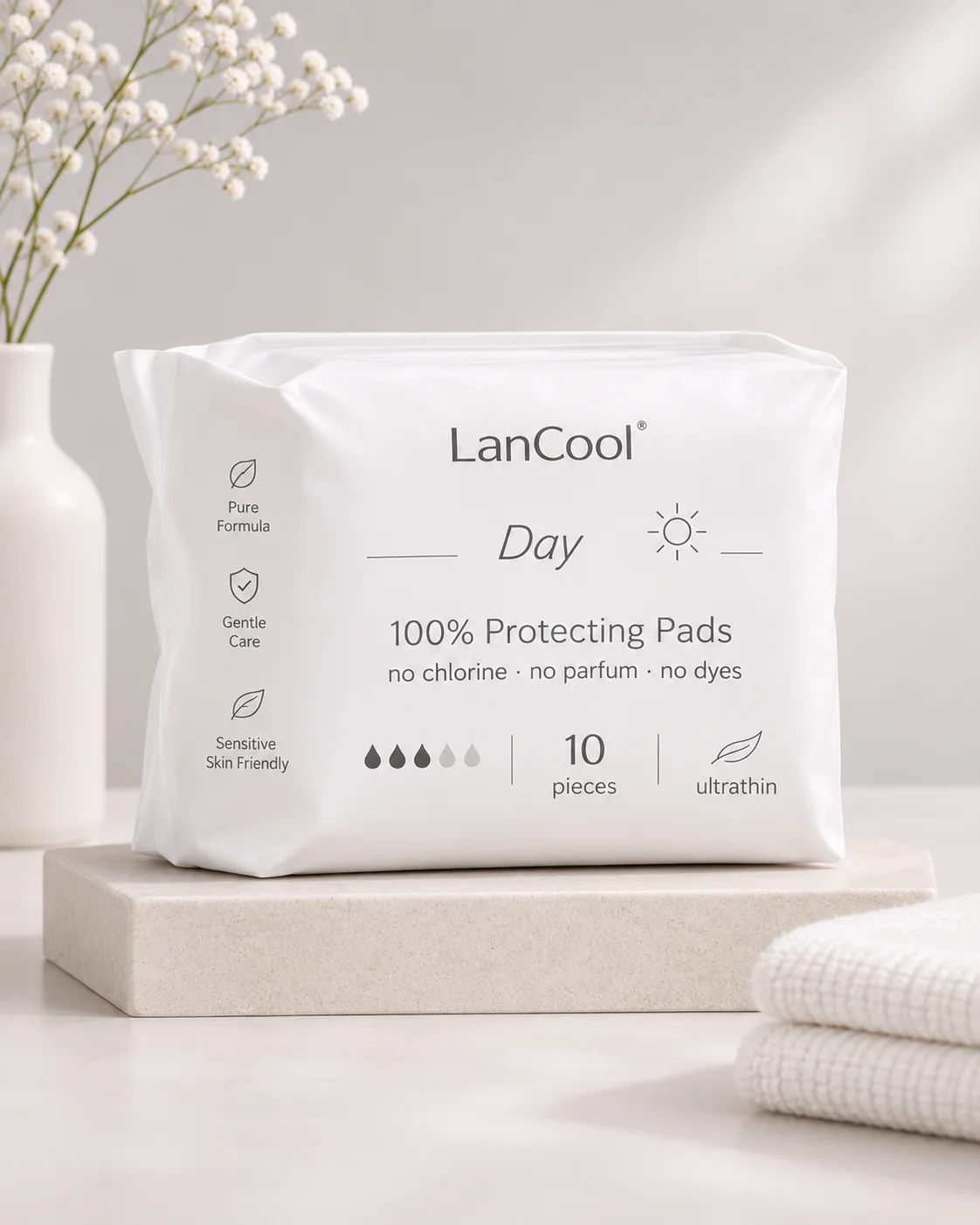
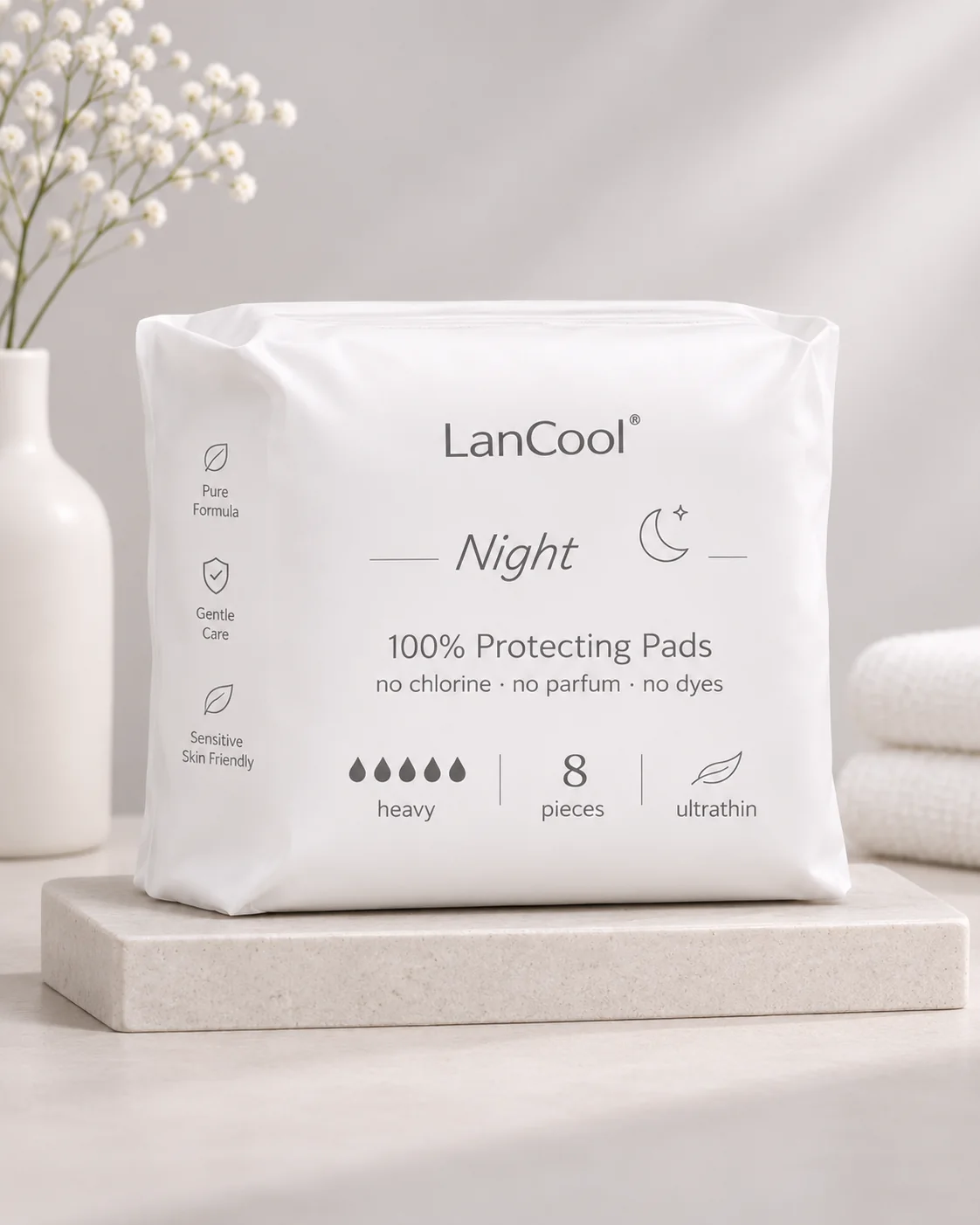
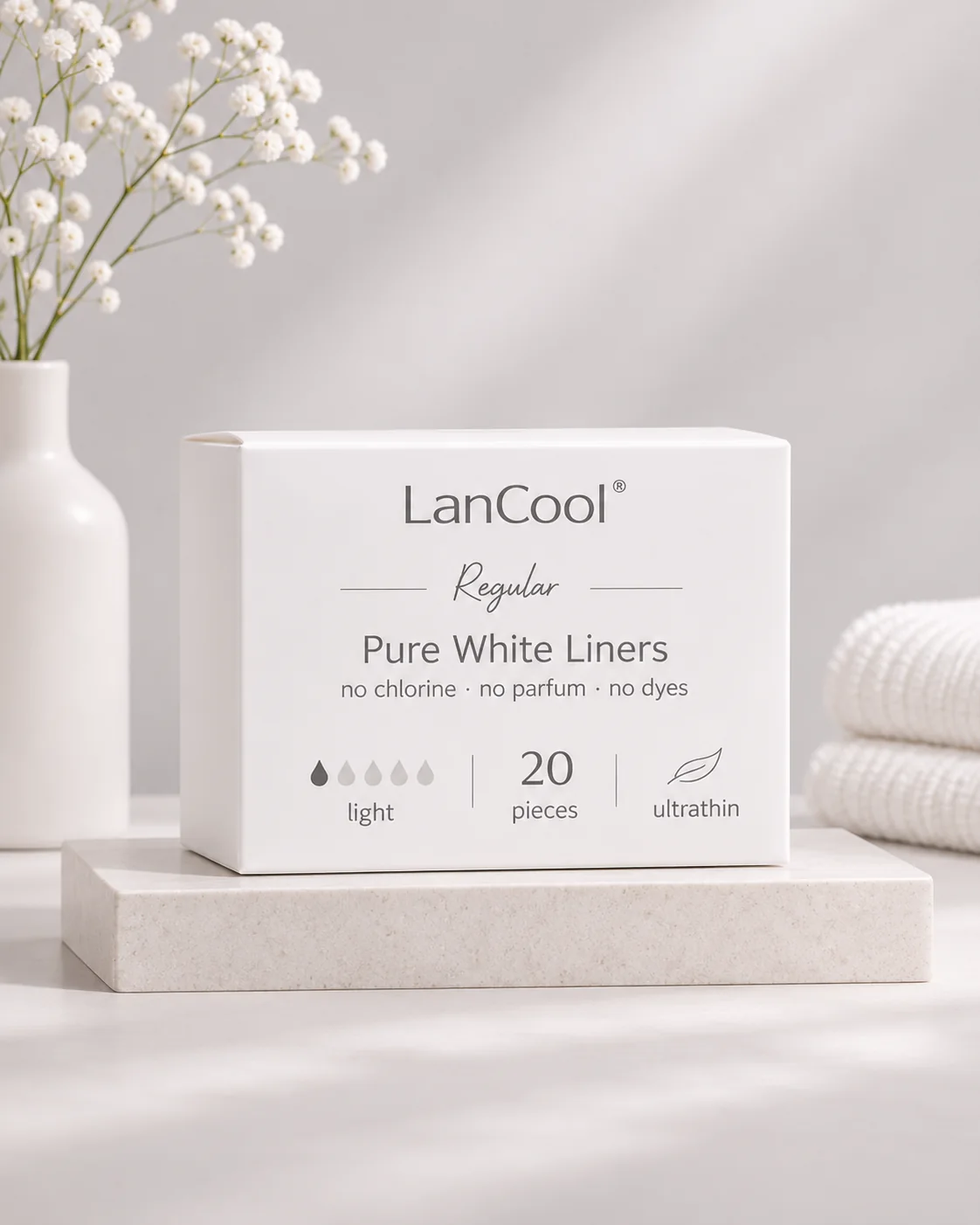
This LANCOOL design study explores a coordinated three-SKU range: day pads in a 10-piece pack, night pads in an 8-piece pack and regular pantyliners in a 20-piece box. The images are packaging concepts, not final printed retail packs. They are useful because they show both the strength of a consistent visual system and the decisions that must be resolved before production.
Why a three-SKU packaging system works
Day pads, night pads and pantyliners serve different use occasions, but buyers often want them to read as one family on a retail shelf. A shared white background, consistent logo position and repeated icon system can connect the range without making every pack identical.
The useful part of this approach is not the color white by itself. It is the repeatable information structure. A shopper should be able to find the same elements in the same place on each SKU:
- Brand name
- Product type and use occasion
- Length or size
- Absorbency or flow guidance
- Number of pieces
- One or two verified product attributes
For an OEM project, this consistent structure also reduces artwork errors. The day, night and liner files can follow one approved design grid while retaining different product identifiers.
Start with the product specification, not the front panel
Packaging artwork should be built around the product that will actually go inside it. Before approving a design direction, confirm the specification for every SKU. At minimum, the brief should state:
- Product type: pantyliner, day pad, night pad or extra-long night pad
- Length and width
- Winged or wingless format
- Core structure and topsheet material
- Target thickness
- Pieces per retail pack
- Individual wrapper requirement
- Retail pouch or paper box dimensions
The concept shown here uses 10 pieces for day pads, 8 pieces for night pads and 20 pieces for pantyliners. These counts are possible starting points, not universal standards. A buyer may choose different counts based on local price points, retail shelf space, consumer habits and carton efficiency.
Buyers comparing existing LANCOOL formats can review the LANCOOL sanitary pad and pantyliner range before requesting samples. A new minimalist pack can only be finalized after the selected product and pack count are confirmed.
Review every front-of-pack claim before printing
Minimalist packaging gives each word more visual weight. That makes claim review especially important. Phrases such as "chlorine-free," "fragrance-free," "dye-free," "ultra-thin," "sensitive skin friendly" or "100% protection" should not be treated as decoration.
Each statement needs a clear product definition and supporting basis:
- Fragrance-free: confirm that no fragrance is intentionally added to the relevant SKU. "Fragrance-free" or "no added fragrance" is generally clearer English than "no parfum."
- Dye-free: confirm which product components the claim covers and whether any printed or colored materials are present.
- Chlorine-free: define whether the statement refers to bleaching, a specific raw material or the complete product, and keep supplier documentation that supports the wording.
- Ultra-thin: compare the approved sample and thickness specification with the wording used on the pack.
- Sensitive-skin wording: use only when the final formulation, materials and available test evidence support the claim for the destination market.
- Absolute protection claims: avoid broad promises such as "100% protection" unless the exact claim, conditions and evidence have been reviewed. A descriptive product name is usually safer and clearer.
A strong private-label pack does not need many claims. Two verified, relevant attributes are more credible than a long list of unqualified promises.
Use clear English that buyers and shoppers understand
Export packaging is often reviewed by several teams: product, design, sales, compliance and the local importer. Simple English reduces interpretation problems.
For this type of range, practical labels include "Day Pads," "Night Pads" and "Regular Pantyliners." Add the length in millimeters where it helps shoppers compare products. Use "pieces" or "pads" consistently across the range, and keep capitalization consistent.
LANCOOL should also appear in one agreed brand style across all files. Small variations in spelling, capitalization or logo spacing can make a coordinated range look unfinished.
Choose the retail packaging format early
The concept uses flexible pouches for the day and night pads and a paper box for pantyliners. Both formats can support a minimalist design, but they create different technical requirements.
Flexible pouches
A printed pouch is lightweight and practical for pad packs, but the material, thickness, sealing method, print area and bag dimensions must match the packed product. The artwork must account for gussets, seals and areas that may wrinkle after filling.
Paper boxes
A box provides flat printable panels and can support a premium shelf presentation. The project still needs a confirmed dieline, board specification, coating or finish, inner protection method and shipping test. The product should not be placed into a box designed only from a visual mock-up.
Plan the back and side panels for real market information
The front panel attracts attention, but the remaining panels carry much of the information needed for sale and distribution. Requirements vary by country, so the importer or local compliance adviser should review the final copy. A working checklist may include:
- Product name, type, size or length and pack count
- Materials or composition statement
- Directions for use and disposal information
- Warnings required by the destination market
- Manufacturer, importer or responsible-party details
- Country of origin
- Lot or batch identification and relevant date marking
- Barcode and retail item number
- Customer-service contact information
- Required market language or languages
Do not leave these items until the last artwork revision. They affect text space, font size, panel layout and sometimes the pack dimensions.
What to send your OEM packaging partner
A useful packaging brief is more than a mood board. To obtain an accurate review and quotation, send the following information for each SKU:
- Approved product sample or confirmed product code
- Product length, structure and pieces per pack
- Target retail pack format and dimensions
- Brand logo in a print-ready vector format
- Target languages and destination countries
- Barcode files and importer information
- All proposed claims with supporting documents
- Color references, finishes and print requirements
- Retail carton quantity and shipping-mark requirements
For a broader handoff checklist, see our guide to custom sanitary pad packaging for OEM and private-label orders.
Approve samples and proofs in the right order
Packaging should follow the product approval process, not run ahead of it. A practical sequence is:
- Confirm the product range and request samples.
- Approve the product specification for each SKU.
- Confirm the retail pack format, count and dimensions.
- Review claim wording and destination-market label requirements.
- Prepare the dieline and print-ready artwork.
- Approve a digital proof and, where needed, a physical packaging sample.
- Confirm carton packing before bulk production.
This order prevents a common private-label problem: attractive artwork that must be rebuilt because the pack count, product size or required label copy changed after design approval.
Can LANCOOL support a minimalist private-label range?
The white LANCOOL series shown in this article is a design direction for discussion. Day pads, night pads and pantyliners can be evaluated as a coordinated range, while final product specifications, packaging material, claims, order quantity and print plan are confirmed separately.
If you are developing a private-label feminine care line, send us your target country, preferred product lengths, pieces per pack, packaging format, languages and expected order quantity. We can review the brief against available product options and identify the questions that must be resolved before quotation and artwork approval.
Contact Guangdong Nafei about sanitary pad samples and private-label packaging.


