
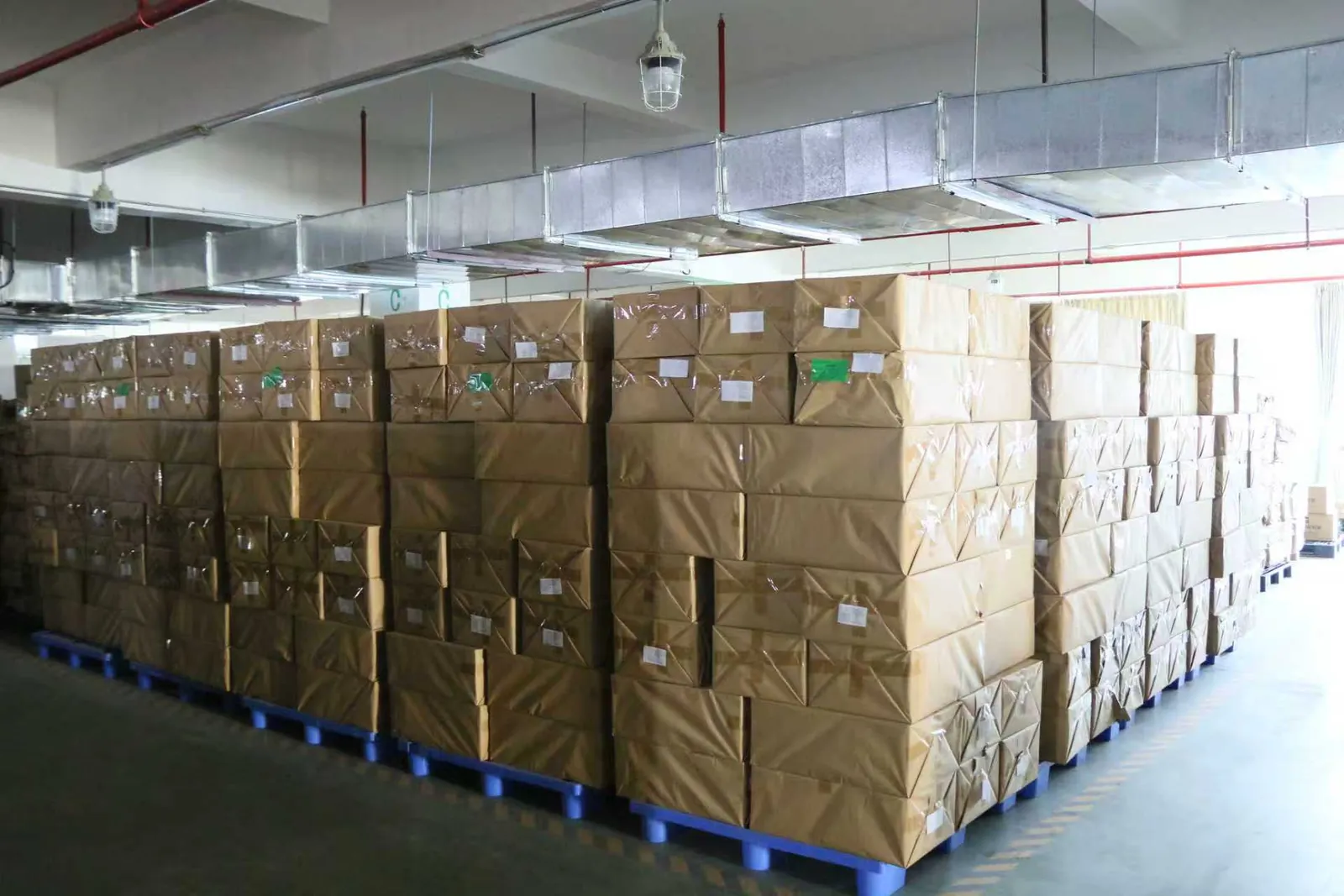
A Jakarta buyer sends a short enquiry: a shipment size, a wholesale price, a delivery address in Surabaya, and the factory can answer it in two minutes. The expensive part of that order is not the price. The container clears as one customs entry in one importer's name, and then has to be broken into dozens of separate handovers across a domestic shipping network that no Chinese supplier ever touches. The carton is the only object that travels the entire route.
One Entry, One Importer, One Release Order
A customs declaration is filed per consignment, against one importer identity. That is the first constraint on any shipment into the country, and it does not bend at the port gate. Two buyers cannot share one container under one entry, because the release order hands the cargo to the name on the entry, not to whoever paid for it. The sequence to import sanitary pads from China to Indonesia is short: order, production, booking, bill of lading, entry, release. The delay is almost never in the first three.
A container therefore behaves like an indivisible block until it sits inside the importer's own control. The importer has to absorb that block at once, not eventually, because storage charges at the terminal begin at discharge rather than at release. No sanitary pads supplier in Indonesia can lift that constraint, whatever the price.
| Stage | Who holds the goods | What the factory can still change |
|---|---|---|
| Production | The plant | Pack count, case, pallet pattern |
| Ocean leg | The carrier | Nothing once the bill of lading is issued |
| Entry and release | The licensed importer | Nothing, and documents only |
| Domestic leg | The distributor | Nothing |
The Sealed Carton Is the Price Tier
In a distribution chain a case is a promise: a known count of packs, a known assortment, an unbroken seal. A sub-distributor buys cases because a case can be counted, stacked and invoiced without being opened. Open it, and the contents become loose packs that can only be sold one at a time, to a different customer, at a different price. The phrase sanitary pads wholesale in Indonesia describes that resale tier, not a factory term.
This is why intervention after arrival costs so much. Sorting sizes, adding a sticker, repacking part of a container for a smaller island order: each of these turns a sealed case into an opened one. The cost is not the labour. It is the tier the goods never return to.
Where the Domestic Leg Starts Billing
The ocean leg ends at one of a few ports. Everything past that point is a second transport contract with a different operator, a different schedule and a different set of handling assumptions. On that leg the cargo is no longer a neat stack of pallets. At a small island port it may be handled carton by carton, by hand, and twice.
The same cubic metre is therefore billed twice, once across the sea and once across the domestic crossing, and the factory sets that cubic metre when it chooses carton dimensions. This is the line item a sanitary pads supplier in Indonesia cannot quote for you, because the domestic crossing is booked in your name.
There is a second consequence. A distributor who is strong on one island and weak on another cannot fix that with a larger order. He can only fix it with a smaller case, and the case is set at the plant. That trade-off belongs to the wholesale structure you are building, not to the pad.
What a Sanitary Pads Supplier in Indonesia Can and Cannot Do
A sanitary pads supplier in Indonesia is a phrase that covers two different businesses: a local trading company that imports and holds goods, and a plant overseas that ships against an order. We are the second. We ship from China and do not hold stock locally, and no local entity stands behind the invoice.
Most enquiries that ask for a sanitary pads manufacturer in Indonesia are really asking whether the plant can hold a specification, a pack format and a date, none of which depend on where the plant sits. The part that does depend on location belongs to your importer: the entry, the duty, the release order and everything after it.
Pretending a supplier can do the other half is how orders stall at the terminal with nobody clearly at fault.
Port Choice Belongs to the Buyer
Which port takes the container is the importer's call, and it is usually made on the strength of the domestic leg rather than the ocean leg. A port that suits the carrier can be the wrong one for the distribution network, and the difference appears as a domestic freight line rather than a sea freight line.
Because we quote on the loading side, the sea leg is your contract. That is not a technicality. It means the discharge port, the forwarder and the inland routing are three decisions you can make without asking us, and three decisions that settle whether the case arrives sealed and square.
The Carton Is Specified for a Stack It Sees Once
A shipping carton is built against the load it will carry in a container stack, which is the heaviest load it will ever see. After devanning that load disappears. What replaces it is repeated manual handling: cartons lifted by a corner, dragged across a floor, stacked on a trolley and unstacked again.
The failure that ends a case is rarely the bottom one collapsing. It is a crushed corner that stops the case stacking square, after which every unit above it leans and the pallet cannot be rebuilt. That is why a carton drawing is worth reading before a price is agreed, and why our packing capability is documented apart from the product sheet.
Four Numbers a Product Spec Never Carries
A product specification describes the pad. It almost never describes the shipment, and four numbers are missing from nearly every sheet we receive: packs per case, case dimensions, cases per layer on a pallet, and the size ratio inside a case.
- Packs per case: the quantity the entry and the packing list have to agree on.
- Case dimensions: the figure both freight legs bill against.
- Cases per layer: what decides whether a pallet can be rebuilt after a partial pick.
- Size ratio: whether one case can serve two island markets or only one.
None of the four can be read off a product spec, and each is settled at the factory before production starts. Packs per case is usually where the MOQ conversation should begin, because quantity is counted in cases, not in pads. A buyer who leaves these open has not left the supplier room to optimise. He has left the forwarder room to charge whatever the carton happens to measure.
How to Compare Two Quotes for the Same Order
Compare cost per case landed at your own door, using your own freight quotes for the second leg. The factory cannot quote a domestic leg it does not operate, and a supplier who offers one is quoting someone else's number. This single change removes most of the noise, because it forces the case, the port and the inland leg into the same line.
Then ask three questions of both suppliers. What are the case dimensions? Which discharge port is the price built around? And what happens to the unit cost if the quantity halves? The answers describe the offer far better than a discount percentage does. For the document side, the supplier page and the FAQ cover what a factory signs and what it does not.
What Changes on a Repeat Order
The second shipment is easier for reasons that have nothing to do with price. The importer's registration and the product description have already been tested once, and a repeat shipment inherits whatever was accepted. The sub-distributors already know the case.
What does not survive is a change of pack count. A different count means a different case, a different pallet pattern and a different entry quantity, so the second order starts over at the four numbers again. If a change is coming, it is cheaper to make it before the first production run than after it.
If you are preparing an enquiry for this market, send the pack count you want, the case dimensions your distributor can handle and the port you would discharge at. We will return a specification sheet and a carton drawing, and mark the two numbers that will move your inland freight.
Frequently Asked Questions
Who is the importer of record for a shipment into Indonesia?
Your licensed importer. The entry, the duty and the release order are all filed in that company's name, and an overseas factory cannot stand in for it.
Can one container be split between two buyers?
Not under a single entry. A split means a second declaration, a second set of charges and a second examination, and the cargo cannot leave the terminal under two release orders.
Why does the case matter more than the price per pack?
Because the sealed case is the unit your distributor resells. Once it is opened the goods drop to a lower tier, and no later discount recovers the difference.
Is there local stock available for buyers here?
No. We ship from China and do not hold stock locally, so every order is produced against your specification instead of picked from a shelf.
What should an enquiry include to get a usable answer?
Pack count, case dimensions you can handle, discharge port and the size ratio you sell. With those four we can price the shipment rather than the pad alone.


