
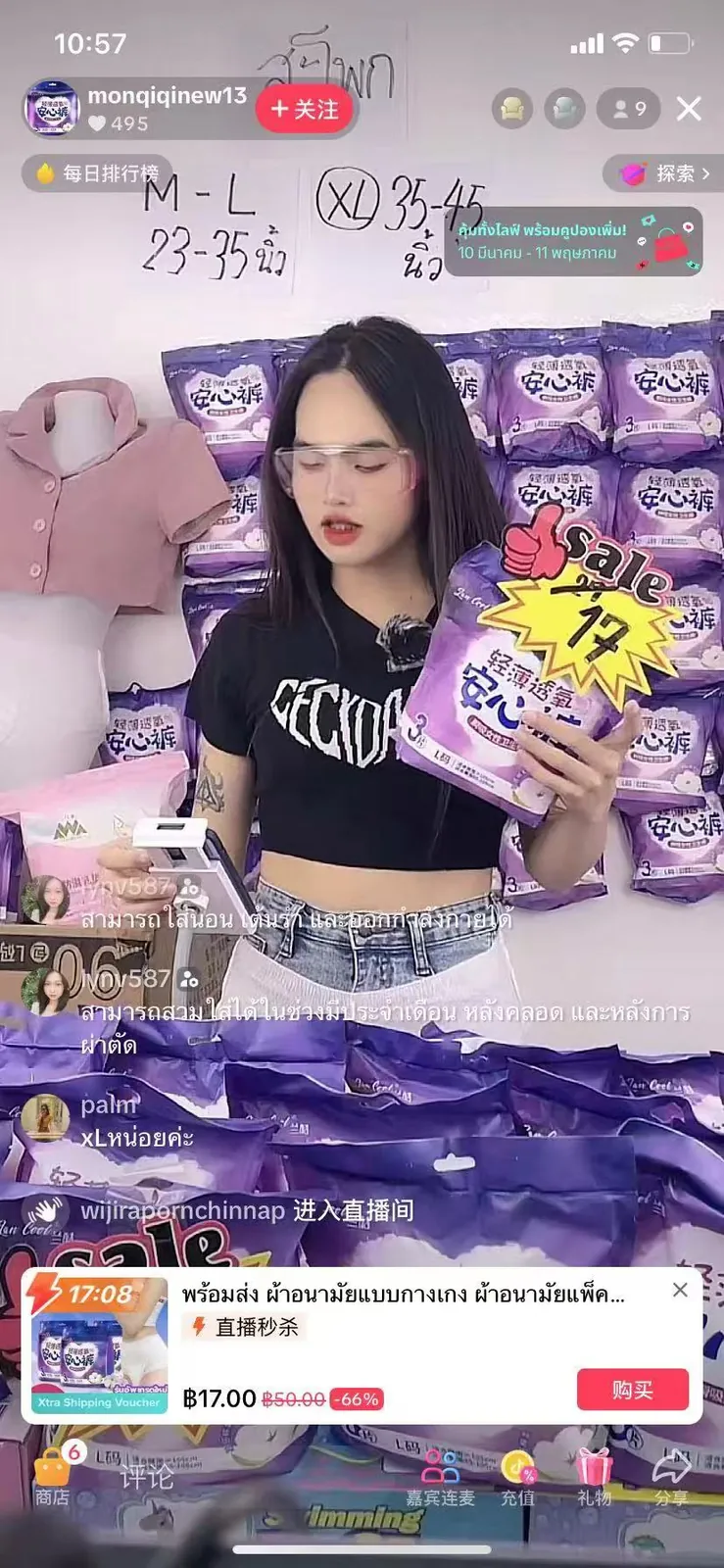
Most feminine care product demo ideas fail for a simple reason: the camera shows a pack turning slowly on a table, and the viewer still cannot tell how many units are inside or how large the pack is. A plant can support far better material than that, but only for objects and measurements that actually exist. The useful demos are the ones a buyer could check against the carton that arrives.
Why feminine care product demo ideas should start with measurements
A viewer comparing two formats wants three things: the physical size of a single unit, how many units are in the retail pack, and how many packs sit in a carton. Those are all measurable, and all of them are already written in the specification. Shooting them with a ruler, a scale or a full carton in frame gives a demo that stays correct after the campaign ends.
An OEM production specification fixes construction, the material list and the carton plan. Use that document as the shot list. If a number appears on screen, it should come from a dated source with a version identifier, not from somebody reading a forwarded message.
Shots a plant can genuinely supply
A factory can photograph the approved physical sample, the single wrapper being opened, the size or absorbency naming on the pack, the inner count laid out on a table, and a full carton with its shipping mark. Each of those shots documents a real object from a named version. They also answer the questions a seller would otherwise field one by one in a chat.
- One unit next to a ruler, with the pack dimension stated in the caption.
- The full inner count laid out, matched to units per pack.
- An open carton showing the pack arrangement and units per carton.
- A clear shot of the carton mark with each field named.
- The approved sample beside its artwork version identifier.
The fourth item is rarely filmed and is disproportionately useful. A carton mark is what connects a delivered box to a production run; showing how to read it means a later question can be answered with a code instead of a description. It also makes short video ideas for feminine care sellers substantive rather than decorative.
What a script must not say
Live selling script ideas for period care often drift toward performance or health language. A plant cannot substantiate those sentences in the destination market, and it should not supply them. Keep the spoken facts to dimensions, materials, counts, handling and the version identifier. Leave market-facing wording to the party accountable for local compliance.
| Script line | Safe source | Why |
|---|---|---|
| Units per pack | Dated product schedule | Checkable against the carton |
| Pack dimensions | Factory measurement | Checkable with a ruler |
| Material list | Written specification | Factual, not a claim |
| Local market wording | Seller responsibility | Compliance is local |
| Performance sentence | Exclude from plant material | Not verified by the plant |
The last row is the boundary that protects both sides. When the underlying facts and the claims live in separate blocks, a change to local wording does not require a new product schedule, and a change to the specification does not silently rewrite a campaign.
Version identifiers on visual assets
Images outlive the version they were shot from. Put the artwork version identifier and the date in the corner of each asset, and keep a short log of which version each video used. When a wrapper changes, reissue the affected shots and withdraw the old ones from the seller folder instead of adding new ones alongside them.
Keep one physical reference unit of every approved version at the plant and with the seller. When a viewer says a pack looks different from the video, both sides can compare the same object. Factory capability outlines the measurements and records available as source material.
Short video ideas for feminine care sellers that survive review
Good short clips answer one question each: how a single wrapper opens, how the size marking is read, how many packs fill a carton, how the carton mark is laid out, and how a sample differs from a production unit. The most durable feminine care product demo ideas are built this way, one question per clip, because each asset stays reusable across channels and can be withdrawn on its own when a single field changes.
Avoid a clip that mixes several formats without naming them. A viewer who sees two pack counts in one frame will assume they are the same unit, and the seller will spend the rest of the session correcting that assumption. If two formats must appear, label each with its version identifier on screen.
Where the objects come from
The items in these shots are produced in Guangdong and shipped from China. No plant, office or stockroom is maintained in the seller market, so a demo should never imply that the object on screen came from a local facility. Guangdong Nafei describes the producer and the records behind the physical samples.
That wording also settles the record split: the plant holds production, carton and lot records, while the seller holds customer and order records. A question about a specific carton needs the lot code from the mark, which is why the mark deserves its own clip.
Reviewing the asset folder after a season
After a season, check which clips generated repeated questions. If viewers keep asking about the inner count, that shot was not clear enough. If they ask whether two listings are the same unit, the on-screen naming disagreed with the approved wrapper. Fix the shot list and the data sheet together, then reissue both with one version identifier.
The team can help turn a reviewed shot list into a clean production brief for the next run, so the physical sample and the visual assets stay aligned.
Questions buyers ask before the first order
Why should a product demo start with measurements?
Because a viewer comparing formats wants the size of a single unit, the number of units in a retail pack and the number of packs in a carton. Those figures already exist in the dated specification and can be shown with a ruler or a full carton in frame.
Which shots can a factory support honestly?
The approved physical sample, a single wrapper being opened, the size naming on the pack, the inner count laid out, and an open carton with its shipping mark. Each documents a real object from a named version.
What should a live selling script avoid?
Performance or health language that the plant has not verified in the destination market. Keep spoken facts to dimensions, materials, counts, handling and the version identifier, and leave market-facing wording to the seller.
Why do visual assets need a version identifier?
Images keep circulating after a wrapper or pack count changes. An identifier and date on each asset let the seller withdraw outdated shots when a new version is issued instead of leaving two versions in the same folder.
Where are the demo units produced?
They are produced in Guangdong and ship from China, with no plant, office or stockroom maintained in the seller market. A demo should not imply a local facility, and the carton mark is what links any unit back to its production run.


