
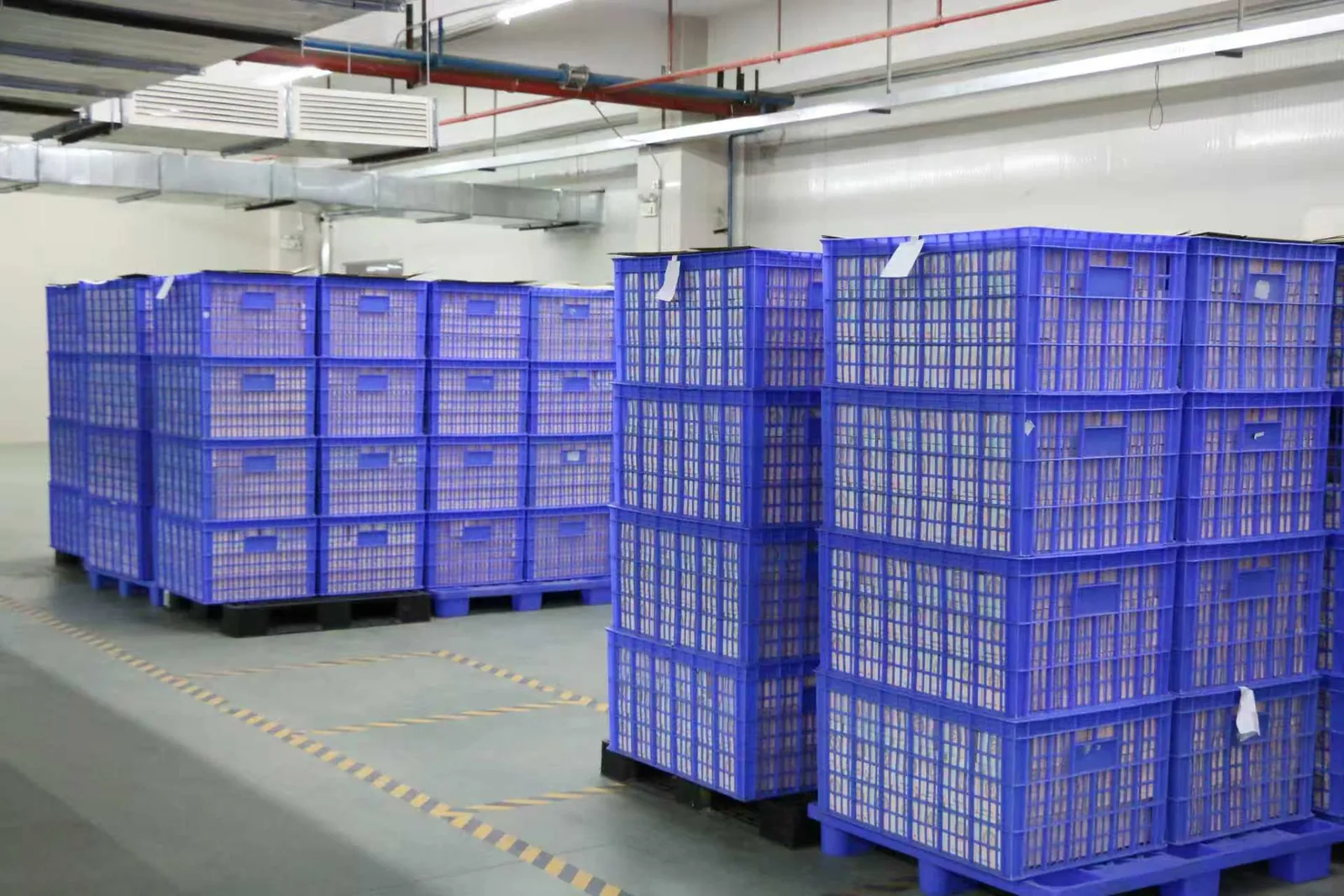
The container is sealed, gated and gone before most Ugandan buyers find out what they actually bought. By the time the cartons are opened in Kampala, the goods have crossed an ocean, cleared a port in a neighbouring country and moved inland under a transit bond that was discharged weeks earlier. A defect found at that point is no longer a shipment problem. It is an accounting problem, and the supplier at the other end of the thread knows the arithmetic as well as you do.
The Return Leg Is a Second Import
Returning goods from a landlocked market is not a reverse shipment. It is a fresh export from Uganda, a fresh transit through Kenya or Tanzania, and a fresh import into China. Each leg carries its own paperwork and its own payer, and none of it is covered by the freight quote you negotiated at the start.
The practical remedy set therefore collapses to two options. A credit against your next order, or replacement units inside your next container. Both depend on the supplier still wanting your business next quarter. That is why a quality argument is really an argument about leverage, and leverage is built before the deposit, not after the complaint.
What Sampling Actually Agrees To
Every inspection you can buy is a sampling plan, and every sampling plan accepts some defect rate by design. The plan draws a fixed number of cartons from a lot and tolerates a fixed number of failures before the lot is refused. Read that again slowly: the plan is a stated tolerance, not a promise of perfection.
This matters because most disputes are not about whether a defect exists. They are about whether the count of defects crossed a line that the contract never drew. When nobody wrote the plan down, the argument gets settled by whoever has more patience and less to lose.
- Define the lot. One colour running across two shifts is two populations, not one.
- Define the unit. A carton, an inner pack and a single pant give three different readings from the same table.
- Write the accept and reject numbers into the purchase order, next to the specification, where the factory actually reads it.
Where a Sampling Plan Gets Written Down
The plan belongs in the purchase order. A later email is not a plan. It is a preference that arrives after production has already been packed and wrapped.
Mechanically, a sample only describes the lot it was drawn from. If a colour is split across two lines to protect a shipment date, and both outputs are packed into the same range of cartons, the lot has stopped being one population. The sample is then drawn from a mixture, and no accept number can rescue that afterwards.
Sanitary Pants Supplier in Uganda: Which Documents Carry a Claim
Four documents do the work at destination: the commercial invoice, the packing list, the transport document and the inspection report. Only one of them describes condition. The invoice describes value, the packing list describes count, and the transport document records that the carrier took the load in apparent good order.
| Document | What it establishes | Where it fails you |
|---|---|---|
| Commercial invoice | The value declared and the terms you agreed | Silent on the goods actually inside the carton |
| Packing list | Carton count and the pack configuration loaded | Cannot show whether the size split matches what was ordered |
| Transport document | That the carrier accepted the load at handover | Records the outside of the load, not the contents |
That last phrase is where claims die. Apparent good order means the outside of the load looked intact at the moment of handover. It says nothing about a sealed carton, and it is signed long before your inspector opens one. If you shortlist a sanitary pants supplier in Uganda on price alone, this is the sentence you will be arguing with six weeks later.
This is also why the inspection report has to name the lot and the sampling unit. A report that says inspected and passed, with no reference to which cartons were opened, proves that somebody visited a factory. It does not prove that your goods were the ones examined.
A Sealed Counter-Sample Is the Only Witness
A specification is an argument until somebody seals it. The workable version is simple: two identical sets drawn from the approved sample, sealed and dated, signed by both sides. One set stays at the factory, one travels with the buyer.
The courier cost of that second set is trivial next to the cost of the argument it prevents. When a carton arrives with a seam sitting differently from what you approved, the question is not who remembers the meeting. It is which of the two seals still matches.
Keep both seals intact until there is a dispute, then break them in front of a witness. That is the entire mechanism, and it is the only part of the quality system that survives a change of salesperson at the factory.
Comparing Wholesale Offers on Remedy, Not Price
Two quotes for an identical specification can differ because one includes a pre-shipment inspection and the other assumes you will never ask for one. When you compare sanitary pants wholesale in Uganda offers, price the remedy and not the goods. Our own wholesale range is quoted the same way, with the inspection named as a line rather than buried in goodwill.
Ask each seller two questions in writing. What happens if the inspection fails, and who pays for the second inspection. The answers separate a factory that expects to pass from a trader who is hoping you will not test.
We ship from China and do not hold stock locally, so the remedy any sanitary pants supplier in Uganda can offer is a credit or a replacement in a following container. That is worth stating plainly, because it is true of every exporter serving this market whether or not they admit it.
Import Sanitary Pants From China to Uganda: When the Claim Clock Starts
If you import sanitary pants from China to Uganda, the windows in which you can still refuse a batch close one by one, in a fixed order. Miss one and the next window is narrower and more expensive.
- Sample approval. Last point at which a change costs nothing but a week.
- In-line check during production. Last point at which a defect is still a process fix.
- Pre-shipment inspection before stuffing. Last point at which goods can be held without customs involvement.
- Transport document issue. After this the carrier, not the factory, describes the cargo.
- Inland clearance at destination. From here every remedy is a commercial favour.
The third window is the one people compress, and it is the only one that cannot be reopened. Once a container is sealed and gated in, breaking the seal again needs customs on both sides of a border to agree, and they have no reason to hurry.
What the Factory Can and Cannot Fix After Loading
A factory can replace a carton. It cannot unpick a decision you approved. If the artwork carried the wrong size ratio, or a seal position was signed off on a sample that never matched production, the factory will point at your signature and it will be right.
What remains possible is honest and limited. Hold the next batch, change the pack configuration on a reorder, or credit the difference against a future container. Anything beyond that is a favour rather than a contractual right, and favours do not survive a change of management on either side.
Credit notes deserve one line of suspicion. A credit is only worth what the next order is worth, so a credit from a supplier you are about to stop buying from is a discount you will never collect. That is the mechanism behind the advice to keep remedies inside the trading relationship rather than in a claim file.
Qualifying the Supplier Before the First Order
A buyer who asks for a sanitary pants manufacturer in Uganda will usually be handed a trading company with a good catalogue and a rented meeting room. That is not automatically a problem. Not knowing which of the two you are talking to is the problem.
Three questions settle it. Who owns the pattern, which line runs this specific pant, and what happens to the artwork plates between orders. A trading company cannot answer the second one without naming a factory, and a sanitary pants manufacturer answers it without hesitating.
The third question matters more than it looks. Plates that are stored mean a reorder repeats the first order. Plates that are discarded mean every reorder is a new print run, with a new setup and a new chance to drift. Ask for the minimum order quantities per colour at the same time, and whether the factory capability covers the pack format you want. Vague answers here predict vague inspections later.
A Short Checklist Before You Approve Anything
Before the deposit, four items: a specification attached to the purchase order, a lot definition, a sampling plan with accept and reject numbers, and a sealed counter-sample. Before loading, one item: the inspection report, naming the lot and the cartons opened.
None of this is exotic. It is the ordinary paperwork of a market where the return leg costs more than the claim, and the whole point is that it has to exist before the container seals. Aftersales in a landlocked country is mostly a memory of what you prepared in advance.
If you want the specification sheet and the sampling clause we use for sanitary pants supplier programmes, ask for them before the first quote rather than after the first problem.
Where in the process should the inspection happen?
Before the container is stuffed and before the transport document is issued. Once a container is sealed and gated in, reopening it needs customs agreement on both sides of a border, so a later inspection tells you what you own rather than what you can still refuse.
Who pays for a second inspection when the first one fails?
That belongs in the purchase order, not in a conversation. The workable split is that the party whose fault caused the failure pays, which means the factory when defects are found and the buyer when the specification itself was too loose to measure.
Do I still need a sealed counter-sample if I have a written specification?
Yes, because a specification describes intent while a seal describes an object. When physical goods disagree with a document, the sealed set is the only thing an arbitrator or a third party can actually compare side by side.
Is a reorder cheaper than switching to a new supplier?
Usually yes, because the artwork plates, the sealed sample and the pattern already exist. Switching resets all three, and the first batch from a new supplier carries the same learning cost that every first batch carries.
What is the most useful clause in a first purchase order?
The inspection clause, written with a lot definition, a sampling unit and an accept number. The rest of the contract can be argued after the fact, but that clause has to be right before production begins, because afterwards there is nothing left to negotiate with.


