
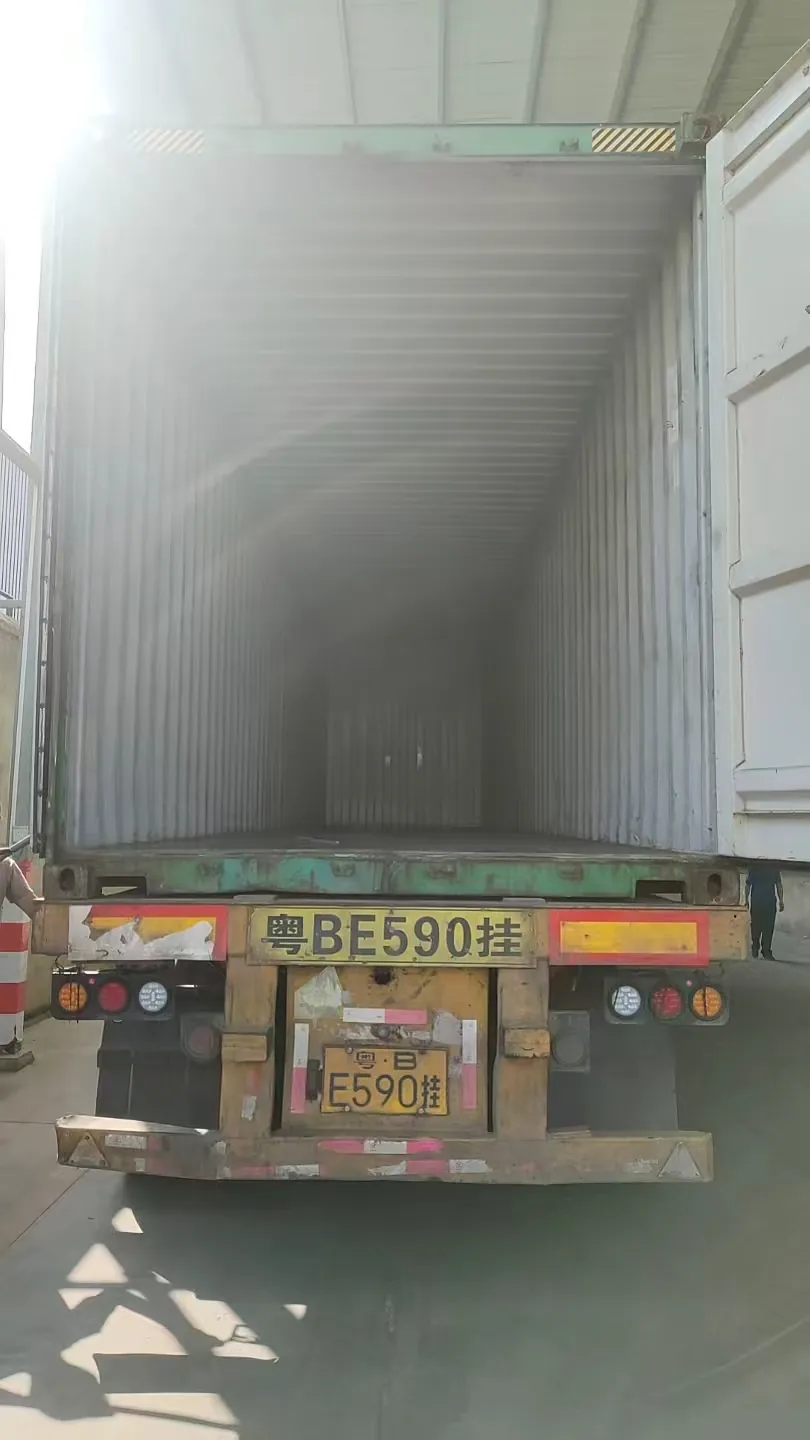
Most buyers vetting a sanitary pads supplier in Uganda spend their time on absorbency, top-sheet softness and price per pack. Those three decide almost nothing about whether the container arrives sellable. The leg that breaks goods is not the production line and not the sea crossing; it is the road after the port, under a bonded seal you cannot open, in air that is warmer and wetter than the one your cartons were specified for.
How a sanitary pads supplier in Uganda Judges the Last Leg
The container leaves the port sealed and bonded. Nobody opens it in transit, so the first person to see your cartons is the clearing agent at the inland depot, after the bond has been discharged and after the carrier window for a clean damage claim has already narrowed. That is why an importer here ends up arguing about cartons nobody could inspect. Damage done on the road and damage done in the yard look identical by the time you see them.
Someone typing sanitary pads manufacturer in Uganda into a search bar is usually asking who can supply them here, not who sews the pads here. The second question has one honest answer, which is a factory in China, and it is also the answer to the first. What changes between suppliers is rarely the pad. It is what they are willing to put in writing about the carton.
Why Corrugated Board Loses Its Back Under Humidity
Corrugated board is paper, and paper is a moisture buffer. As relative humidity climbs, the fibres take up water, the flutes soften, and the resistance of the board to a vertical load falls long before the carton looks wet. The failure is not sudden. A carton that holds its shape through a one-hour stacking check will keep bending under a sustained load for weeks, so the bottom tier quietly takes on the weight of everything above it and gives way in a store room rather than in a test.
Board grades are quoted from compression tests run at a fixed, moderate humidity. The store room your distributor uses is not that room. If you accept a grade on the strength of a test sheet without asking at what humidity the sheet was conditioned, you have bought a number that describes a climate you will not be storing in. The realistic test of a sanitary pads supplier in Uganda is therefore not the sample box but the carton that arrives in the third month.
What the Container Roof Does Overnight
Steel containers breathe. Warm, moisture-laden air sits above the cargo by day; at night the roof cools faster than the load, air at the ceiling reaches its dew point, and water forms on the underside of the roof and drips. This is condensation, not a leak, which is why a container can pass a hose test and still deliver damp top-tier cartons. The usual mitigation is desiccant sized to the air volume of the container, not to the weight of the cargo, because what you are drying is air.
For pads, the two tiers fail in different ways. The top tier takes water and loses print and seal appearance; the bottom tier takes load and loses shape. A carton rarely fails in the middle; it fails at a bottom corner where the load concentrates. Neither problem shows in the loading photographs a supplier sends you, and both are visible to a retail buyer in the first thirty seconds on a shelf.
Where the Wrapper Seal Actually Fails
A flow-wrapped pad is closed by a heat seal along a fin. On a long road leg the load vibrates continuously, and vibration does something compression cannot: it abrades that seal against the neighbouring pack. The result is usually not a breach you can see, but a seal that looks cloudy or lifted at the edge, which is precisely the detail a shelf buyer notices. The pad inside can be perfectly sound and the unit still unsellable, because the pack no longer reads as intact.
This is why seal width and seal pattern belong in the specification next to board grade. Ask which seal geometry was used and whether it was run on a vibration check, rather than whether it passed an internal inspection on the day.
Stacking Height Is a Purchasing Decision
Most importers treat stacking height as a warehouse problem. It is a purchase order line. The load a carton must survive is set by how high it will be stacked and for how long, and both of those are knowable before you book, not after. If your distributor stacks eight tiers against a wall with no dehumidification, say so in the specification and let the board grade be chosen against that number instead of against a generic export standard written for a climate-controlled shed.
Pallets Cost Cube and Buy It Back
Pallets are the one specification where freight cost and damage cost pull in opposite directions, and the arithmetic deserves to be done rather than assumed.
- Pallets lift the bottom tier off a concrete floor, which is where moisture migrates into board.
- They spread load across a deck instead of concentrating it through a few crushed corners.
- They consume cubic metres on a full container, and on a landlocked route cubic metres are what you pay for.
- They add a handling step at the inland depot, where a forklift is most likely to damage a stack.
- They are often scarce or of poor quality at destination, so the decision has to cover whether they come back.
The trade usually favours pallets when the carton will sit in a distributor yard for months on a concrete floor, and usually favours loose loading when the line is broken down and re-stacked within weeks. Either way it is a decision, not a default.
The Handover Point Sets the Delivered Cost
Buyers who search for sanitary pads wholesale in Uganda are usually comparing a delivered unit cost, and that cost is decided at the handover point rather than at the factory gate. A figure that ends at the port of loading excludes the road leg, the transit bond and the inland depot charges. A figure that ends at your door includes them, and also includes an assumption about damage. Two quotes that differ by a few percent are usually quoting different handover points, not different factories.
If you import sanitary pads from China to Uganda, settle the carton specification before the container is booked, because board grade and stacking height change carton dimensions and therefore the cube you are paying for. Changing a carton after booking means re-quoting freight, and re-quoting freight after the vessel is nominated is where a small order loses its margin.
What Belongs on the Specification Sheet
A carton specification that survives the road leg is short, and specific enough that two suppliers quoting against it are quoting the same thing.
| What to specify | Why it belongs on the sheet | What it protects |
|---|---|---|
| Board grade with its test humidity | Converts a paper number into a load at your climate | Bottom tier in a tall stack |
| Stacking height and storage months | Turns a warehouse habit into a purchasing number | Slow compression creep |
| Pallet or loose loading | Trades cubic metres against handling damage | Floor moisture and forks |
| Seal geometry and width | Abrasion resistance over a long road leg | Retail shelf appearance |
| Desiccant basis | Dries the container air, not the cargo weight | Top tier condensation |
| Print and varnish | Scuff resistance when cartons slide in transit | Shelf-ready presentation |
None of these lines is about the pad. All of them are about whether the pad reaches a shelf in a state a buyer will accept, which is the only quality question that outlives the factory.
Questions a Supplier Should Answer Without a Site Visit
A factory visit answers less than importers expect, because the failure you are trying to prevent does not happen at the factory. The questions below can be answered in writing, and the answers are what actually separate one supplier from another.
- At what humidity was the board grade tested, and what is the derated load at the humidity my store room reaches in the wet season?
- What stacking height and storage duration is this carton specified for?
- Is desiccant quoted on container volume, and how many units go in?
- Which seal geometry and width is used, and was it run on a road-leg vibration check?
- Where does risk change hands, and on which document does that happen?
- What do the loading photographs prove, and what would prove the rest?
We have made disposable menstrual pants and sanitary pads in China since 1998. We ship from China and we do not hold stock locally, so by the time a carton reaches you it has already survived the entire road leg, which is exactly why we would rather argue about board grade before loading than about damage after discharge. The factory capability page shows what we control in production; the carton is the part we control jointly with you.
Send us three numbers: the stacking height in your store room, how long stock typically sits there, and how humid that room gets in the wet season. We will send back the board grade, carton and desiccant basis that match them, or tell you that what you already have is right for this leg. If you would rather start from the commercial questions, the minimum order page and the FAQ page cover them.
Frequently Asked Questions
Does a heavier carton board raise the freight cost?
It adds a little carton weight, which matters on a route billed by volume rather than by weight. In most cases the extra board costs less than one crushed tier of stock, so the comparison should be made against the damage it prevents rather than against the carton price on its own.
Why do my top-layer cartons arrive damp but not soaked?
That pattern points to condensation rather than a leak. Warm air inside the container reaches its dew point against the cold roof overnight and drips onto the top tier. Desiccant sized on container air volume, plus loading the cargo clear of the roof, is the usual mitigation.
Can I claim carton damage after the transit bond is discharged?
The window narrows sharply once the seal is broken at the inland depot. The first inspection you are allowed is the one that counts, so photograph the seal, the container number and the tier that failed before anything is unloaded, and note the seal number on the delivery document.
Is a pallet worth the cubic metres on a landlocked route?
It depends on how long the carton sits in the distributor store. For stock held for months on a concrete floor in humid air, the pallet usually pays for itself. For a line that is broken down and re-stacked within weeks, the cubic metres are often the larger cost.
What is the most useful single question to put to a supplier?
Ask at what humidity the board grade was tested and what stacking height it is specified for. Those two answers, in writing, tell you more about whether the goods will survive a Kampala store room than any photograph of a production line.


