
Row 14 in Dar es Salaam and row 14 in Mwanza can carry identical cartons from the same production line, invoiced at the same CIF figure, and still land at different costs per pack. The gap is usually not the pad. It is the name written into the consignee box weeks earlier, a field most buyers sign off without reading and most suppliers never ask about.
What a sanitary pads supplier in Tanzania can actually control
A factory in China controls three things on a Tanzanian order: the product specification, the packing, and the documents it issues before the container leaves. It does not control duty, port dwell time, or which clearing agent the file ends up with. Separating those two lists at the quotation stage prevents most of the arguments that surface after arrival.
The split matters because complaints arrive as one sentence, the goods cost more than quoted, that quietly merges three unrelated problems. A sanitary pads supplier in Tanzania can answer for carton count, grade and packing. It cannot answer for a bond opened on the wrong basis, or for a vessel that discharged before the file was complete.
Dar es Salaam serves more than one country
Cargo discharged at Dar es Salaam is not automatically Tanzanian cargo. The port is the main gateway for Zambia, eastern Democratic Republic of Congo, Rwanda, Burundi and Uganda, with lake routes moving goods onward through Kigoma and Mwanza. A distributor in Lubumbashi and a distributor in Dodoma may share a vessel, an agent and a supplier, and still face entirely different release routes.
That is why the transit question belongs before the price question. Domestic entry and transit cargo are handled under different customs treatment: transit cargo moves under a bond, is tracked to an exit point, and has to leave within a fixed window. Declare onward-sale cargo as a domestic import and the bond, the tracking and the exit obligation land on the wrong party.
- Is the cargo staying in Tanzania or crossing a border after discharge?
- Whose registration number will file the entry at Dar es Salaam?
- Who carries the bond if the container misses its exit window?
The consignee box decides the landed cost
Release is built on identity, not on description. The consignee named on the bill of lading has to match the importer registration that files the entry, down to the business name and the address behind the tax number. One character of drift between the two stops the file, and the fix is a bill of lading amendment that travels the same route as the original.
That amendment is where the money goes. It is requested from the carrier after departure, accepted at the carrier's discretion, and reissued through the same channels as the original set. Meanwhile the container keeps accruing port charges whether or not anyone can collect it. Buyers who fight over the unit price and then sign a consignee field filled in by a forwarder have optimized the smaller number. The question worth asking is not who sells the pads but who clears the cargo, and the answer is already typed on the bill of lading.
Four documents have to tell one story
Customs does not read your order confirmation. It reads the file, and the file has to agree with itself: same quantity, same description, same parties, same references. Disagreement between two documents is treated as a statement about the goods, not as a typo.
| Document | What it fixes | Where a mismatch surfaces |
|---|---|---|
| Commercial invoice | Value, seller, buyer, trade term | Valuation query at entry |
| Packing list | Cartons per SKU, marks, weights | Physical verification and release |
| Bill of lading | Consignee, notify party, port, date | Amendment before release |
| Origin document | Origin and preferential treatment | Origin query, clearance stalls |
The invoice and the packing list are ours to issue. The bill of lading is ours to instruct and the carrier's to issue, which is why the instruction sheet matters more than the invoice copy. Sending a corrected instruction before cut-off costs an email; sending it afterwards costs a reissue and a queue.
Naming and the HS line must agree
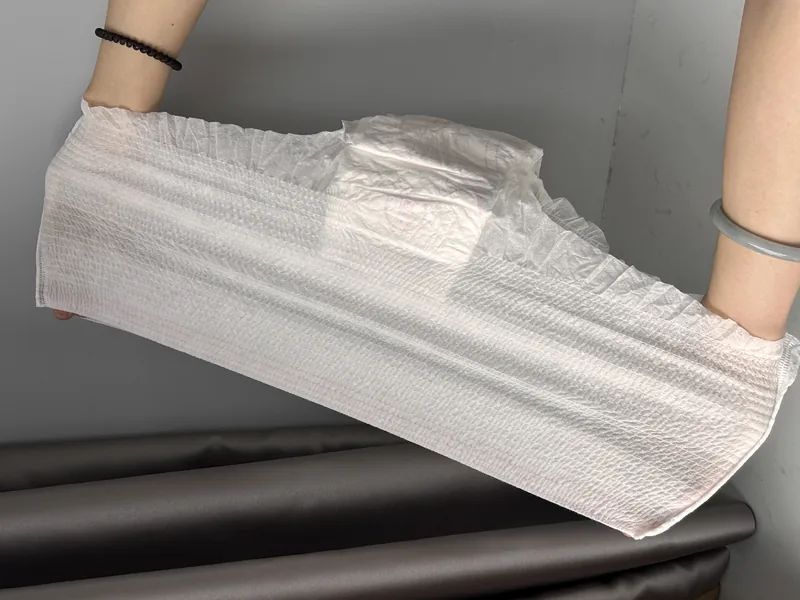
Sanitary pads sit under heading 9619, with sanitary towels and tampons, and disposable menstrual pants are classified in that same goods family rather than as apparel. A file that describes the goods as underwear in one place and as sanitary wear in another invites a classification question that nobody at the port can settle by phone.
Classification and valuation are two separate checks that read the same description. An invoice trimmed for duty reasons and a bill of lading that keeps the technical name disagree on the record, and when they do the slower document wins, because nothing moves until the difference is explained in writing.
Packing that has to survive the corridor
A container from a Chinese port to an inland East African destination passes through more handling than the distance suggests: loading, transhipment, discharge, stacking at the port, then road or lake transport. Corrugated board loses strength in humid heat and adhesive softens. Both effects accumulate rather than announce themselves, which is why failures show up on the last leg instead of the first.
- Carton compression under stacked load, not single-box strength
- Adhesive behaviour after weeks inside a closed container
- Inner bag seal integrity after repeated handling
- Carton marks still readable after transhipment
None of that can be settled by a number on a spec sheet without its test condition. Ask how a figure was measured and which failure it was meant to catch, and agree before production what happens when a carton fails on arrival: replacement, credit, or a change in the build.
What wholesale means in this market
When a buyer asks for sanitary pads wholesale in Tanzania, the request usually means redistributor volumes, enough cartons to supply sub-distributors and pharmacies, not a separate price tier that exists on a list. Prices step down for reasons grounded in production, and volume is only one of them.
The other two are material run length and packaging setup. A long run of one absorbency spreads setup across more units; the same quantity split across three absorbencies does not. A mixed order can therefore cost more per carton than a single-SKU order of equal total quantity, which is why wholesale pricing for pads should always be quoted per SKU mix rather than per tonne.
From the factory floor to the loading port
To import sanitary pads from China to Tanzania, the origin sequence runs in a fixed order: specification sign-off, production, in-process checks, final packing list, booking, loading, bill of lading instructions. Each step produces a document that somebody downstream will read, and jumping ahead leaves a gap no one can fill from the other end.
The packing list is the usual casualty. It is drafted before loading and counts the cartons someone expected to pack; loading counts what was actually packed. Reconciling the two at the container door takes minutes and produces a clean set. Reconciling them after discharge takes a discrepancy report, a survey and a delay. The wholesale buying guide covers the same sequence from the buyer's side of the table.
Questions to settle before you book
A short list, answered in writing before the booking is confirmed, removes most of what goes wrong on this route. None of the answers needs technical knowledge; each one needs somebody to decide and reply. A sanitary pads supplier in Tanzania worth a second order will answer all five without asking why.
- Will the cargo be entered for Tanzania, or moved under bond to another country?
- Whose registration number files the entry, and does it match the consignee exactly?
- Who is the notify party, and can they be reached on the day of discharge?
- Which description of the goods appears on every document, word for word?
- If a document has to be reissued, who pays for it and who chases it?
If you are comparing a sanitary pads manufacturer in Tanzania with a trading company, ask for the document set behind the quote, a sample invoice, packing list and origin document, and read them against each other before you compare prices. Or send your SKU mix and destination and ask for a specification sheet with the test condition written next to every claim. We have produced in Guangdong since 1998, and our factory quotes against a stated minimum order quantity rather than a range. We ship from China and do not hold stock locally.
Who should be named as consignee on a Tanzanian pad shipment?
The importer whose registration files the customs entry, spelled exactly as it appears on that registration. If a bank or a forwarder is named instead, release depends on that third party handing over documents in time, and any later change needs a bill of lading amendment after departure.
Can goods for Zambia move through Dar es Salaam?
Yes. Dar es Salaam handles transit cargo for several landlocked markets under bond, with tracking to an agreed exit point. The consignee, the bond holder and the exit point must be declared at booking. Treating transit cargo as a Tanzanian import creates an obligation nobody in the chain planned for.
How should disposable menstrual pants be described on the invoice?
Use one description everywhere, consistent with heading 9619 rather than apparel. Sanitary pads and disposable menstrual pants belong to the same goods family, and a file that switches between underwear and sanitary wear invites a classification query that holds the container.
Does a larger order always lower the price per carton?
No. Price steps follow material run length and packaging setup as much as total volume. One long run of a single absorbency spreads setup further than the same quantity split across three, so a consolidated mixed order can carry a higher cost per carton than a single-SKU order.
What packing problems appear after a long sea route?
Carton compression under stacked load, adhesive softening inside a closed container, inner bag seals after repeated handling, and carton marks that stop being readable after transhipment. Ask for the test condition behind any strength claim, and agree in advance what happens if a carton fails.


