
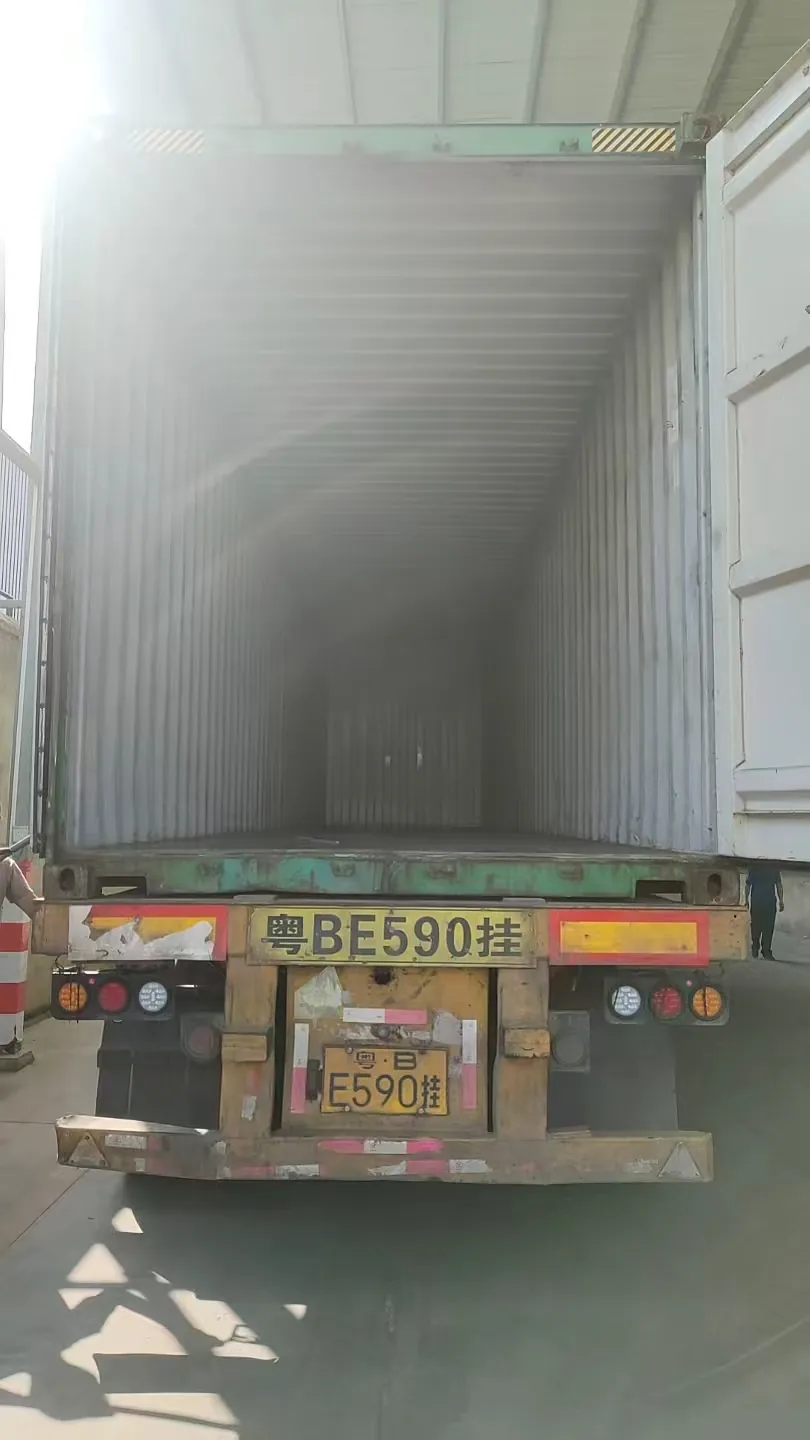
If your quote ends at Dar es Salaam, you do not yet have a Tanzania landed cost. You have a price for a container sitting on a quay, in a currency you did not borrow, at a point you cannot sell from. Most buying decisions here are made on that number anyway, and that is why the same pad looks cheap to one distributor and unworkable to another. The gap is not the pad. It is everything after the port gate.
Sanitary Pads Supplier in Tanzania: Start at the Delivery Point
Before price, settle the destination. A container can be quoted to the port, to a yard in Dar es Salaam, to a distributor dock in Mwanza, or to a border post for onward transit. Those are four different numbers and four different document sets, and only one of them is the figure your customer will compare against.
A sanitary pads supplier in Tanzania who asks where the pallet finally stops is not stalling. The answer decides the incoterm, the carton specification and the truck booking, and it decides them before anything is produced. A supplier who never asks has quietly assumed the port, and the port is the least useful of the four answers.
A Port Quote Is Not a Tanzania Quote
A CIF Dar es Salaam figure covers the goods, the ocean leg and insurance up to the port. It does not cover terminal handling, the clearing agent, duty, VAT, the truck that leaves the gate, or the yard that receives the pallets. None of that is concealed; it simply sits outside the three letters of the trade term.
So the useful comparison is not quote against quote. It is landed cost against landed cost, at one delivery point, in one currency. Ask a sanitary pads supplier in Tanzania for the same incoterm and the same destination, because two quotes that end at different places cannot be ranked, however tidy the columns look.
- Goods and export packing, priced at the factory gate
- Ocean freight and insurance to the port of discharge
- Terminal handling and the clearing agent fee
- Duty and VAT assessed on the declared value
- Corridor trucking to your town or to a border post
Why Pads Fill a Container Before They Weigh It
A pad is mostly air. Compression helps, but only to a point: the fluff core and the back sheet spring back once the bale is released, so the carton you seal is not quite the carton that arrives. Because of that, freight settles on measure rather than weight. Carriers and inland truckers both charge on whichever is greater, the weight or the cubic measure, and for this product the measure wins almost every time.
That single fact reorganises the whole cost sheet. A container of pads reaches its volume limit long before it reaches any weight limit, so freight per unit is set by how many units fit in a cubic metre. Improve the packing and you move the cost. Improve the absorbency and you do not.
Carton Dimensions Move Landed Cost More Than Price
Buyers negotiate hard on the pad price and then accept whatever carton the factory already uses. That is the wrong order of attention. A carton a few centimetres shallower can raise the units per cubic metre, and that gain applies to the ocean leg, the terminal, the truck and the racking at the same time. A price concession applies once, to the goods line only.
There is a limit, and it is a real one. Compress too far and the pads arrive with creased back sheets and a core that does not recover, which surfaces as a complaint at the retail counter rather than at your door. The useful question is not how small a carton can be, but how small it can be before the product stops behaving like the sample you approved.
What the Clearing Sequence Actually Looks Like
Clearing is a sequence, not a set of parallel tasks. When the steps run out of order the container sits and the meter runs. The order that works looks like this.
- The bill of lading is released, as an original set or by telex, once the payment condition is met.
- The clearing agent lodges the declaration and the assessed duty and VAT are paid.
- The release order is issued and the container is collected from the terminal.
- The truck is booked against that release, not before it, since a vehicle standing at the gate costs as much as one working.
- The container is devanned and the empty is returned inside the free window.
- The delivery note is signed at your premises and the file closes.
The step that catches importers is the first one. Payment terms and document release are the same event in practice, so a supplier who hands over documents only after the bank confirms funds is not being difficult; that release is what starts the clock on everything downstream.
Bonded Transit Cargo Changes the Buyer Role
Tanzania is not only a market. Dar es Salaam is also the entry point for cargo consumed inland, in Zambia, the DRC, Rwanda, Burundi and Uganda. That cargo moves under a transit bond: it enters duty-suspended, travels under customs control, and the bond closes when the goods cross the border. Break the seal or change the route and the bond does not close, and the security behind it is drawn on.
For a buyer in that position the question changes shape. You are no longer comparing retail prices in one city; you are comparing the cost of moving a container from a quay to a border post, and the paperwork has to match that destination from the first declaration. A declaration that names the wrong destination cannot be repaired at the border.
Pack Copy Decides the Reorder, Not the Absorbency
In the towns, most packs are sold across a counter by a shopkeeper who explains the product. That works once. The reorder depends on the buyer reading the pack herself, in the language she uses for everything else. A pack printed only in English narrows the channel to pharmacies and supermarkets and closes the kiosk route, which is where the volume actually sits.
This is a specification question, not a design preference. Settle the language, the pack count and the shelf-facing before the artwork is approved, because changing copy after a print run means new film, new plates and a new run. Those who import sanitary pads from China to Tanzania learn this on their second order rather than their first.
Sanitary Pads Wholesale in Tanzania Has a Different Order Shape
Wholesale here usually means many small drops, not one large one. A distributor may serve a hundred counters from a single container, and each counter wants a mixed carton rather than a pallet of one item. That mixes the load badly: pads, pants and liners in one container cube together poorly, and freight per unit rises even though the total volume has not changed.
The practical answer is to fix the assortment before the carton is specified, then size the carton to the assortment rather than the other way round. Done in that order, the container mixes cleanly. Done afterwards, you are paying to ship air. Any sanitary pads supplier in Tanzania who quotes before asking about assortment is quoting a pallet, not a delivery.
Questions to Ask a Sanitary Pads Manufacturer in Tanzania
Four questions separate a supplier who has shipped this corridor from one who has only shipped to a port.
- Which delivery point does your price name, and which incoterm?
- What carton dimensions and units per carton does the quote assume?
- Who releases the bill of lading, and against what condition?
- What changes if the destination becomes a border post instead of a town?
The answers tell you more than the price does. A supplier who answers all four in one reply has done this before. A supplier who answers only the first has quoted you a container, not a delivery, and the difference will appear later as a line on your own cost sheet.
What We Do From China, and What We Cannot Do
We are a factory in Shanwei, Guangdong, and everything we sell leaves from China. We ship from China and do not hold stock locally, so we cannot offer goods that are already sitting in Dar es Salaam, and we would be cautious about anyone who says they can. We have been making disposable menstrual pants since 1998, under ISO 9001, and most of that work has been export packing rather than retail presentation.
What we can do is quote to the point you actually need, state the carton dimensions the quote assumes, and prepare documents so that release is not your bottleneck. If your destination is a border post rather than a town, say so before the order is placed, because that changes the paperwork and not merely the freight figure.
Does a CIF Dar es Salaam quote include duty?
No. CIF stops at the port. Duty, VAT, terminal handling, the clearing agent and the truck to your town all sit outside it, so compare landed cost at one delivery point rather than comparing port prices.
Why does carton size change the freight cost?
Because pads fill a container by volume before they reach any weight limit, freight is charged on cubic measure. A shallower carton puts more units in the same space, which lowers the freight per unit on every leg of the move.
Can you supply goods already held in Tanzania?
No. We ship from China and do not hold stock locally, so every order is produced and packed for that order. We would rather say so plainly than let you plan a launch around inventory that does not exist.
What documents do I need before the container is released?
The released bill of lading, the lodged declaration with duty and VAT paid, and the terminal release order. The truck is booked after that release, never before, or you pay for a vehicle standing at the gate.
Is Swahili pack copy possible on a first order?
Yes, if the copy is agreed before the artwork is approved. Printed copy is set on film and plates, so a language change after the run means a new run rather than a sticker over the old print.
If you want a comparison you can use, send the delivery point and the assortment, and ask for a quote that names both. We will return it with the carton dimensions attached, so you can put it beside the others and see what the differences really are. Start with our supplier page, or read the wholesale buying guide if this is your first container. Buyers comparing build options usually end up on the manufacturer page, and the MOQ page answers the question that comes next. Order shape is covered on the wholesale page.


