
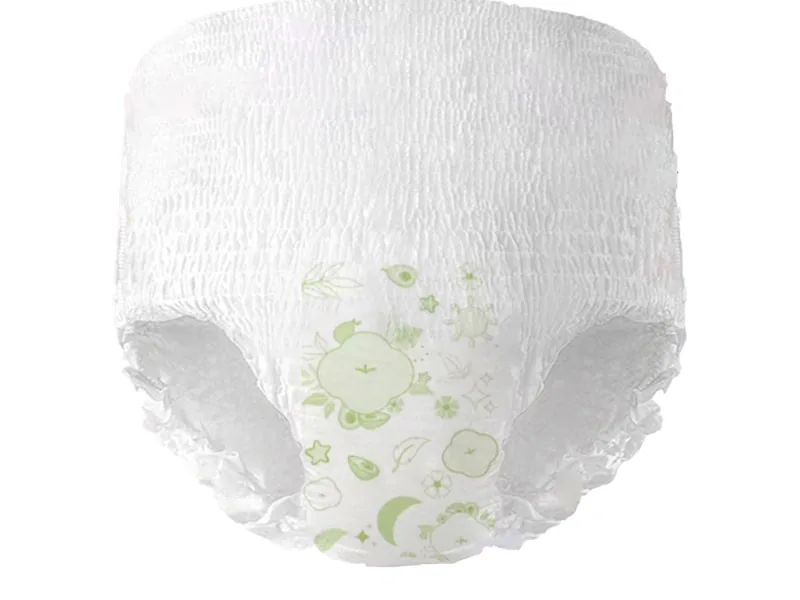
What a Sanitary Pants Manufacturer in Kenya Can Quote Accurately
The fastest way to overpay for sanitary pants in Kenya is to collect three prices before you ask a single question about construction. Three quotes, three different products, one spreadsheet, and the lowest number wins by default. That is not a purchasing decision. It is a guess about what each supplier assumed you meant by the word pants.
In East African trade talk, the phrase sanitary pants covers at least three separate objects: a disposable pull-up worn like underwear, a washable textile brief sold under the same name, and a long pad a trader calls panty-shaped. Three products, three supply chains, one search term. An inquiry that does not name the object cannot be compared with another that also does not name it.
An inquiry that opens with sanitary pants manufacturer in Kenya usually means one of two very different things: a factory inside Kenya, or a factory that ships to Kenya. The overlap between those two is small. The first is a converter who buys rolls and packs locally. The second owns the lamination line and the sealing line, which is where the construction is decided. Ask what the factory floor can hold before what it can produce.
The Construction Is a Lamination Plus a Seal
A pad is a flat lamination: topsheet, absorbent core, backsheet, adhesive, cut to shape. A pull-up adds three elements a pad machine does not carry — an elastic waistband, standing leg cuffs, and a side seal joining front to back. Those three additions move the failure mode. On a pad, the question is whether liquid passes through the backsheet. On a pull-up, the more common complaint is that the side seam opens under movement, or that the core shifts toward one leg.
That is why two samples can look identical on a table and behave differently after twenty minutes of wear. The difference is not visible in a photograph. It lives in the tension the elastic was applied at, and in how much seal width the machine was set to leave. Neither number appears on a specification that only lists length and pack count.
Four Specifications That Move Cost More Than the Unit Price
Inside one product family, the material decisions below change factory cost per pant far more than the price negotiation does. They are also the items most often missing from a first inquiry. A supplier who quotes without asking about them is quoting an assumption.
| Decision | What it changes | What the inquiry should state |
|---|---|---|
| Core build | How much absorbency sits in fluff pulp versus superabsorbent polymer, and whether the core is fluffed in line or bought as a laminate | The wear occasion, and whether the product must cover overnight protection |
| Waist elastic | How the pants stay up without pinching, and how far the waist opens after storage | The size range and the body type that range has to cover |
| Leg cuff | Whether liquid is held at the leg opening while the wearer moves | Whether the product is worn during sport, travel or sleep |
| Backsheet film | Breathability against the chance of dampness at the outer surface | The climate of the market and how cartons will be stored before sale |
| Pack format | Carton cube, shelf presence, and the cost of film artwork | Units per pack, packs per carton, and whether sizes are mixed |
Notice what is absent: price. Price follows from those five decisions, and fixing them first is what makes a second quote meaningful. Without them, each supplier describes a different object and the spreadsheet compares adjectives.
Why the Elastic Waist Decides Your Complaint Rate
Elastic is applied under tension, and that tension is a machine setting rather than a material property. It drifts with running temperature, with the batch of elastic spools, and with how long the roll sits before it is sealed into a carton. A pant that leaves the line with a firm waist can arrive with a softer one, because the elastic keeps relaxing while it is wound and compressed inside a container.
This is the quiet reason two shipments from the same supplier can produce different complaint rates in the same market. It is also why an experienced buyer measures the waist after storage rather than straight off the line, and why an honest supplier will decline to promise a waist tension without knowing how the goods are kept at the destination. The same logic sets minimum order quantities, since every size change is a machine setup rather than a paperwork step.
Reading a Kenyan Inquiry the Way a Factory Does
A factory reads four things out of an inquiry before it reaches the price section: the size split, the pack configuration, the channel the goods will sell through, and whether the buyer has a brand to print. The channel matters most in Kenya, because supermarket shelf, kiosk resale and institutional tender each imply a different specification and a different tolerance for pack damage.
- Size split: how many units of each size, not only the order total.
- Pack configuration: units per pack, packs per carton, mixed or single size.
- Channel: retail shelf, kiosk resale, or a tender with a fixed specification.
- Brand: whether film artwork exists, and who signs it off.
- Document route: who opens the import declaration, and which bank handles it.
The last two items are the ones that stall orders. A tender specification cannot be reopened after the conformity certificate is issued, and film artwork that arrives after the production slot is booked either delays the run or ships under a sticker pasted over the print.
Packing Arithmetic Comes Before Freight
Ocean freight is not priced per pant. It is priced per container, and a container is filled by cube. Carton length times width times height gives a case cube, the case cube divides into the usable container volume, and what remains depends on whether the load is floor-stacked or palletised. Pallets consume cube, so a floor-loaded container carries more cartons and discharges more slowly at Mombasa.
Two suppliers can quote the same pant and ship materially different quantities per container, because one compresses the packs harder or uses a carton that nests better. The unit price gap you negotiated can vanish at that point and reappear as a freight gap. A wholesale buying guide covers the carton and document sequence in more detail.
The Clearance Sequence Starts Before the Line Runs
For regulated goods, the conformity document is issued in the country of export against a specific consignment, its invoice and its packing list. It is not obtained afterwards at the port. The order is fixed: specification frozen, artwork approved, goods produced, consignment inspected, document released to the importer side, vessel booked, container loaded.
Any change after that document is issued — a different pack count, a changed brand, a substituted film — leaves the paperwork describing goods that no longer exist. That costs more at the port than the production change ever would. A factory that asks you to freeze the specification early is protecting the document chain, not being difficult.
What Sanitary Pants Wholesale in Kenya Buyers Usually Miss
Buyers who enter sanitary pants wholesale in Kenya tend to compare the printed pack and the price, and to ignore the two variables that decide whether the goods still sell in month six: the film and the storage. Coastal humidity is unforgiving. Cartons stacked against a wall, or a container held at the port, will soften film and lift print.
The practical response is not a heavier film everywhere, which charges the whole order for one weak link, but a film chosen for the route and a storage instruction the distributor will genuinely follow. A supplier who has shipped into the region will raise this before you ask, and will print the storage condition on the carton instead of hiding it in a catalogue. Our wholesale range is quoted size by size for the same reason.
Before You Import Sanitary Pants From China to Kenya
If you are preparing to import sanitary pants from China to Kenya, the useful first message is not a quantity and a target price. It is a one-page construction statement: the wear occasion, the size range, the absorbency expectation written as a wear condition rather than a figure, the pack and carton format, the channel, and whether artwork exists.
- Wear occasion: daytime use, overnight protection, or both.
- Size range, and the body type that range must actually cover.
- Pack and carton format, including whether cartons mix sizes.
- Channel, and whether a tender specification applies.
- Artwork status, and who approves the print.
We have manufactured disposable absorbent products since 1998, and we ship from China. We do not hold stock locally and we do not run a factory, warehouse or office in Kenya, so a Kenyan entity presenting itself as our branch is not one. What we can do is quote the construction you describe, work the conformity route with the agent appointed for the shipment, and tell you plainly which of your five choices is driving the cost.
Send the construction statement through the contact page and we will return a written comparison of two builds: the one you specified and the one we would recommend for your channel, with the trade-offs stated in words rather than compressed into a single figure. If your specification is still open, ask for the construction sheet first and the price second.
Questions Buyers Send Us About Sanitary Pants
Does a sanitary pants manufacturer in Kenya have to be based in Kenya?
No. Most sanitary pants sold in Kenya are produced abroad and imported. What matters is whether the supplier owns the lamination and sealing lines and can carry the conformity route for your consignment from the exporting country.
What should be fixed before I ask for a quotation?
The wear occasion, the size range, the pack and carton format, the selling channel, and whether film artwork exists. Once those five are fixed, two quotes describe the same product and can be compared on merit rather than on adjectives.
Why do two samples feel different after a few weeks in storage?
Elastic is applied under tension and keeps relaxing after the pant is sealed. Storage heat and compression change the waist far more than they change the absorbent core, which is why one supplier can show different complaint rates across shipments.
How is a container load calculated for disposable menstrual pants?
By cube rather than by weight. Carton dimensions give a case cube, the case cube divides into the usable container volume, and the palletised or floor-loaded pattern decides how much of that volume is really available for cartons.
Can the specification change after the conformity document is issued?
Not without consequence. The document describes a specific consignment, invoice and packing list, so a late change to the pack count or the film leaves the paperwork describing goods that were never shipped.


