A Softer Top Sheet Isn't the Goal: Balancing Softness and Fluid Flow in OEM Sanitary Pads and Menstrual Pants
2026-10-29
When a buyer briefs us on a new OEM line, one request comes up constantly: make the top sheet as soft as possible.
We only half-agree with that.
Softness and fluid flow pull in opposite directions
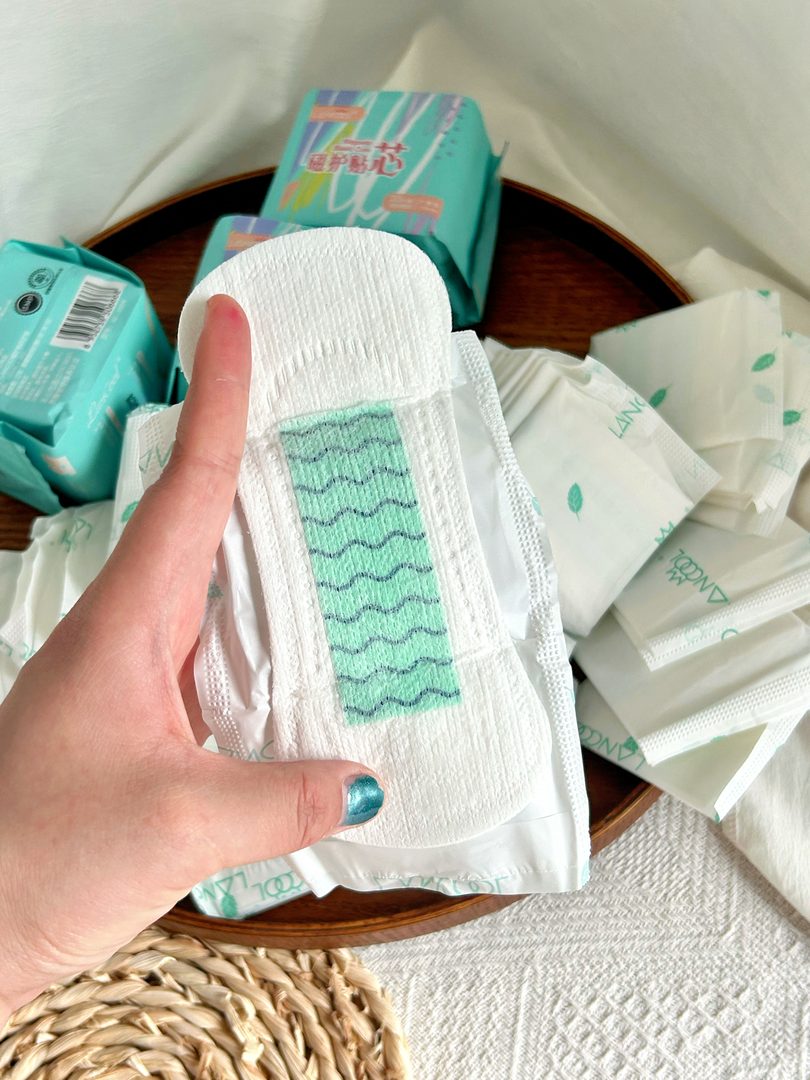
A top sheet's first job is to let liquid pass through quickly and move it into the core. When bulk is pushed too high, the gaps between fibers get larger. The sheet feels softer and more cushiony to the hand, but liquid takes longer to penetrate and can sit on the surface a moment longer than it should.
The result: the handfeel is softer, but the dry feel suffers. So "soft" by itself is not the target. Fast and soft at the same time is.
We balance it with two levers
We don't chase softness with a single number. We tune two things together:
- Fiber selection. Fine-denier fibers raise the skin-soft feel, while profiled or cross-section fibers (grooved, hollow) keep capillary channels open so fluid still moves.
- Perforation. Aperture size, hole shape, density, and layout actively open channels in the surface, so the sheet stays skin-friendly yet lets liquid drop through fast.
The same word "soft" can feel completely different depending on how the fibers and the holes are combined.
We match the structure to the positioning
There is no single right top sheet — only one that fits the positioning:
- Overnight / heavy protection: leans on absorption and keeping the surface dry; the sheet can be loftier with sparser holes.
- Daily / light: leans on thin, close-to-skin comfort; the sheet should be thin, soft, and quick to conduct.
- Sports / menstrual pants: leans on fit and staying in place; the top-sheet structure follows the pant shape.
How soft it should be, where the holes go, and which fibers we use — we work those out from your product positioning, not by applying one recipe to every order.
Why this matters when you brief a factory
"Make it soft" leaves too much on the table. The useful brief describes the user scenario and the performance you need, and lets the supplier balance the structure for you. That is where our OEM sanitary pads and menstrual pants manufacturing programs live — and our private label work, where we match the top-sheet structure to what the product is actually for.
This is part of a larger set of notes for founders building a hygiene brand — see the Founder's Playbook series.
If you are planning a new product's top sheet, tell us the positioning and we will work the structure out with you.
Part of the Founder's Playbook: Building a Hygiene Brand series — practical business thinking for founders exploring a hygiene or personal-care brand.
Turn this guide into an OEM brief
Share your product direction, target market, packaging idea and sample questions. Nafei can help translate the buying guide into a practical RFQ discussion.
- Product type: period pants, sanitary pads or mixed OEM project
- Target country, channel and buyer positioning
- Size range, material preference and sample review focus
- Private label artwork, pack count and estimated quantity