Postpartum Disposable Menstrual Pants: Side-Open vs Overnight, and What to Stock
Postpartum recovery means heavier, longer bleeding than a normal period. A plain-language guide to disposable menstrual pants for postpartum - side-open vs overnight pants, what to stock, and what to ···
Share target market, size range, pack count, artwork status and order quantity for quotation.
Introduction
After delivery, the bleeding isn't a normal period — it's lochia, and it runs heavier and longer, commonly 20-plus days and sometimes close to four weeks. That changes the product math completely. A pad that handled a regular flow fine now leaks at 3 a.m., and a design that works when you can move freely doesn't work when lifting a leg hurts. Most of the confusion at the hospital-gate comes down to one question: disposable menstrual pants for postpartum — which kind, and how many.
Here's the practical version. It's written for new mothers and, further down, for the brands and buyers who make these products. The short answer first: for most people, a side-open disposable menstrual pants (called 日安裤 in China) plus a supply of overnight pants covers the peak, and you can skip most of the rest. Here's why.
The two pants that actually matter — and the one difference between them
Two products do the heavy lifting in postpartum recovery, and they look almost identical until you check one detail: how you put them on.
Overnight pants (安睡裤) are one-piece, pull-on pants — an absorbent, leak-guarding version of normal underwear. You step into them like underwear. They work well when you can move freely, so they suit an uncomplicated vaginal delivery in the first heavy week.
Side-open pants (日安裤) start out the same but have tear-away adhesive tabs on both sides. You lay the pant flat under the hips, then fasten the tabs — no lifting, no stepping through. When it's soiled you tear the sides open and pull it straight out. That single change is what makes them the safer default, because stepping into pull-on pants pulls at stitches after an episiotomy or tear, and bending hurts after a C-section. If you never tear the tabs open, a side-open pant just behaves like a normal overnight pant. You're not losing anything by choosing it.
One product, two use cases. The side-open design is a superset of the pull-on design — which is why so many hospitals and care routines default to it.
Side-by-side: every postpartum absorbent product, ranked by usefulness
| Product | Structure | Best for | Pros / cons | Stocking advice |
|---|---|---|---|---|
| Overnight pants (安睡裤) | One-piece pull-on, thin waistband, soft topsheet | Uncomplicated vaginal delivery, first heavy week | Good leak guard, no pad or disposable underwear needed; but stepping in pulls at stitches, not for C-section or tears | Buy the largest size; pair with side-open pants |
| Side-open pants (日安裤) | Pull-on shape with tear-away side tabs | All scenarios — tears, episiotomy stitches, C-section | Same leak guard, minimal effort, no strain on the wound; no real downside | Stock first; reusable across every stage |
| Measured maternity pads | Much larger than normal pads, paired with a weighing scale | First two days of peak bleeding, when the hospital monitors output | Lets you track lochia volume and flag abnormal bleeding; but only required by some hospitals | Ask the hospital; or just buy two packs as backup |
| Maternity sanitary pads | Much larger and thicker than day/night pads | First few heavy days | High absorbency, but poor wrap and easy side leakage — no longer the mainstream choice | Don't over-buy; a small backup is enough |
| Adult diapers | Thick, built for urine retention | No real postpartum fit | Poor breathability, stiff fabric, low comfort — not recommended postpartum | Skip |
A phased plan: what to use, when
What actually matters when you buy
- Size up. For all pant-style products, choose the largest size. A looser fit avoids rubbing against stitches and is noticeably more comfortable. This is the single most common regret — buying true-to-size.
- Prioritize a soft topsheet. A silk or silk-feel surface is gentler against a tear or episiotomy wound and reduces irritation. The topsheet, not the absorbency rating, is what your skin feels for three weeks straight.
- Skip adult diapers. They're engineered to hold urine, so they run thick, stiff and low-breathability. That's the wrong tool for postpartum recovery.
For brands and buyers: how this maps to product specs
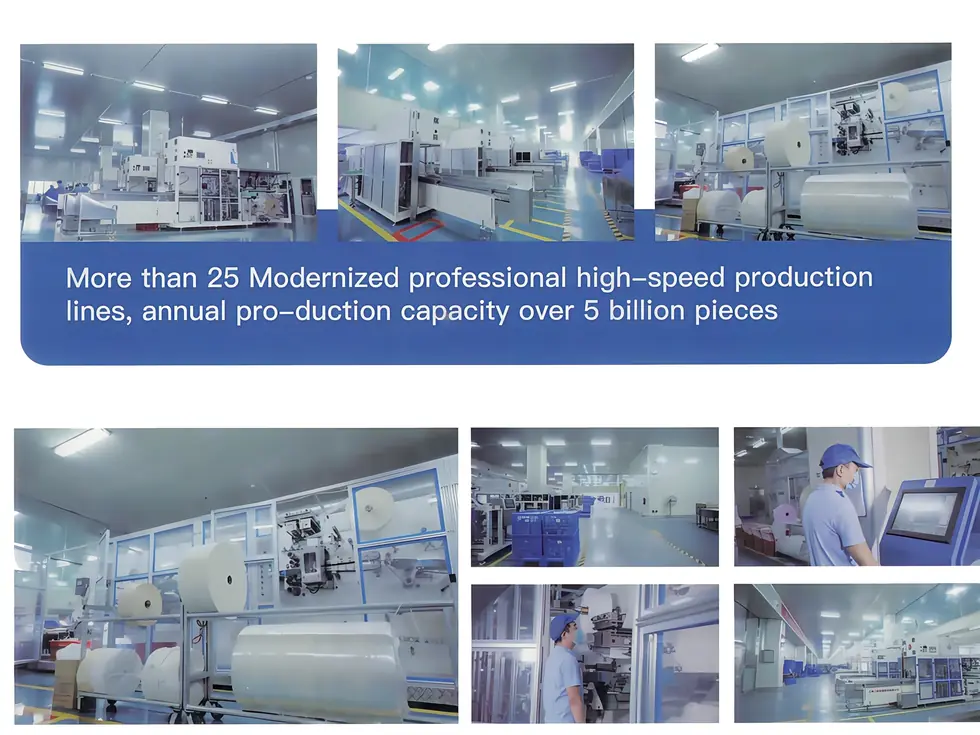
If you build or source a postpartum line, the same logic becomes a spec sheet. The products above aren't marketing categories — they're design decisions. A side-open disposable menstrual pants line needs tabs that tear cleanly without leaving residue, a waistband that fastens flat under the body, and a topsheet soft enough for stitched skin. A heavy flow menstrual pants line needs real overnight-grade absorbency, because the postpartum peak is heavier than any regular period. Maternity disposable underwear and postpartum pants both sit on the same factory line as standard menstrual pants, but they carry extra requirements: size range has to run genuinely large, and the topsheet and adhesive choices have to survive contact with healing skin.
That's the part most generic suppliers get wrong — they relabel a standard pant "postpartum" without changing the tabs, the sizing or the surface. For a brand, the difference shows up fast in reviews and returns. When you talk to a menstrual pants manufacturer, ask specifically whether they can run side-open construction, extended sizing, and a soft topsheet as a private label menstrual pants program — not just print a logo on an existing SKU.
The same compliance gate applies as anywhere else in this category: a postpartum product sold into strict markets still needs the hygiene-product test reports and facility documentation buyers check, the same way a standard pad line does. Sourcing cheaper without that paper is how a brand gets stopped at the border.
Frequently asked questions
What's the difference between side-open pants and overnight pants for postpartum?
Both are absorbent, leak-guarding pant styles. The difference is how they go on: overnight pants are pull-on, so you step into them, while side-open pants (日安裤) have tear-away side tabs — you lay them flat, fasten the tabs, and tear the sides open to remove them. Side-open is the safer default when you have stitches, a tear, or a C-section, because you never have to lift a leg. Leave the tabs intact and it works exactly like a normal overnight pant.
How many postpartum pants should I prepare?
Lead with side-open pants since they work across every stage, and add overnight pants as the pull-on option for uncomplicated recovery. Buy the largest size regardless. For the very first two days, check whether your hospital wants measured maternity pads to monitor lochia output — if you'd rather not check, two packs as backup are a reasonable hedge.
Are maternity sanitary pads still worth buying?
They absorb a lot but wrap poorly, so they leak easily and have mostly fallen out of mainstream use. A small backup is fine; they shouldn't be your main product for the peak days. The pant-style products handle heavy flow with far less leakage risk.
Can disposable menstrual pants be used for postpartum bleeding?
Yes — postpartum recovery is one of the core use cases for disposable menstrual pants, because lochia is heavier and longer than a normal period. Buyers search for postpartum disposable period underwear and postpartum menstrual pants interchangeably; it's the same product family, so if you're selling or sourcing, use the term your market actually searches. The key is choosing the right construction: side-open for restricted movement, extended sizing, and a soft topsheet for healing skin. For brands, a purpose-spec'd postpartum line beats a relabeled standard pant.
Request a Nafei OEM Quotation
Building a postpartum or maternity pants line? Tell us your target market, size range, absorbency, topsheet material and packaging, and we'll spec a side-open disposable menstrual pants or heavy flow menstrual pants program around it — compliant to GB 15979-2024, with the ISO and GMP documentation your target market checks. Share your estimated volume and we'll reply with samples and a transparent quote.
Photos


Send a sampling brief for Postpartum Disposable Menstrual Pants: Side-Open vs Overnight, and What to Stock
Tell Nafei your target market, size range, absorbency preference, packaging artwork status and estimated order plan. Our team can reply with sample discussion and quotation details.
- Target market and sales channel
- Size, pack count and material preference
- Private label artwork or packaging reference
- Sample review, quantity and delivery timeline