
How to Choose Overnight Pads: Longer Isn't Automatically Better
Overnight pads are built for lying down, not for length contests. What actually prevents night leaks: back coverage, wider guard, and absorbency matched to flow — not just a bigger pad.
Share target market, size range, pack count, artwork status and order quantity for quotation.
Introduction
The overnight-pad aisle is a length contest. "Extra long," "super long," "longest ever" — as if the only problem with night leaks is that the pad didn't reach far enough. It mostly isn't. A pad that's long but thin at the back leaks exactly where you don't want it. Let me explain what actually keeps you dry at 3am.
Why night leaks happen
You lie down. Flow doesn't fall straight; it pools and travels backward. A daytime pad is shaped for upright use — narrow back, modest guard. Turn horizontal for eight hours and that same pad leaves the back and sides exposed. The fixes are about coverage shape and absorbency at the right spot, not total length.
What to actually look for
- 1Back coverage and a wider guard. An overnight pad should extend further back and have a taller side barrier than a day pad. That back flap is doing more work than the extra centimeters of length.
- 2Absorbency matched to your heavy night, not the box's "heavy." "Heavy" on one brand is "regular" on another. If you wake up leaking, you didn't size up the length — you under-estimated the absorbency or changed too late.
- 3Adhesion that holds while you move. A pad that rides up at night leaks from the gap, not from being short. Check the wing and center stick.
- 4Change right before sleep. A fresh overnight pad at bedtime beats a day pad swapped at midnight. Timing beats size.
| Day pad | Overnight pad | |
|---|---|---|
| Back coverage | Modest | Extended + higher guard |
| Absorbency | Matched to daytime flow | Higher, for 8h horizontal |
| Best use | Upright, active | Sleep, side-lying |
| Leak path | Sides when moving | Back when lying |
When to skip the pad entirely
For very heavy nights or restless sleep, disposable period pants — full-coverage, sized like underwear — beat even a good overnight pad, because there's no gap to ride up into. If you've tried "the longest pad" and still wake up leaking, that's the sign to switch format, not to buy a longer pad.
Practical rule: pick overnight pads by back coverage and absorbency-at-the-back, change right before bed, and if leaks persist, move to period pants. Chasing the longest number on the shelf is the most common night-leak mistake.
Frequently asked questions
Is a longer overnight pad always better?
No. Night leaks come from poor back coverage and side guards when you lie down, not from total length. A well-shaped overnight pad with extended back coverage and a higher side barrier protects better than a longer, thin-at-the-back pad. Judge the shape, not the millimeter number.
What absorbency overnight pad do I need for heavy flow?
Match it to your actual heaviest night, and remember brands label "heavy" differently. If you wake leaking, you likely need higher absorbency or a fresher pad at bedtime — not just a longer one. For very heavy or restless nights, period pants often beat pads.
Why do I still leak with an overnight pad?
Usually the pad rides up (poor adhesion), the back coverage is insufficient for side-lying, or it's saturated from a late change. Check the wing/center stick, pick a pad with real back guard, change right before sleep, and consider period pants if leaks continue.
Source an Overnight & Maternity Pad Range
Building a pad line? Tell us your market and volume, and we'll spec an overnight + maternity range — extended back coverage, higher side guards, and absorbency mapped to real heavy-night flow rather than a vague "super" label. A compliant quote and samples follow once we know your positioning.
Photos
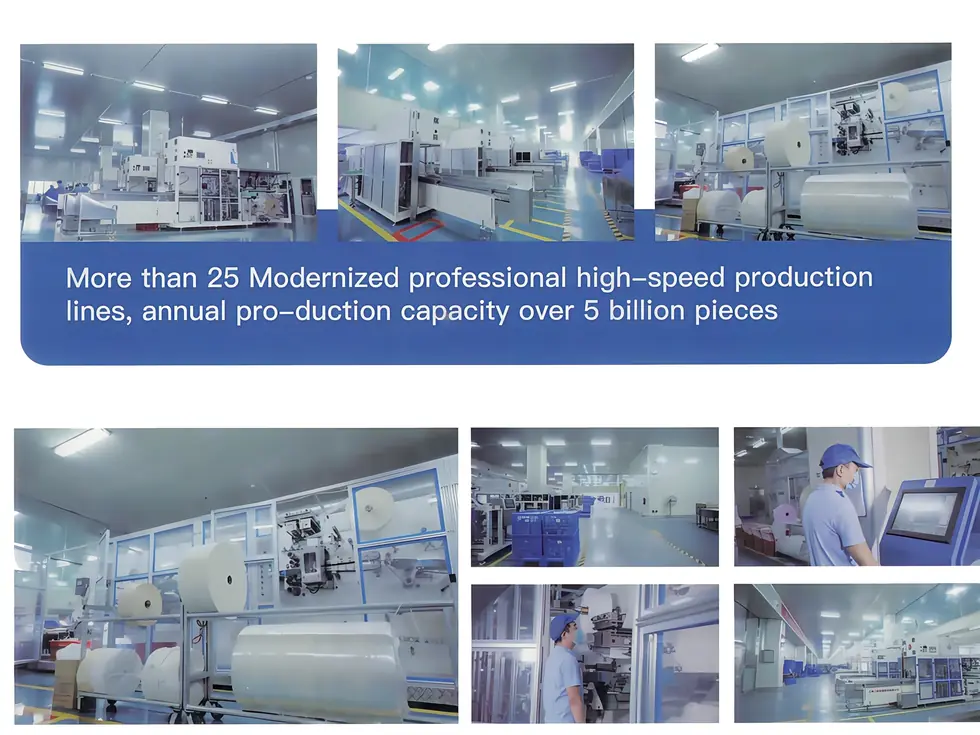
Send a sampling brief for How to Choose Overnight Pads: Longer Isn't Automatically Better
Tell Nafei your target market, size range, absorbency preference, packaging artwork status and estimated order plan. Our team can reply with sample discussion and quotation details.
- Target market and sales channel
- Size, pack count and material preference
- Private label artwork or packaging reference
- Sample review, quantity and delivery timeline