Na Xiaorou Pocket Pal-Size Daily Pads: Why a 240 mm Travel Format Works for Young Buyers
2026-09-10
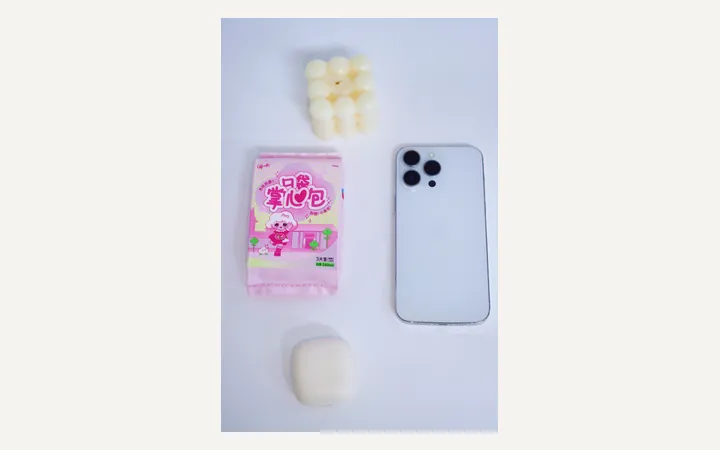
The first thing that struck me about the Na Xiaorou pocket pal-size pack was the size of the finished bag. It is smaller than a phone case, thinner than a wallet, and still holds three individually wrapped 240 mm day-use pads. For a student line aimed at Gen Z buyers, that small footprint is not a gimmick. It is the whole point.
I have watched China’s sanitary pad market move from one-size bulk packs to format-specific SKUs for schools, gyms, commutes, and dorm rooms. The 240 mm day-use segment is crowded, but the palm-pack concept — three pads in a pocket-sized wrapper — is still under-explored by many OEM programs. This article looks at why it works, what is inside the wrapper, and what distributors should think about before adding a similar SKU.
What “pocket pal-size” actually means
A standard retail bag of 10 pads is efficient for home storage. It is not efficient for a teenager who needs to carry one or two pads in a crossbody bag without anyone noticing. The Na Xiaorou pocket pack solves that with a 3-piece format:
- 240 mm length: daytime coverage without the extra bulk of a 285 mm or 350 mm night pad.
- Ultra-thin core: the pad keeps a low profile so the wrapper stays flat.
- Cottony-soft top sheet: a soft nonwoven surface that feels less clinical against skin.
- Winged design: standard side wings for daily movement.
- Suspended core construction: the absorbent core is centered to reduce side leakage when the user is walking or seated.
The outer bag itself is small enough to disappear into a purse pocket. That matters more than most product specs because discretion is part of the user experience.
The Gen Z buyer is not looking for “premium.” She is looking for “not embarrassing.”
I have seen enough first-period kits to know that the emotional experience is half the sale. A bright, bulky package can feel like a billboard. A palm-sized pack in soft colors does not.
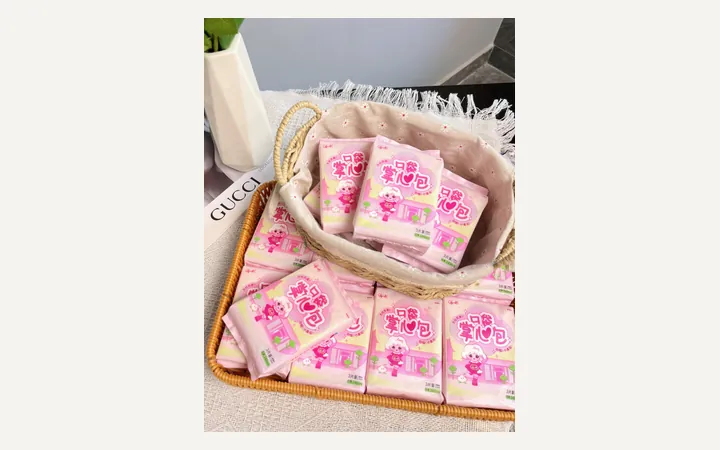
The Na Xiaorou line leans into that psychology. The packaging is designed for school bags, gym lockers, and commuter pouches. The brand mascot and rounded typography read younger than the clinical white-and-blue packs that dominated shelves for years. The store listing shows a 4.59 store rating, roughly 23,000 units sold, and 35,000 followers as of early September 2026. Those numbers do not prove the product is the best on the market, but they do prove the format found an audience quickly.
Inside the wrapper: what the 240 mm SKU delivers
The pad itself is straightforward and that is a strength. It does not try to add a cooling layer, a fragrance, or an “ion” feature. It focuses on the basics:
- Cottony top sheet – soft surface contact for school-day wear.
- Ultra-thin absorbent core – enough capacity for daytime flow without a bulky feel.
- Wings – standard anchor points for movement.
- Individually sealed wrappers – each pad stays clean until use.
- Palm-sized outer pack – three pads fit where a ten-pack cannot.
This is the kind of SKU that competes on convenience and fit, not on extreme absorbency claims. For a 240 mm daily pad, that is the right positioning.
Why distributors and private-label buyers should care about the format
Most B2B conversations start with absorbency, length, and price. The Na Xiaorou pocket pack is a reminder that format can be the differentiator. A 3-pad travel pack opens up placement options that a 10-pad standard bag cannot: vending machines, hotel welcome kits, school care packages, airline amenity sets, and checkout-rack impulse buys.
If you are sourcing from a sanitary pad manufacturer for a student or Gen Z brand, the questions to ask are:
- Can the factory produce a 3-pad mini bag on the same line as the 10-pad retail bag?
- Is the wrapper material printable for custom branding at low MOQ?
- Does the 240 mm core use the same absorbent sheet as the 285 mm SKU, or does it require a separate die?
- What is the minimum order for a trial SKU before scaling to a sanitary pads wholesale run?
At our facility, we run custom sanitary pads and private label sanitary products programs where format experiments like this are common. The pocket pack is not technically exotic — it is mostly a bag-size and wrapper decision — but it changes where the product can be sold and who will buy it.
What this says about China’s OEM design thinking
For years, China’s sanitary pad factory output was judged by how closely it could match the big Japanese and American brands. Today, many of the more interesting SKUs coming out of China are not copies at all. They are formats designed around local habits: long-distance train travel, school commutes, shared dorm bathrooms, and the preference for small, cute packaging over family-size value packs.
The Na Xiaorou pocket pack is one example of that shift. It is not trying to be a premium night pad. It is trying to be the pad a 16-year-old does not mind pulling out of her bag in front of friends. That is a different design problem, and solving it has real commercial value.
A few honest caveats
No product is right for everyone. A 240 mm daily pad with an ultra-thin core is designed for light-to-moderate daytime flow. It is not an overnight product. The 3-pad format is great for portability but less economical for someone who wants a one-month stock at home. And individual body shapes and flow patterns vary, so “comfortable” will always be a personal measurement.
We do not claim the material is zero-risk or universally suitable for sensitive skin. The product uses a standard soft nonwoven top sheet. If a buyer has a known allergy, she should check the material list or test a single pad first.
How to source a similar palm-pack SKU
If you want to develop a comparable product under your own brand, start with the format, not the core. Decide the pack count, bag dimensions, and artwork first. Then match the core length and absorbency tier to the target user. A student line usually lands at 240 mm day-use or 155 mm panty liner as a starter SKU. A travel or hotel line might pair the 3-pad bag with a single individually wrapped panty liner for light days.
The tooling cost is usually lower than people expect because most converting lines can handle both full-size and mini bags with a simple format change. The real work is in artwork registration, wrapper sealing quality, and shelf-life testing for the smaller package.
Final thought: small bags, big signal
The Na Xiaorou pocket pal-size pack is a 240 mm ultra-thin daily pad wrapped in a simple idea: young buyers want products that do not announce themselves. That insight is more valuable than any single material claim. For OEM and private-label buyers, it is also a reminder that the next winning SKU may not be the most absorbent pad on the market — it may be the one that fits in a pocket.
— Li Genyuan, Nafei Founder’s Notes. First posted September 2026.
Related: If you are deciding between pad formats, our guide on how sanitary pad layers work together breaks down what each layer actually does. For a look at how “premium” is defined in this category, see what makes a premium pad premium.
Turn this guide into an OEM brief
Share your product direction, target market, packaging idea and sample questions. Nafei can help translate the buying guide into a practical RFQ discussion.
- Product type: period pants, sanitary pads or mixed OEM project
- Target country, channel and buyer positioning
- Size range, material preference and sample review focus
- Private label artwork, pack count and estimated quantity