
Sanitary Pad Quality Is Built on the Production Line, Not Found in the Lab
2026-09-05
Fifteen years in sanitary pad manufacturing have left me with one conviction: quality is built into a product during production. It is not discovered by testing afterward.
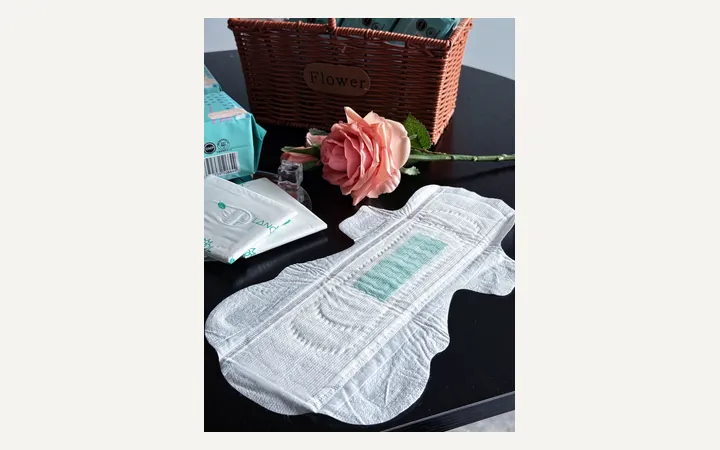
I started on the production floor of a leading hygiene company, and I have watched this industry boom and then eat itself in price wars. Somewhere along the way, a dangerous assumption spread — among consumers and even among newcomers to the trade — that a passing test report equals a good product. It does not. Passing is the floor of the industry, not the ceiling of quality. Testing removes defective units from a batch. It cannot put quality into them.
Good pads start at the design stage
Every serious manufacturer runs internal quality standards: upper and lower limits on every raw material, process parameter, and finished-product metric. If the finished data lands inside the range, the unit ships. What separates factories is not whether those ranges exist — everyone has them — but where production actually aims. Standardized production means aiming at the optimal target value, not coasting just above the lower limit.
The three-layer structure, and where quality hides
The global industry still runs on the classic three-layer core structure. The topsheet, usually a nonwoven, handles quick fluid transfer and defines skin feel and dryness. The core — pulp fiber plus SAP, the superabsorbent polymer — does the absorbing; the SAP ratio must be engineered, because imbalance shows up directly as rewet, slow uptake, or clumping. The backsheet is the breathable-but-fluid-resistant layer that helps prevent leaks while allowing air movement.
If you want to see how these layers are engineered to work together, I broke that down here. What matters in this piece is what happens to that structure under price pressure.
How price wars quietly destroy quality
There are only two honest ways to reduce cost: lower the defect rate through equipment maintenance and stable line conditions, and raise material utilization through standardized process control. Both leave quality intact.
What the industry mostly does instead:
Running lines above their rated speed. Every production line has a design speed matched to its best bonding and forming. Push past it to amortize cost per piece, and you get blurred embossing, weak lamination, layer separation, and irregular forming. The worst variant is quietly shortening finished product length — the exact practice behind the pad-size scandal a Chinese consumer-rights TV exposé made famous years ago.
Stretching raw materials. Nonwovens and core material can be physically stretched so each finished piece uses less. Length, thickness, and density all drop. The unit still passes the internal range — "compliant" — while real absorption and comfort have quietly degraded.
Add reduced adhesive application, cheaper substitute materials, and thinned-out quality control, and you get products that pass tests and disappoint users.
The detail almost nobody discusses: adhesive
A single pad uses two or three purpose-formulated adhesives — laminating layers together, and anchoring the pad to underwear. The back adhesive is held to strict peel-strength requirements for a reason. Too aggressive, and removal leaves residue on the underwear and skin contact where it should not be. Too weak, and the pad shifts and curls during wear, inviting exactly the leaks users blame on "absorption." Adhesive viscosity, application temperature, and pattern length are quality decisions, not afterthoughts.
On skin reactions
When users report itching or redness, the first suspect is always the topsheet material. Often the real causes sit elsewhere: excessive fluorescent whitening agents added by low-end producers, or inadequate sanitation controls in the production environment. This is why we hold our workshop to hygiene-grade standards, do not add fluorescent whitening agents, and treat sanitation process control as a production specification, not a slogan. (If irritation is recurring regardless of brand, that is a matter for a doctor, not a pad.)
The point
Compliance is the industry's floor. Consistent quality — the kind users can feel but rarely see — is decided on the line, hours before any lab sees the sample. If you are evaluating a sanitary pad factory for OEM or private label production, do not just ask for test reports. Ask what the line speed is set to, what the adhesive spec sheet says, and where their process actually aims inside the tolerance range.
Consumers may not read process documents. Skin and experience do not need to.
Li Genyuan is the founder of Guangdong Nafei Biotechnology, a feminine hygiene OEM/ODM manufacturer. He started on the production floor. More from Founder's Notes.
Turn this guide into an OEM brief
Share your product direction, target market, packaging idea and sample questions. Nafei can help translate the buying guide into a practical RFQ discussion.
- Product type: period pants, sanitary pads or mixed OEM project
- Target country, channel and buyer positioning
- Size range, material preference and sample review focus
- Private label artwork, pack count and estimated quantity