How Do You Grow a Category Nobody Rebuys for Three Months?
2026-09-05
Founders outside this industry ask me a version of the same question: my category has a long repurchase cycle — users buy once and disappear for two or three months. How do I grow?
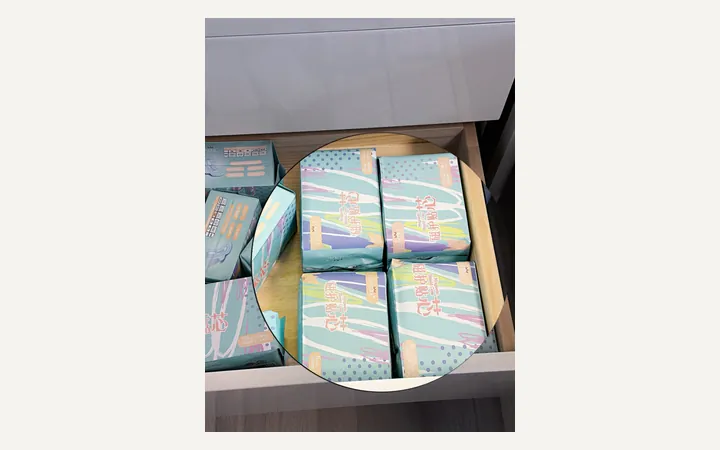
I paid real tuition on this one. After my micro-commerce attempt failed, I moved into social-share e-commerce: a light-entrepreneurship model where promoters earned on each sale, no inventory required. We built the system, designed the incentive ladder, flew the team to Hong Kong, toured promoters through the factory. Priced at ¥68 a set, a promoter earned ten or twenty yuan per sale. We ran it for nearly two years and moved real volume.
It still failed. The post-mortem came down to three interlocking problems.
The three traps
Margin too thin. At ¥68, the cost structure left promoters too little per sale. Motivation decayed month by month.
The repurchase clock. A woman buys pads and does not need them again for two or three months. A promoter works through her friends, her family, her coworkers — and then has no one left to sell to before the first buyer is ready again. Without high-frequency repurchase, the network runs out of warm contacts and stalls.
No training system, no culture. Without structured training and a team identity, the promoters who could have gone professional drifted away.
The real lesson
All three traps point at one truth: in a long-cycle category, growth built purely on new-customer acquisition is a countdown, not a curve. Every new buyer takes months before she is worth another sale. You are perpetually transfusing "three months from now" while "today" bleeds cash.
What actually worked for us
The answer was not a better funnel. It was changing where the frequency comes from.
We grew in period pants — a newer category with high headroom, a higher use frequency, and real daily-demand urgency. And more importantly, we grew in B2B. A business customer reorders in batches, on a rhythm, month after month. The same product, sold wholesale, converts a three-month consumer cycle into a weekly purchasing rhythm. When the category is slow, find the faster scenario — or build the business on a model that is structurally high-frequency.
Today that logic is the backbone of our sanitary pads wholesale business: importers, distributors, and brand owners who reorder on schedule, not on impulse.
Growth strategy in a slow category is not "how do we find more new users." It is "why would anyone come back." Answer the second question first. Repurchase is the foundation; acquisition is just the roof.
Li Genyuan is the founder of Guangdong Nafei Biotechnology, an OEM/ODM manufacturer of sanitary pads and menstrual pants. More from Founder's Notes.
Turn this guide into an OEM brief
Share your product direction, target market, packaging idea and sample questions. Nafei can help translate the buying guide into a practical RFQ discussion.
- Product type: period pants, sanitary pads or mixed OEM project
- Target country, channel and buyer positioning
- Size range, material preference and sample review focus
- Private label artwork, pack count and estimated quantity