OEM, ODM, or Custom Sanitary Pads: Which Path Fits Your Brand
2026-08-05
Buyers reach out asking for "OEM sanitary pads" when what they actually want is three different things. The word gets used as a catch-all, and the mismatch shows up later as surprise costs and slowed launches. Here's the split we draw with every new client before a single pad is made.
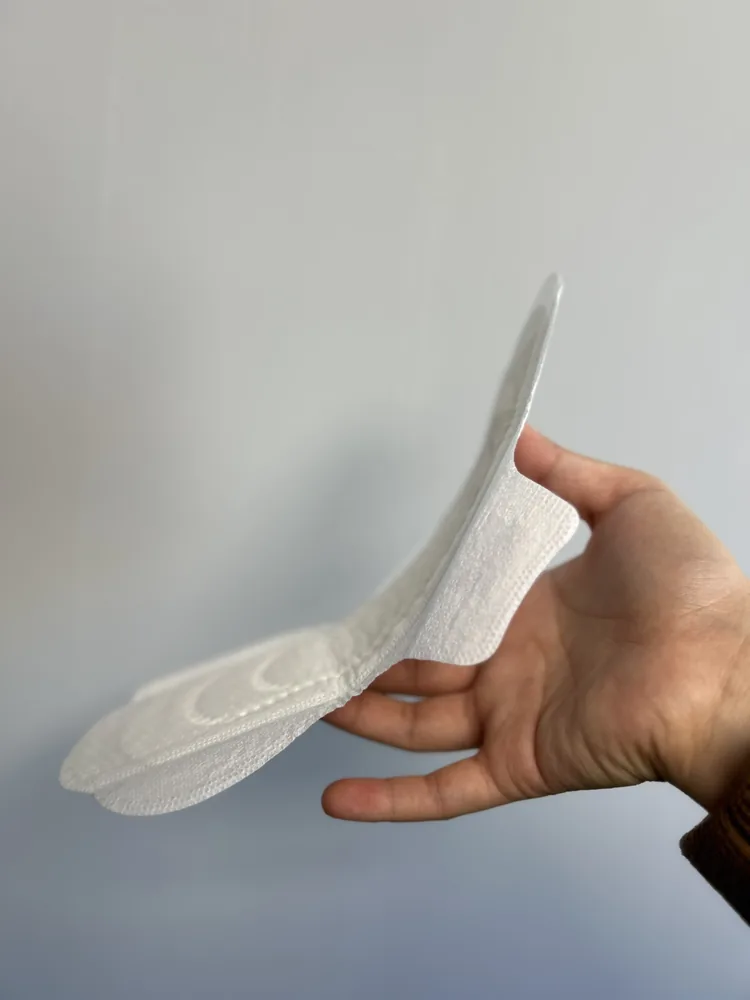
OEM: your formula, our line
True OEM means you bring the spec — the SAP grade, the topsheet, the absorbency target — and the factory runs it. This fits brands with a technical team and a clear idea of what they want. The factory's job is execution and consistency, not invention. It's the fastest path when your spec is already locked.
ODM: our design, your brand
ODM means the factory designed the product and you put your name on a tuned version. For most first-time importers this is the lower-risk door: you get a product that's already been through failure analysis, with only light customization (scent, print, pack size). The trade-off is less uniqueness — a competitor may be selling a cousin of your pad.
Custom: your idea, built from scratch
Custom is the expensive, slow, potentially rewarding option. You have a concept — a cooling layer, a specific shape, a material claim — and the factory engineers it. This needs real development budget and lead time, and it only pays off if the difference is something customers can feel and competitors can't copy in a quarter.
A client insisted on "custom" for a pad that was, functionally, our ODM product with a different wrapper. We talked them to ODM-plus and saved them roughly 11 weeks and a five-figure tooling bill — and the customer never knew the difference, because the pad performed identically.
Which path fits your stage
- Testing a market — start ODM. Low commitment, fast to shelf.
- Have a spec and volume — OEM. You control the product, they control the line.
- Have a real differentiator — custom. But prove the difference matters before paying for it.
Most brands we work with evolve: ODM for the first container, then OEM as they learn what their customers actually want, then selectively custom on one hero SKU. Our development process supports all three without forcing you to switch factories mid-growth.
If you're not sure which bucket you're in, our engineering team will tell you straight — including when the cheaper path is the smarter one.
Which is cheapest: OEM, ODM, or custom?
ODM is usually cheapest to start (shared development cost), OEM is mid, custom is most expensive per unit at low volume because tooling and trials aren't amortized. At high volume, custom can become cheapest if it drives enough margin.
Can I start ODM and move to OEM later?
Yes, and it's the common path. Once you know your spec from sales data, shift those decisions to your own team and keep the same line running them. The factory relationship doesn't have to change.
Does custom always mean a new production line?
No. Often it's a new core formula or a modified converting setting on an existing line, plus new tooling for packaging. Full new-line custom is rare and only for genuinely novel structures.
How long does each path take to first shipment?
ODM: often 2–4 weeks including packaging. OEM: 4–8 weeks depending on spec confirmation. Custom: 8–20 weeks with development and validation. These compress once you've run a few programs with the same factory.
For a full walkthrough with a ready RFQ template, see the free feminine care sourcing guide.
Related: choosing between OEM, ODM and custom pads — a closer look at what a sanitary pads factory can change before new tooling.
Turn this guide into an OEM brief
Share your product direction, target market, packaging idea and sample questions. Nafei can help translate the buying guide into a practical RFQ discussion.
- Product type: period pants, sanitary pads or mixed OEM project
- Target country, channel and buyer positioning
- Size range, material preference and sample review focus
- Private label artwork, pack count and estimated quantity