Lancool 350mm Anion Sanitary Pad: A Spec Breakdown for Night-Use OEM Ranges
2026-09-04
A 350mm night-use pad is one of the easiest products to get wrong. It looks like a longer daytime pad, but the usage context — lying down, rolling over, eight hours without a change — changes almost every layer of the design.
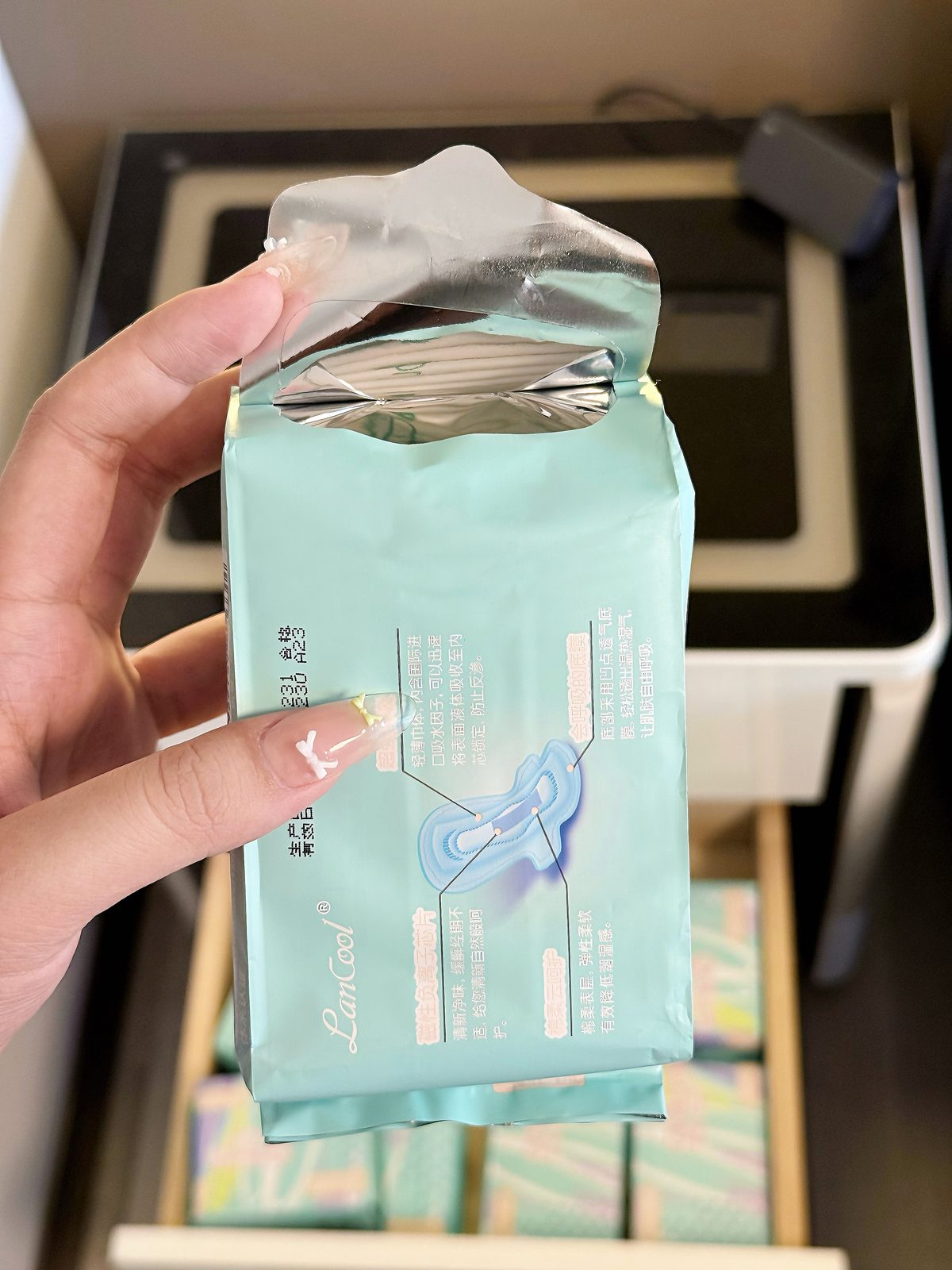
Lancool's 350mm anion sanitary pad is a useful case study because it is built around a recognizable visual feature: the green anion chip strip down the centre. In this article we break down what the spec sheet means, where the engineering trade-offs are, and what OEM buyers should ask for if they want to develop a similar night-use SKU under their own brand.
1. Why 350mm matters for overnight use
During the day, gravity and movement keep fluid concentrated in the centre and front of the pad. At night, the wearer is horizontal. Fluid travels differently, and the back of the pad becomes the highest-risk leak zone.
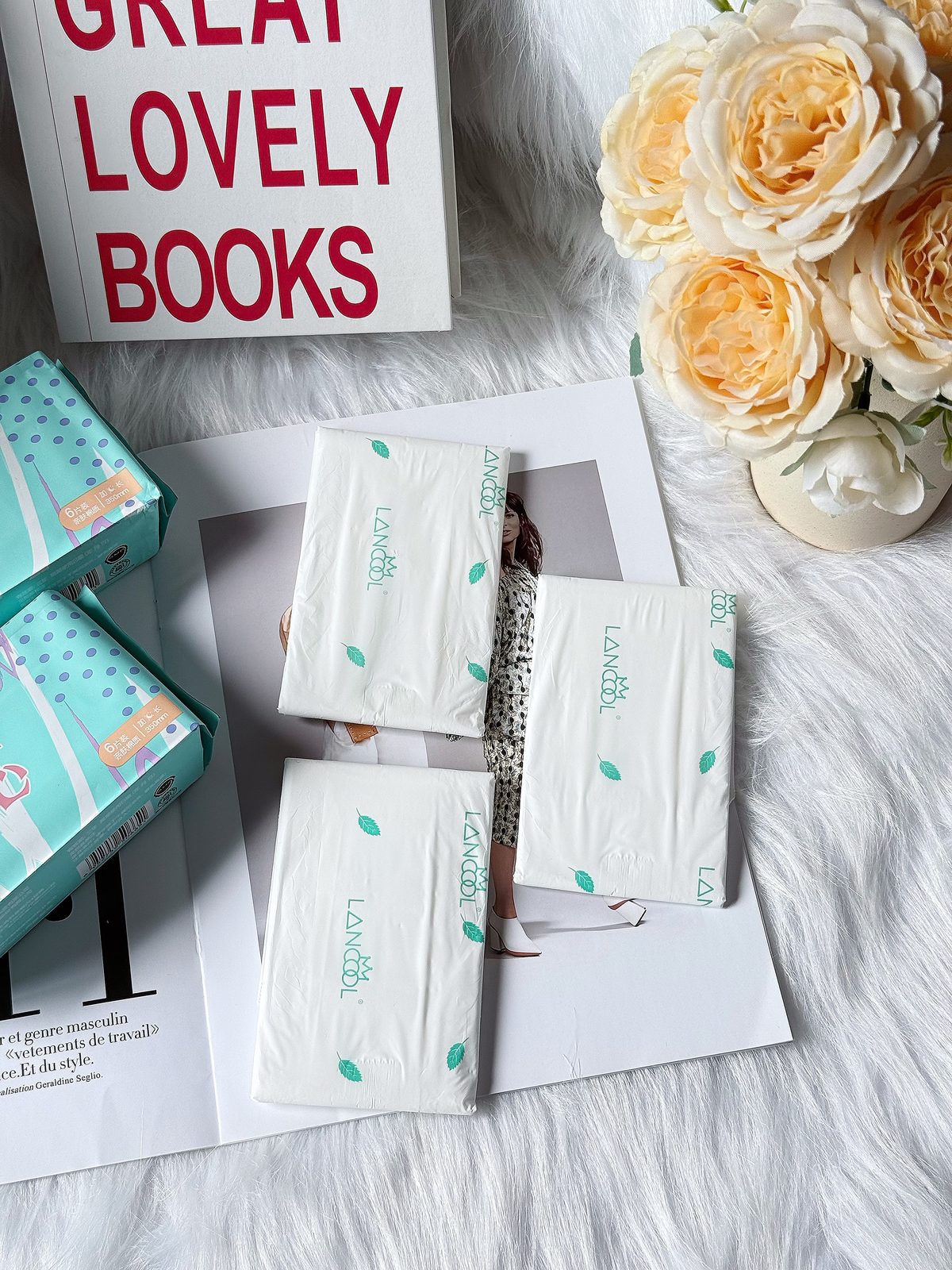
A standard 240–280mm daytime pad leaves the back coverage short. A 350mm pad extends the absorbent core further toward the rear, giving the product a longer "landing zone." It is not just about total absorption capacity; it is about where that capacity is placed.
For OEM buyers, the lesson is to specify length and core placement together. A 350mm pad with the core centred like a daytime pad still behaves like a daytime pad. The core needs to be biased toward the back half.
2. The green anion chip: what it is, and what we do not claim
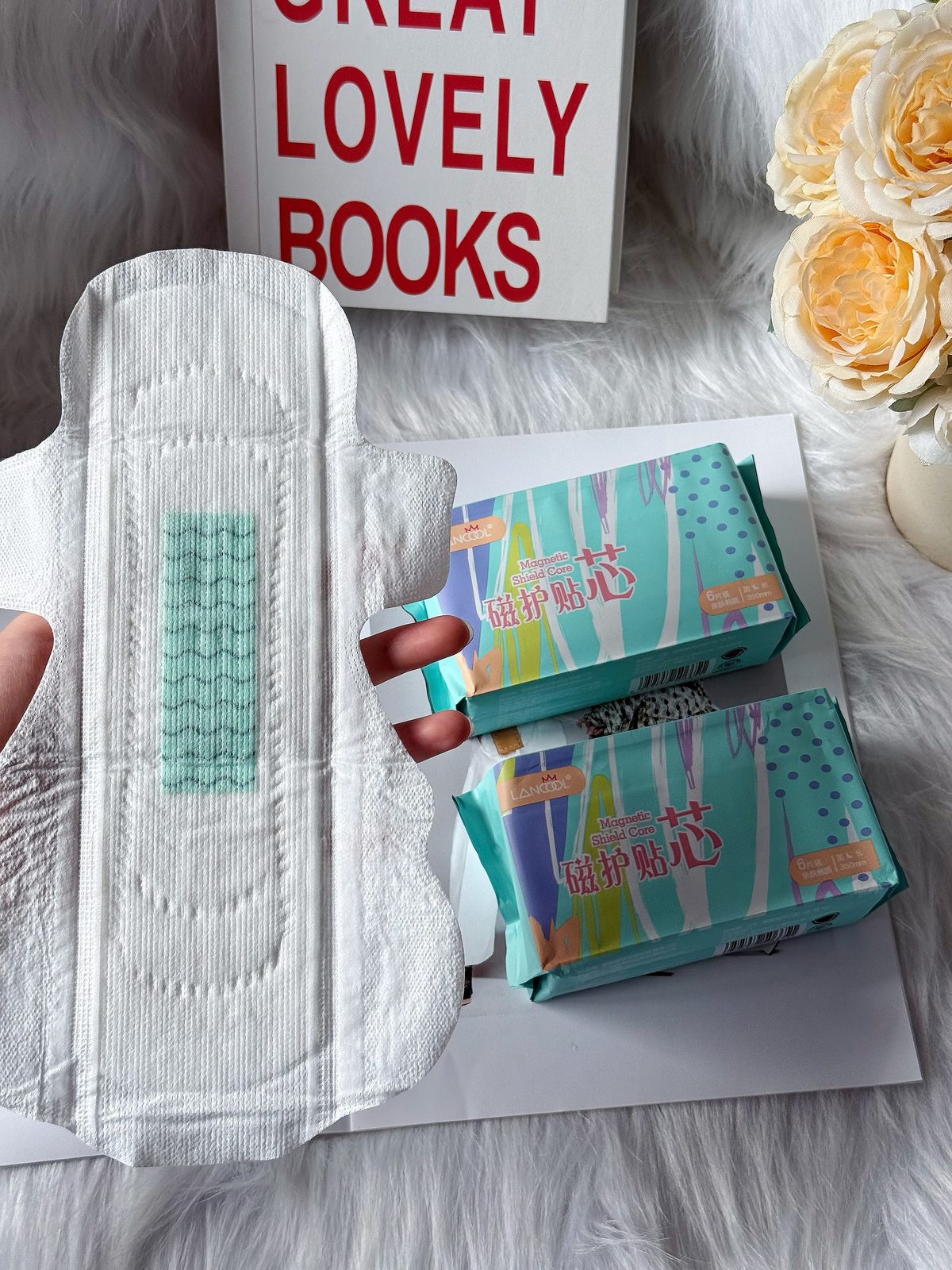
The green strip visible through the topsheet is the anion chip. On a retail shelf, it is one of the fastest visual cues a shopper can process. It says "this pad is different from the plain white one next to it."
At the manufacturing level, the chip is a functional layer integrated into the topsheet assembly. In some markets, brands choose to communicate freshness or hygiene associations around this feature. Those claims are market-specific and must comply with local advertising and sanitary-product regulations. As a manufacturer, we do not make medical or antibacterial claims for the chip; we supply it as a design option that brands can build their own local messaging around.
The real commercial value is shelf recognition. A green chip pad stands out in a thumbnail, on a store shelf, and in an unboxing video.
3. Core construction: fluff pulp + SAP
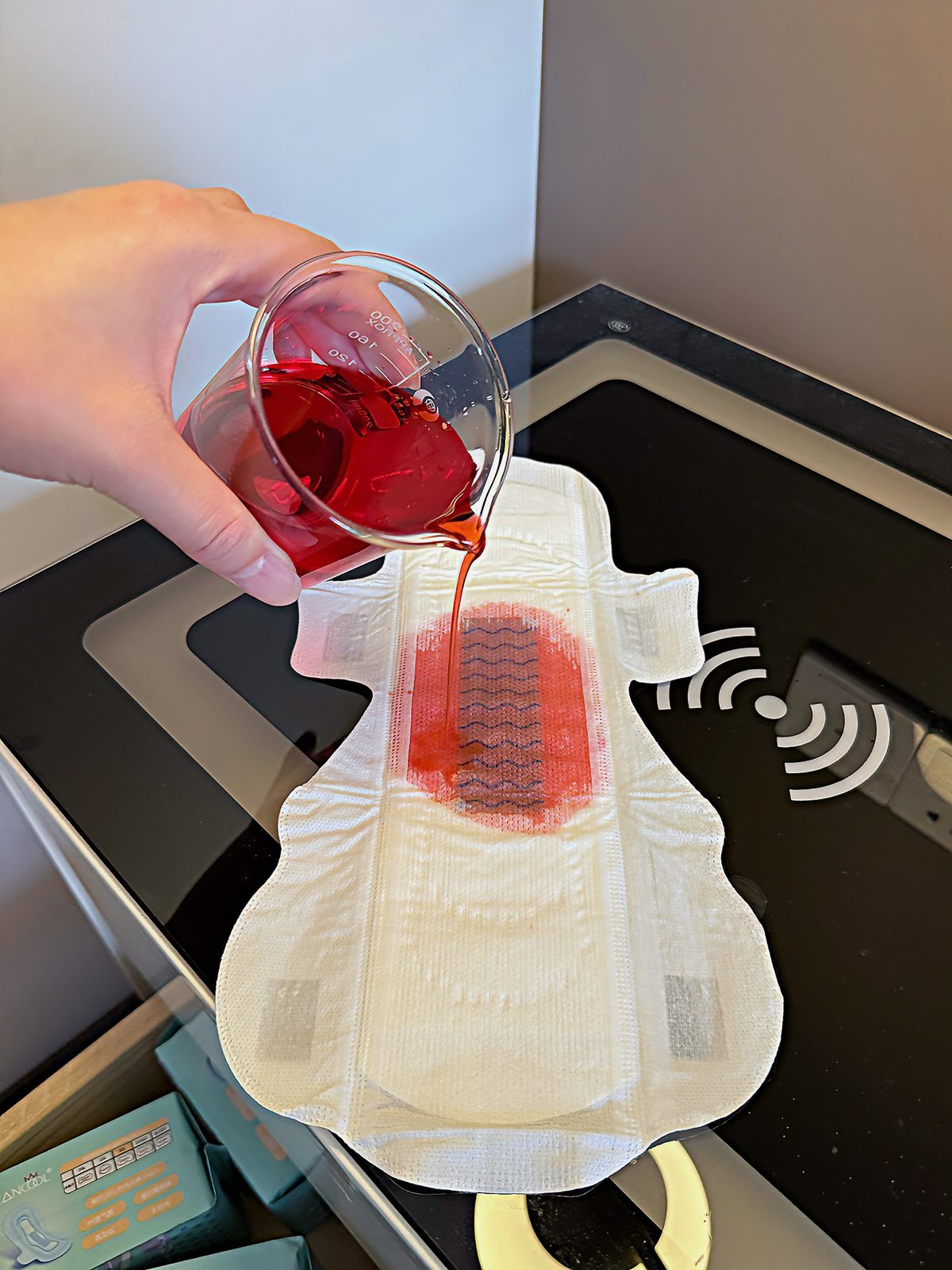
The absorbent core combines fluff pulp and superabsorbent polymer (SAP). The fluff pulp spreads liquid across the core so it does not pool in one spot. The SAP locks it into a gel, reducing surface wetness and preventing the pad from feeling heavy as the night goes on.
For a 350mm night pad, the core is thicker than a daytime equivalent. That extra bulk is not padding for padding's sake — it is the depth the SAP needs to distribute a higher fluid load over a longer wear time. The balance is to add capacity without making the product so stiff that it creases or bunches when the wearer rolls over.
If you are sourcing an OEM version, ask two questions: what is the SAP ratio by weight, and how is the core shaped relative to the pad length? Those two answers tell you more about real-world performance than the headline length does.
4. Top sheet and back sheet: the comfort layers
The top sheet is the layer in direct contact with skin for up to eight hours. Lancool uses a soft, non-woven top sheet designed to let liquid pass through quickly while staying dry to the touch. The faster the strike-through, the less time fluid sits against the skin.
Behind the core, the back sheet needs to do two opposing things: block fluid from reaching underwear, and let water vapour escape. A breathable PE film handles the first; micro-porous structures handle the second. The result is a pad that does not feel like a sealed plastic bag — important for overnight comfort in warm climates.
5. Leak control by structure, not promises
Side leaks happen when fluid reaches the edge of the pad before the core can absorb it. The countermeasure is a raised leak guard — a hydrophobic cuff that runs along the sides and redirects fluid back toward the centre.
The guard needs to be tall enough to stay effective when the pad is compressed between the thighs, and soft enough that it does not chafe. That is a materials and sealing challenge more than a design challenge. On the production line, the cuff height, elastic tension, and ultrasonic sealing pattern all have to be held within tolerance.
We describe this as leak control, not leak proofing. No pad can guarantee zero leaks in every sleep position, but a well-built 350mm pad with a properly sealed cuff reduces the risk dramatically.
6. Technical specifications at a glance
| Feature | Lancool 350mm anion pad | Why it matters | | --- | --- | --- | | Length | 350 mm (35 cm) | Extended back coverage for horizontal wear | | Core | Fluff pulp + SAP | Spreads and locks fluid across the pad | | Anion chip | Green strip, integrated into topsheet | Visual differentiation; market-specific messaging | | Top sheet | Soft non-woven, fast strike-through | Reduces surface wetness and skin contact time | | Back sheet | Breathable PE film | Blocks leaks while allowing vapour escape | | Side protection | Raised hydrophobic leak guards | Reduces side-leak risk during movement | | Wear duration | Designed for overnight use | Typical 6–8 hour wear window depending on flow | | Positioning | Mid-to-heavy flow night pad | Suitable for regular-heavy overnight use |
7. Who this SKU works for
A 350mm anion night pad fits several market positions at once:
- Value-tier night upgrade — for brands that want to offer a "night" SKU above their standard 245/280mm range without jumping to premium pricing.
- Postpartum and maternity ranges — the extra length and capacity match the needs of new mothers in the first weeks.
- Teen and first-period lines — the visible chip feature makes the product easier to explain to first-time buyers.
- Hot-climate markets — the breathable back sheet and fast-absorbing core matter more in humid conditions than in temperate ones.
8. For OEM and private-label buyers
If you want to develop a Lancool-style 350mm anion pad under your own brand, most of the variables are adjustable:
- Chip colour and pattern — green is the market default, but the strip can be blue, pink, or white depending on your brand colours.
- Length and core shape — 350mm is standard, but 290mm, 350mm, and 410mm variants are common.
- SAP ratio and fluff basis weight — higher SAP ratios improve dryness but raise unit cost; the right spec depends on your price point.
- Packaging language and claims — we supply neutral technical copy; you add the local-language marketing claims and regulatory checks.
You can see our standard sanitary pad manufacturing specs at hnnafei.com/sanitary-pads-manufacturer/ and our OEM/private-label options at hnnafei.com/oem-sanitary-pads/.
Frequently asked questions
What does the green strip in a Lancool pad do?
It is an anion chip integrated into the topsheet. Its main commercial role is visual differentiation. Any health or freshness claims associated with anion chips must be evaluated under your local regulations.
Is a 350mm pad only for heavy flow?
Not necessarily. The extra length also helps moderate-flow users who move around in their sleep and want back coverage. Heavy-flow users benefit from both the length and the thicker core.
Can the chip colour be changed for OEM orders?
Yes. Green is the most recognised colour for anion chips, but we can match other colours or remove the visible strip entirely if your market positioning calls for a plain look.
What is the typical MOQ for a 350mm night pad SKU?
MOQ depends on the packaging format, whether you want a printed film, and the total order mix. A single 350mm SKU can usually start at a flexible minimum when combined with other sizes in the same production run.
*Author bio: This article comes from the product team at Nafei, a China-based manufacturer of sanitary pads and period pants serving OEM, private label, and wholesale buyers worldwide.*
Turn this guide into an OEM brief
Share your product direction, target market, packaging idea and sample questions. Nafei can help translate the buying guide into a practical RFQ discussion.
- Product type: period pants, sanitary pads or mixed OEM project
- Target country, channel and buyer positioning
- Size range, material preference and sample review focus
- Private label artwork, pack count and estimated quantity