
Cool-Feel Period Pants for Hot Climates: Building for Southeast Asia, Not Just for Summer
2026-09-02
In most markets, a cool-feel product is a summer SKU. You stock it in May, discount it in September, and move on.
Then you ship to Bangkok. Or Jakarta. Or Manila. Somewhere the temperature sits above 30 degrees for ten months a year, and humidity does not drop when the sun does. The product brief changes completely.
This is what we learned building our cool-feel overnight period pants for Southeast Asian markets — and what distributors in the region should look for when they source one.
Heat plus humidity is a different problem
Dry heat and humid heat punish a period pant in different ways.
In dry heat, the enemy is temperature. In humid heat, the enemy is trapped moisture — sweat and flow together, against skin, for eight hours. That combination drives most of the comfort complaints we see from tropical markets: stuffiness, stickiness, the feeling of wearing something sealed.
So a pants product built for year-round humid climates has to answer two questions at once. Can the surface keep skin feeling fresh? And can the whole garment move moisture out of the way fast enough that the wearer stops noticing it?
A cool-feel layer addresses the first question. It cannot fake its way through the second.
What the cool-feel layer is, honestly
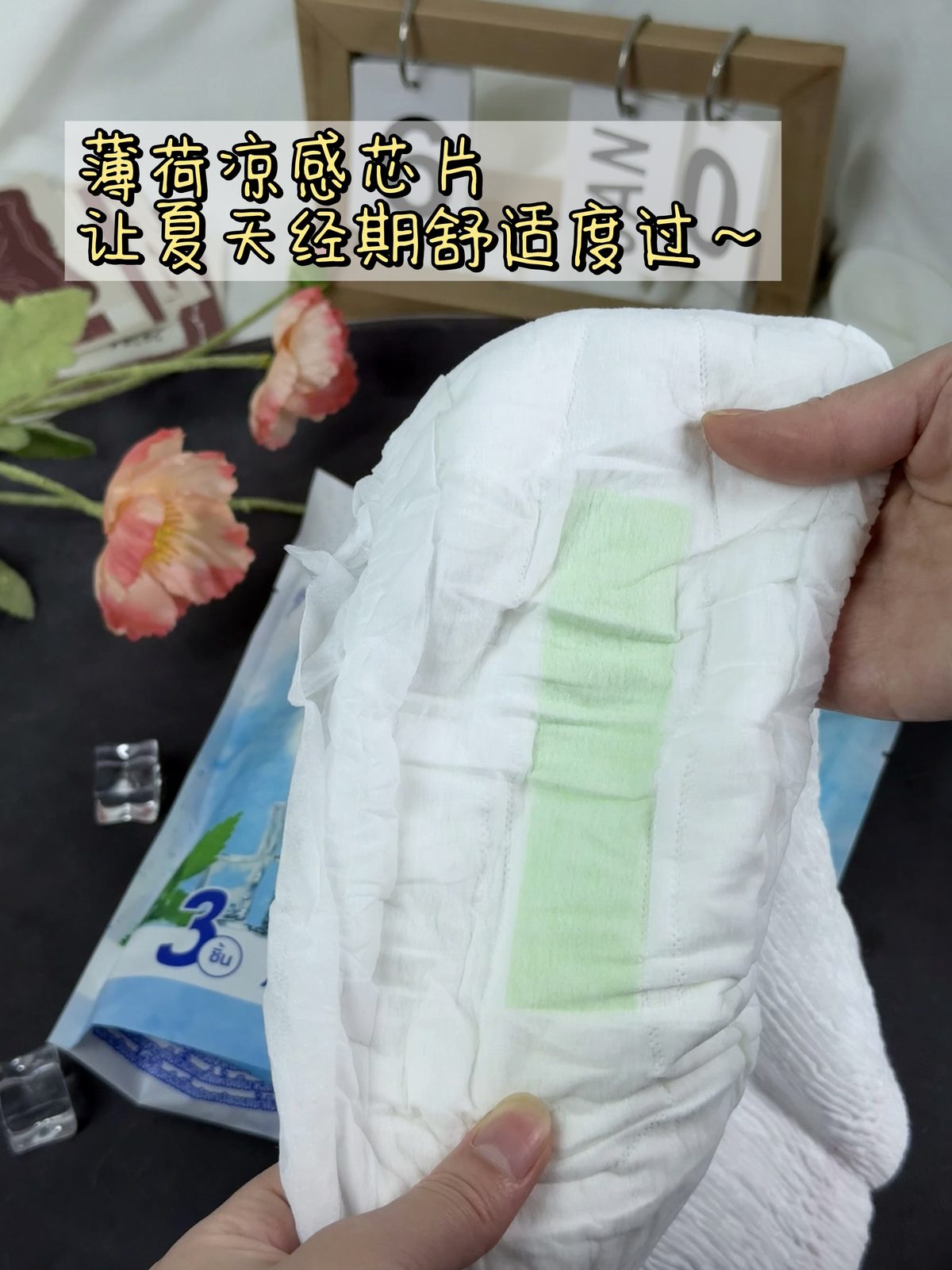
Our top sheet uses a mint-based cool-feel treatment. When skin contacts the surface, there is a noticeable cooling sensation. It is strongest at the start of wear and gradually fades over the following hours — that is simply how the chemistry works, and we would rather tell buyers that up front than have them discover it from a customer review.
Two things we deliberately left out: alcohol and added perfume. Both are cheap shortcuts to a cooling effect, and both are common irritants. In hot-climate markets where sweat already stresses the skin, adding irritants to a product that sits against it for a full night is a bad trade.
The part that matters more: the core and the structure
Cooling is the shelf appeal. Absorption is the repeat purchase.
For humid climates we spec a high-ratio SAP core — thin, but with enough locked-in capacity for a full night. The goal is a pant that stays slim and light, because thickness is the enemy of comfort in heat, while still pulling liquid away from the surface quickly.
Leak control comes from structure, not padding: a shaped leak guard along the legs, a higher waistband that stays put when the wearer turns over, and a backsheet chosen for breathability. If a sample you are evaluating feels stiff, thick, or diaper-like, it was not engineered for this climate.
Packaging in the local language is not a nice-to-have
This is the part that surprises new entrants to the region, and the part that decides sell-through at the shelf.
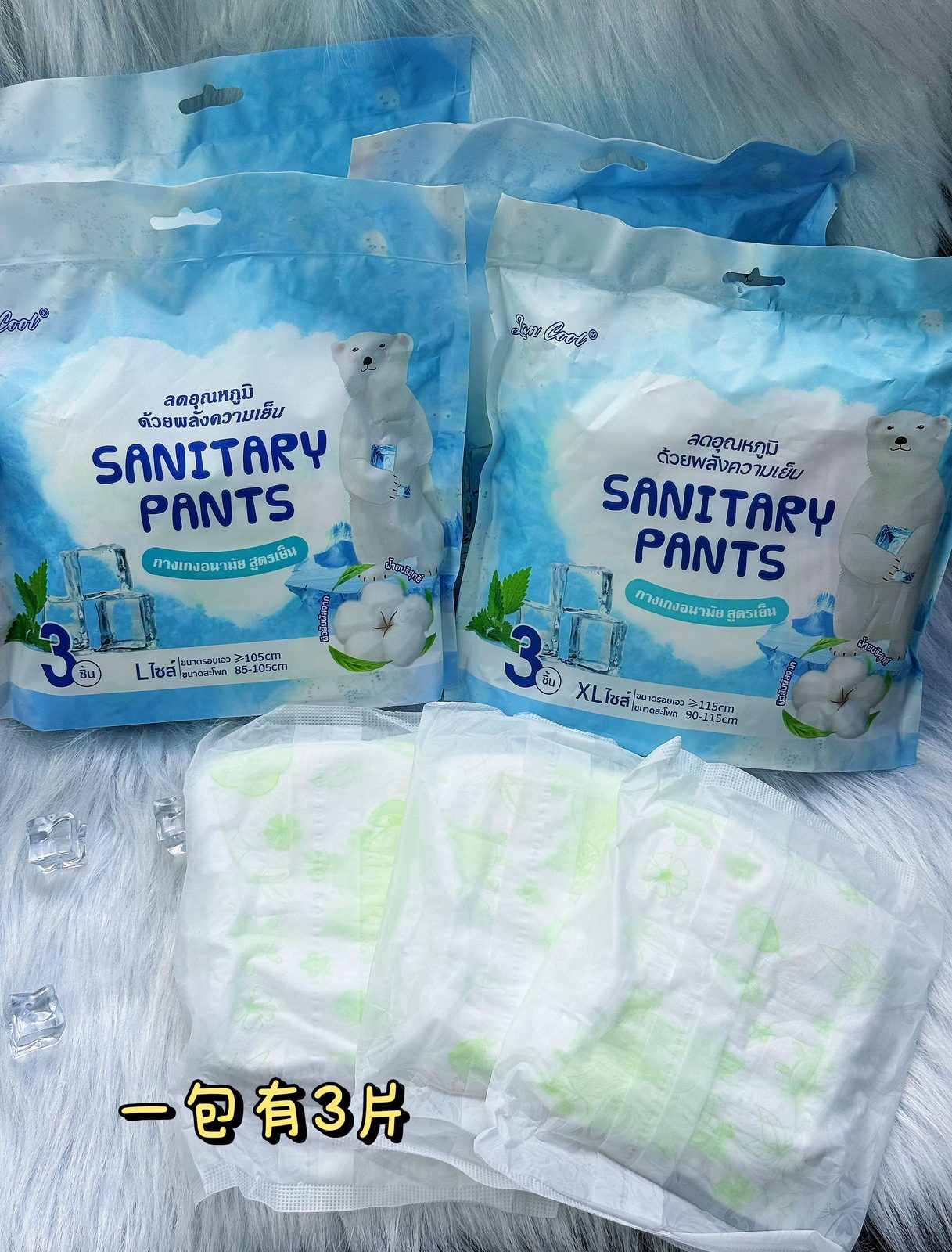
A cool-feel product sells a sensation. If the pack cannot explain that sensation in the first two seconds — in the language the shopper actually reads — the premium goes unbought. Our Thai-market packaging leads with the cooling benefit in Thai, front of pack, with the overnight and fit benefits directly under it.
For private label clients we handle this as part of the brief, not an afterthought: local-language copy, the visual hierarchy on the pack, and the shelf-facing design. Artwork in the destination language, checked by someone who reads it, before it goes to print.
For distributors and OEM buyers
If you are sourcing period pants for Southeast Asia, the checklist is short:
- Ask the factory what the cool-feel layer is made of, and how long the sensation lasts. Vague answers here become your customer complaints later.
- Wear-test a full night in your own climate before committing. A sample that performs in a 22-degree showroom tells you nothing about a 32-degree bedroom.
- Confirm the core spec — thickness plus SAP ratio — and ask how leaks are controlled structurally rather than by adding bulk.
- Treat packaging localization as a launch requirement, and check who owns the language review.
We manufacture these pants in our own facility, support OEM and private label runs, and ship into tropical markets where this exact configuration — cool-feel surface, thin high-absorption core, structure-first leak control, local-language packaging — is what we build for. Details on sanitary pants manufacturing capabilities or wholesale menstrual pants options.
We also keep a running guide on sourcing feminine hygiene products in Southeast Asia — market notes, regulatory pointers, and what buyers in the region tend to ask for.
One last thing on claims
Cool-feel is a sensation, and we describe it as one. We do not claim it lowers body temperature, treats any condition, or does anything medical. Some markets are stricter about cooling claims than others — Thailand among them — so we keep the language to what the product does: a cooling feeling on contact, comfortable wear in heat.
That restraint costs nothing at the shelf, and it keeps your product compliant across every market you might expand into next.
*Author bio: This article comes from the engineering desk at Nafei, a China-based manufacturer of sanitary pads and period pants serving OEM, private label, and wholesale buyers worldwide.*
Turn this guide into an OEM brief
Share your product direction, target market, packaging idea and sample questions. Nafei can help translate the buying guide into a practical RFQ discussion.
- Product type: period pants, sanitary pads or mixed OEM project
- Target country, channel and buyer positioning
- Size range, material preference and sample review focus
- Private label artwork, pack count and estimated quantity