Before You Design a Feminine Hygiene Product, Decide Who It Is For
2026-08-28
There is an old-timer in this industry I have come to respect. Every time someone walked into his office asking for materials or a finished product, his first question was the same:
"Who are you planning to sell this to?"
Most people brushed it off. "Just give me the most expensive, best version." But he was right. The gap between high-end and low-end is not price. It is the user. One product cannot serve everyone. Pair the wrong materials with the wrong person and even premium ingredients go to waste.
I learned this the hard way — and spent real money doing it.
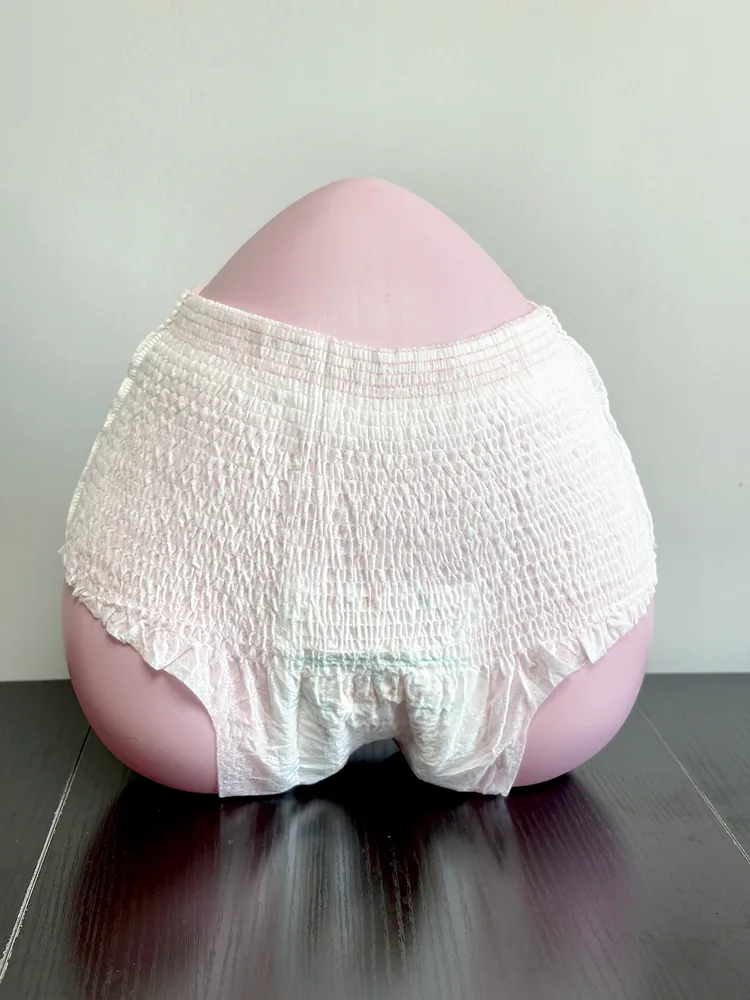
When we developed period pants, we did not build one "universal" product. We built three brand lines. Lanku holds the premium end, for buyers who want the best feel and materials. Na Xiaorou targets younger users and students who care about style, entry price, and ease of use. Na Xiaoshuang is the value line, for price-sensitive consumers who still want reliable protection.
Same category. Three audiences. Three approaches.
Why? Because a student using period pants for the first time cares about different things than a working woman. One worries about price and embarrassment. The other worries about quality and discretion. You cannot satisfy both with the same sheet spec, the same waistband, or the same packaging language.
The classic case that proves this is the liquid sanitary pad. It did not win by adding more fluff. It won by doing less, but doing it precisely. Its core is a single-piece elastic foam with no fluff pulp, no loose superabsorbent polymer — almost like a dense sponge. It targeted users who wanted "no-feel" performance above everything: thinness, elasticity, fit. They did not care about maximum absorption. They cared that the product disappeared.
So the manufacturer spent its budget on precision — consumer research, core engineering, fit testing — instead of piling on raw materials.
The opposite lesson is just as common. An older colleague told me about a mass-market brand that wanted a softer surface. It switched to finer fibers. Allergy complaints exploded. The reason is simple: finer, denser fibers slow moisture penetration. Wetness sits on the surface longer. Bacteria multiply. The surface felt softer to the hand, but the product failed the user because the user wanted dryness, not a soft hand-feel.
That is why product development should run backwards. First, define who you are selling to. Then figure out when they use the product, how they use it, and what they are afraid of. Only then do you choose the topsheet, the acquisition layer, the absorbent core, the packaging color, and the words in your marketing.
Everything follows the user.
You cannot be premium and cheap at the same time. You cannot be fast to develop and perfect in every detail. Some combinations fight each other. Once you answer "who is this for," most of those conflicts disappear.
For brands sourcing OEM sanitary pads or custom period pants
Product positioning is not a marketing afterthought. It should shape the technical specification from day one. The right contract manufacturer helps you match materials, layers, and brand language to the exact user you want to win.
At Nafei, we develop OEM sanitary pads, custom sanitary pads, and period pants around the target consumer — not around a one-size-fits-all formula. If you are building or repositioning a feminine hygiene brand, start with the user. We can help you translate that into a spec: OEM Sanitary Pads Development.
Turn this guide into an OEM brief
Share your product direction, target market, packaging idea and sample questions. Nafei can help translate the buying guide into a practical RFQ discussion.
- Product type: period pants, sanitary pads or mixed OEM project
- Target country, channel and buyer positioning
- Size range, material preference and sample review focus
- Private label artwork, pack count and estimated quantity