Bangladesh Menstrual Products and OEM: What Buyers Actually Hit, and Where the Opportunity Is
Bangladesh isn't India with a different flag when it comes to feminine hygiene. The market, the standards body, and the OEM picture are their own thing. What importers and local brands should actually···
Share target market, size range, pack count, artwork status and order quantity for quotation.
Introduction
A brand owner came to us wanting to mirror his India private-label pad deal in Bangladesh. Same product, same supplier, just ship it east. I stopped him there. Bangladesh looks like India's smaller neighbour on a map, but the buying rules, the standards body, and the way the local market actually behaves are different enough that copying an India file will cost you a shipment, not save you one.
Here's the practical picture for anyone sourcing or building a menstrual-product brand in Bangladesh.
The market in plain terms
Bangladesh is 170 million-plus people, young, and majority Muslim. That last point matters for positioning but not the way people assume — more on that below. Pad use outside Dhaka and Chittagong was thin a few years back, but it's climbing fast. Two things pushed it: a government hygiene push that put free pads in schools, and a wave of local and regional brands treating menstrual care as a real category instead of a shameful afterthought.
What that means for a buyer: this is a growth market, not a saturated one. The brands winning right now are the ones who showed up with consistent supply and decent product, not the ones who out-spec'd everyone. If you're late, you're not too late.
What the rules actually look like
This is where people blur Bangladesh into India. Don't.
- There is no BIS-style mandatory pre-import certification for pads. India runs BIS as a hard gate on imported sanitary napkins. Bangladesh doesn't mirror that with an equivalent compulsory certification for the product itself. The body that sets standards is BSTI (Bangladesh Standards and Testing Institution), and it publishes standards for sanitary napkins — but the import gate is lighter-touch than India's BIS route.
- Customs and duties do the real gatekeeping. What actually bites on the way in is the tariff line and the documentation your freight forwarder expects, not a product certificate you have to pre-clear months ahead. Rates change, so confirm the current HS treatment with a local customs broker before you quote, not after.
- Halal is not mandatory — and that's a genuine difference from Indonesia. Bangladesh is Muslim-majority, but sanitary pads don't carry a compulsory halal certificate the way they do in Indonesia (BPOM + halal, both required). No cert needed. That said, the market is sensitive, so a supplier who can show clean, traceable materials still wins trust even without a halal stamp.
The OEM and manufacturing picture
Two supply stories run side by side in Bangladesh:
- 1Local manufacturing is real but patchy. A few established local producers exist, and the country's massive garment (RMG) base means the sewing, labour, and export infrastructure are already there. For a purely domestic brand, local production cuts lead time and duty. The catch: consistent core materials (SAP, fluff pulp, topsheet) still lean on imports, so "made in Bangladesh" pads often start from imported inputs anyway.
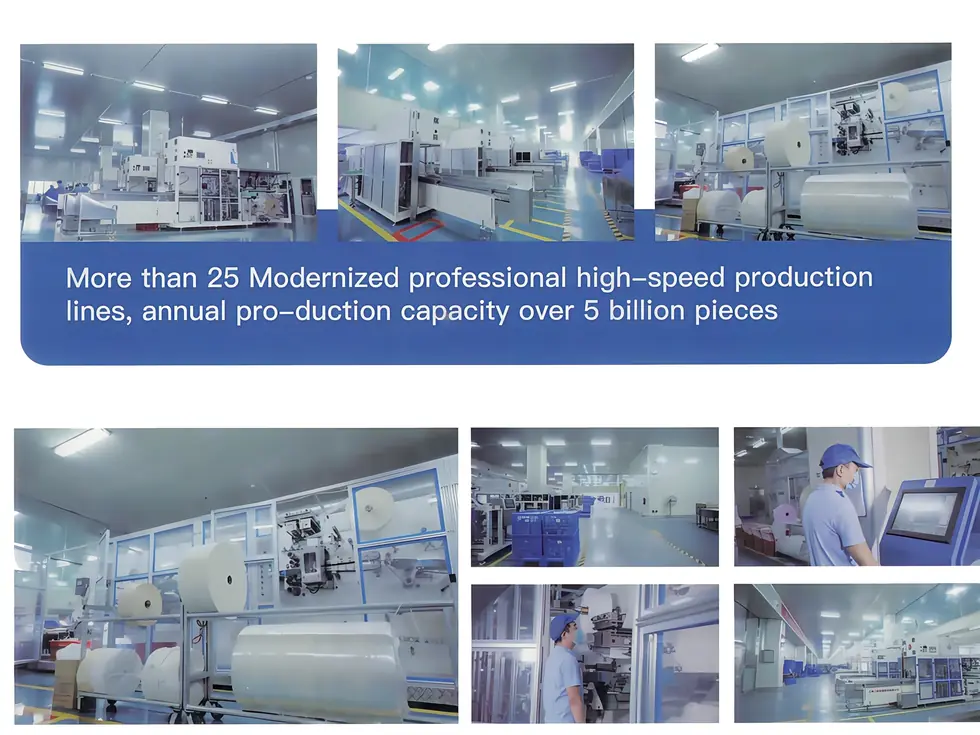
- 2China OEM is still the default for serious volume and spec control. Buyers who want a specific absorbency profile, a private mould, or a reliable SAP/fluff ratio tend to come to Chinese OEMs. The math is predictable: longer lead time and freight versus tighter, repeatable quality and lower unit cost at scale. If your brand lives or dies on consistency, that trade is usually worth it.
- 3The arbitrage is "blend," not "pick one." Several Bangladesh brands run a China-sourced core product while building local packing or a local line for responsiveness. That hybrid is where most of the OEM enquiries we get actually land.
A practical checklist for a Bangladesh-bound order
- Confirm the current duty + HS line with a Dhaka broker. This shifts; don't quote off a 2022 memory.
- Ask the supplier about BSTI. A Chinese OEM who's shipped to Bangladesh recently already knows whether a test report is expected and what form it takes.
- Decide local-pack vs full-local vs China-OEM based on volume and how much spec control you need, not on patriotism.
- Don't over-build halal claims. It's not required, so a forced halal angle reads as noise. Lead with product and supply, not a cert you don't need.
- Spec the absorbency honestly. The Bangladesh buyer is price-aware but not gullible — "most absorbent ever" claims backfire. Map pads to flow days like everyone else.
| Bangladesh | India | Indonesia | |
|---|---|---|---|
| Main standards body | BSTI | BIS | BPOM + Halal |
| Mandatory pre-import cert for pads | No hard BIS-style gate | Yes (BIS) | Yes (BPOM + Halal both) |
| Halal required? | No | No | Yes |
| Main gate on import | Customs duty + docs | BIS + duty | Notification + halal + duty |
| OEM default for volume | China OEM or hybrid | India BIS-compliant local/China | Local BPOM-ready or China |
Practical rule: treat Bangladesh as its own market, not India's understudy. The single most expensive mistake we see is a buyer who reuses an India compliance file, discovers Bangladesh doesn't recognise half of it, and pays for a re-do. One Dhaka agent call up front is cheaper than one stuck container.
Frequently asked questions
Do sanitary pads need BIS certification to enter Bangladesh?
No. Bangladesh doesn't run an India-style compulsory BIS certification for imported sanitary napkins. The standards body is BSTI, and while it publishes napkin standards, the import gate is lighter — mostly customs duty and documentation. Always confirm the current BSTI expectation with a local agent, because enforcement can shift.
Is halal certification required for pads in Bangladesh?
No. Bangladesh is Muslim-majority but does not mandate a halal certificate for sanitary pads, unlike Indonesia where halal is compulsory alongside BPOM. You don't need it to sell. That said, clean and traceable materials still matter for buyer trust in a sensitive category.
Should I manufacture locally in Bangladesh or use China OEM?
It depends on volume and spec control. Local production cuts lead time and duty but leans on imported core materials; China OEM gives tighter, repeatable quality and lower unit cost at scale. Many brands run a hybrid — China-sourced core with local packing. Decide on the blend based on your actual order size, not on principle.
Request a Bangladesh-Ready OEM Quotation
Building a menstrual-product brand for Bangladesh, or supplying one? Tell us your volume and whether you want China-OEM, local-pack, or a hybrid, and we'll spec a Bangladesh-ready OEM program — correct duty and documentation handled with a Dhaka broker, BSTI expectations confirmed up front, and the absorbency profile mapped to your market rather than over-claimed. A compliant quote and samples follow once we know your plan.
Photos
Send a sampling brief for Bangladesh Menstrual Products and OEM: What Buyers Actually Hit, and Where the Opportunity Is
Tell Nafei your target market, size range, absorbency preference, packaging artwork status and estimated order plan. Our team can reply with sample discussion and quotation details.
- Target market and sales channel
- Size, pack count and material preference
- Private label artwork or packaging reference
- Sample review, quantity and delivery timeline