Period Pants vs Sanitary Pads: When to Use Which (and How They're Made Differently)
2026-08-12
Walk down any hygiene aisle and you'll see two things side by side: the pad you've known forever, and the disposable period pant that looks like underwear. People ask which is "better." That's the wrong question. They solve different problems, and the buyers who do well stock both and let the use case decide.
What a pad is good at
A sanitary pad is the flexible default — you change it through the day, it comes in light-to-overnight absorbencies, and it's cheap to trial a new brand. For daytime, for spotting, for someone building a private-label range on a budget, pads are the floor of the category. The part that actually affects comfort is the topsheet: a breathable one that moves vapor instead of trapping heat against the skin, which matters more in hot climates than any absorbency number on a box. Our breathable material guide covers what that choice looks like in production.
What period pants are good at
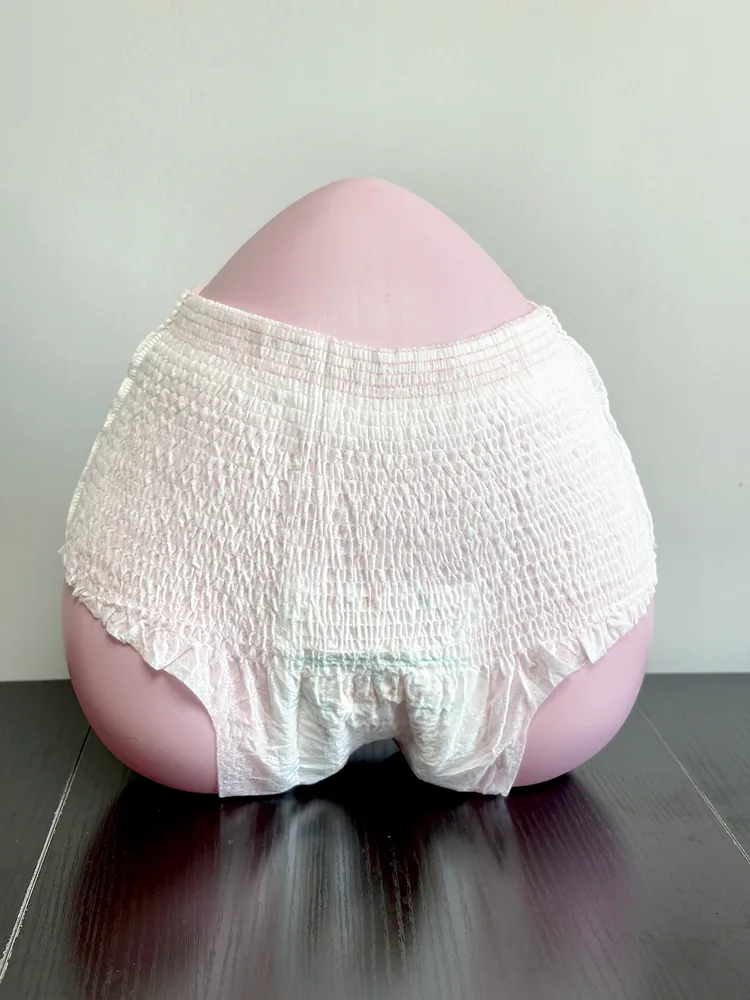
A disposable period pant is a 360° full-wrap garment: you pull it on like underwear and tear the side seam to remove it. No wings, no shifting, no "did it leak sideways while I slept." That full coverage makes it the overnight and heavy-flow winner, and the go-to for postpartum and active days where a pad might move. The trade-offs are cost per use, less daytime flexibility, and heat — a pant wraps more of the body, so the standard version runs warmer than a pad; the spec that actually separates a good pant from a stuffy one is a breathable backsheet. If you're building a range, pants are the step-up SKU, not the value SKU.
How they're made differently
A pad is a layered absorbent with an adhesive backing and wings. A period pant is a non-woven garment with the absorbent built into the gusset — different machine, different fit testing, different QC. That's why a factory's pants line and pad line are separate capabilities; ask to see both, and read the GB/T 39391 period-pants standard explainer for what a proper pants spec actually tests.
The buyer who stocks only pads loses the overnight sale. The one who stocks only pants loses the trial buyer. Range them both.
How to choose for your market
If you're launching, lead with pads for trial and margin, then add pants as the overnight step-up. The standards underneath are the same discipline we cover in the menstrual-care standards guide — absorbency, pH, and a cert you can verify. Open the build at the OEM overview once the range is set.
Are period pants more leak-proof than pads?
For overnight and sideways sleep, yes — the full-wrap garment doesn't shift or gap the way a pad can. But no product is leak-proof in every position; the real win is that pants remove the "pad moved" failure mode. Daytime light flow is still pads' territory on cost and flexibility.
Which should a new brand launch first?
Lead with pads: lower cost per use, easier to trial, and the value tier that builds shelf space. Add period pants as the overnight and heavy-flow step-up once you've proven the range. Stocking both captures the trial buyer and the overnight buyer instead of one.
Do period pants need a different factory than pads?
Often yes — they're separate production lines with different fit testing and QC. When you vet a supplier, ask to see both capabilities, not just one, and confirm the pants line meets the relevant standard (GB/T 39391 in China) rather than assuming a pad maker can deliver pants.
Are period pants less breathable than pads?
Usually, yes — a pad is thinner with less material, so it breathes more by default. A period pant wraps more of the body, so the standard version runs warmer; the fix isn’t a bigger absorbency number but a breathable backsheet that lets vapor out. If you’re stocking pants for a hot-climate market, that’s the spec to ask for.
Other sourcing hubs
Turn this guide into an OEM brief
Share your product direction, target market, packaging idea and sample questions. Nafei can help translate the buying guide into a practical RFQ discussion.
- Product type: period pants, sanitary pads or mixed OEM project
- Target country, channel and buyer positioning
- Size range, material preference and sample review focus
- Private label artwork, pack count and estimated quantity